Introduction
Many organizations still depend on people moving information between systems. A planner checks ERP demand, updates a schedule, and waits for procurement approval.
Traditional automation can handle these steps. But it is not the best choice when your data is incomplete, or when the conditions change. Or when you need the full context.
Agentic AI workflow automation combines AI agents with business rules, system integrations, and human approvals to help you achieve desired outcomes.
Agentic AI coordinates processes in your business that depend on manual follow-ups, disconnected information, and individual judgment.
IBM research finds that 55% of organizations are actively developing or deploying an agentic AI operating model. Thus, agentic AI is moving beyond isolated trials and beginning to influence your workflows, systems, and decision rights.
What are agentic workflows?
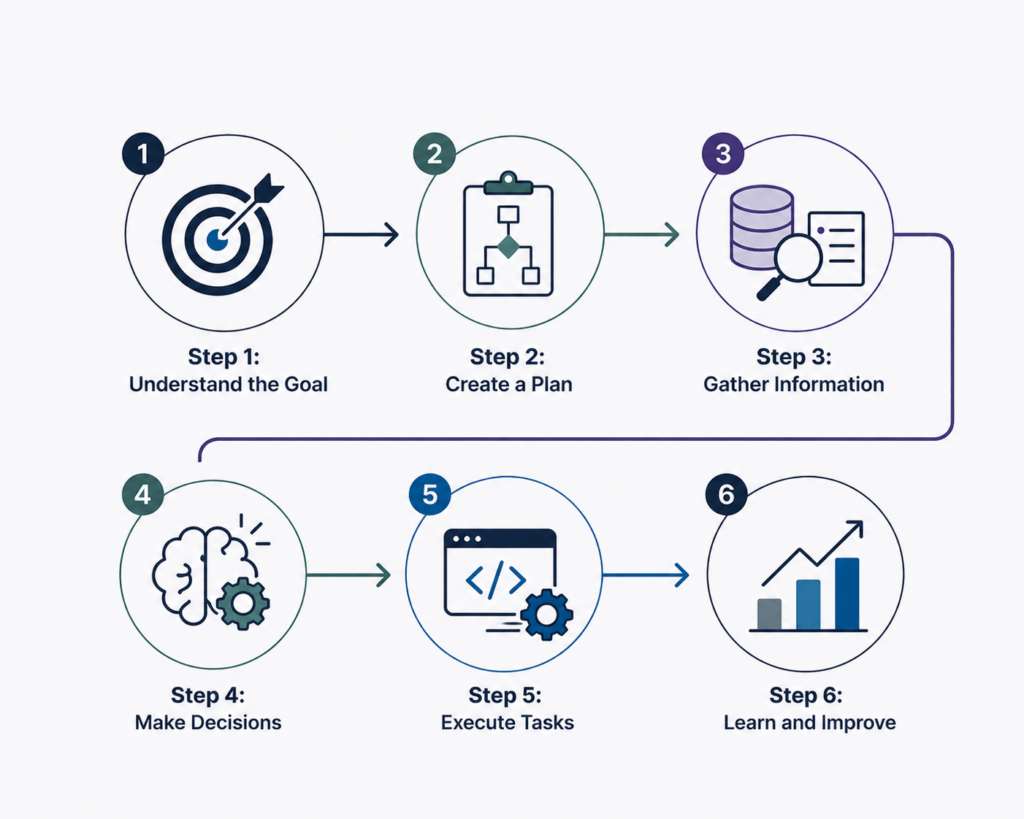
An agentic workflow uses one or more AI agents to interpret a goal, plan the required steps, retrieve information, use approved tools, and determine the next permitted action.
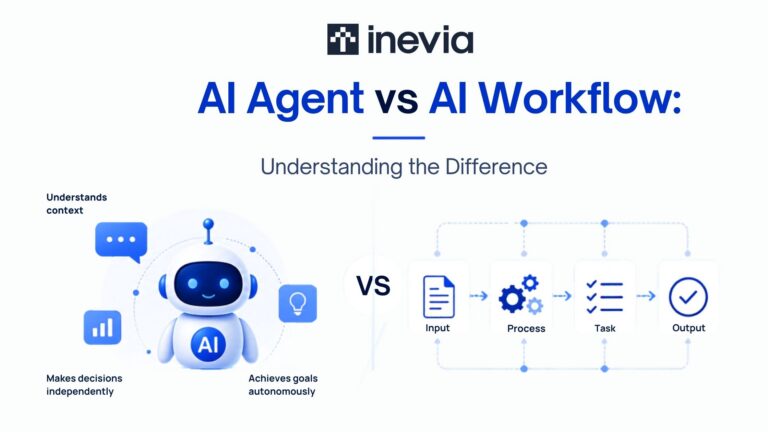
Unlike a chatbot that mainly responds to questions, an agent can compare records, apply policies, update connected systems, request missing information, and escalate exceptions.
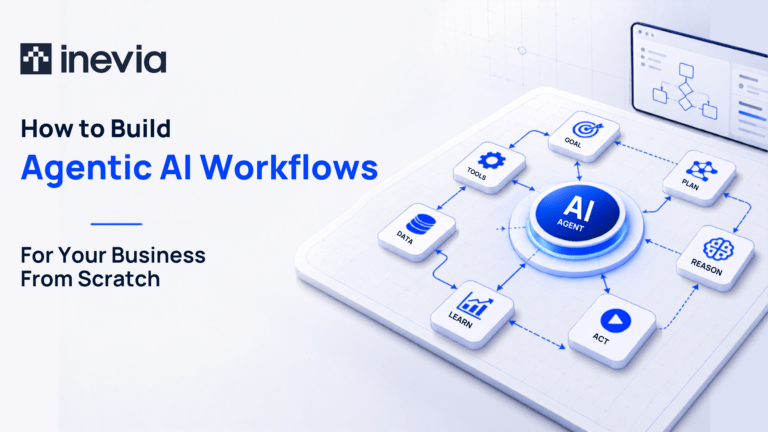
It moves through a continuous loop:
- Trigger
- Understand the objective
- Plan
- Retrieve data
- Use connected tools
- Verify the result
- Act or request approval
- Record the outcome
The agent does not require unlimited autonomy. While enterprise designs combine flexible reasoning with fixed controls, rules determine which data and systems an agent may access, which actions require approval, and what happens when confidence is low.
This structure helps agents handle variability, while it also needs human accountability.
Agentic workflow use cases
Industry: Banking and Financial Services
- Credit decisions draw on applications, bank statements, credit bureaus, and internal risk systems.
Use case: Controlled credit and risk decisioning
- An agentic workflow can collect documents, validate information, apply approved lending policies, and prepare an evidence-based recommendation.
- Standard cases progress faster while exceptions reach an underwriter.
- Final accountability, fairness testing, and explainability remain with the financial institution.
Industry: Healthcare
Use case: Prior authorization and care pathway acceleration
- Prior authorization requires staff to retrieve clinical records, confirm insurer requirements, and follow up on incomplete requests.
- An agent can extract information, check coverage criteria, identify missing evidence, and prepare the authorization package.
- It can track responses and route unusual cases for review.
- Clinical and coverage decisions remain with qualified professionals.
Industry: Government sector
Use case: Benefits determination and citizen service orchestration
- Benefits applications can stall when documents are missing, or information cannot be verified.
- An agentic workflow can guide applicants, collect records, compare eligibility information, and identify incomplete submissions.
- Straightforward cases progress through established rules, while uncertain cases reach a caseworker with the evidence.
- Decision logs, human oversight, and appeal routes remain essential.
Industry: Life sciences
Use case: Clinical trial design and execution
- Clinical trials generate extensive scientific, operational, and regulatory information.
- Agents can review studies, protocols, and site data to support trial design, site selection, and patient matching.
- They can monitor enrolment, flag protocol deviations, and trace changes.
- Scientific judgment, patient-safety decisions, and regulatory approvals remain with experts.
Industry: Retail
Use case: Demand shaping and omnichannel fulfilment
- Retail teams balance demand, stock, promotions, supplier constraints and fulfilment capacity.
- An agentic workflow can adjust replenishment or move inventory within approved limits.
- When an order arrives, it can select a fulfilment location based on stock, cost, and delivery commitments.
- Availability, margin, stockouts, and on-time delivery indicate its effect.
Industry: Automotive and heavy manufacturing
Use case: Scheduling and quality optimization
- Production schedules become outdated when equipment stops, materials arrive late or priorities change.
- An agent can assess capacity, inventory, due dates, and changeovers before proposing a revision.
- For a quality issue, it can retrieve specifications, identify affected work orders, create a quality record and notify teams through connected MES, ERP and quality systems.
- Managers retain control over consequential decisions.
Industry: Heavy asset management
Use case: Asset lifecycle optimization
- Fleets, utilities and capital equipment require maintenance without unnecessary downtime.
- Agents can compare sensor data, service history and failure indicators with technicians and parts availability.
- The workflow can identify a maintenance window, prepare the work order, reserve parts, and notify the service team.
- Safety-critical actions and major decisions require authorized approval.
Best practices for agentic workflow automation
Deloitte’s 2026 State of AI in the Enterprise report finds that only 20% of organizations are already increasing revenue through AI initiatives.
For operations leaders, this reinforces the importance of connecting every workflow to measurable improvements in cost, capacity, quality, service, or revenue.
Here are some best practices recommended for your business:
Alignment with an operational outcome
Successful projects are tied to a defined delay, cost, risk, or service problem. Measuring that problem before development creates a baseline for evaluating the workflow.
Complete workflow mapping
Many processes evolved through workarounds and individual judgment. Workflow mapping should capture routine steps, exceptions, hand-offs, approval points, and system dependencies.
Clear authority boundaries
An agent’s responsibilities, access and decision rights need explicit limits. Information retrieval can be separated from system-changing actions, with human approval retained for consequential decisions. Narrowly defined agents are easier to monitor and improve.
Observability and performance monitoring
Reliable workflows require visibility into agent actions, tool calls, approvals, failures, and hand-offs. Monitoring accuracy, latency, cost, and unexpected behavior supports auditing and improvement.
Testing under real operating conditions
Production data may contain missing fields, inconsistent formats, and conflicting records. Testing needs to cover routine cases, genuine exceptions, and attempted misuse before autonomy expands.
Combining AI reasoning with deterministic automation
Agent reasoning is most valuable when a decision depends on context. Stable, routine steps can remain deterministic. A process might use a fixed trigger, AI reasoning for an exception and conventional automation for execution, improving predictability and controlling model usage.
Implementation strategy for workflow automation
According to McKinsey’s State of Organizations 2026 report, 86% of organizations are still not prepared to adopt AI in their operations.
For leaders, this shows why process mapping, data quality, system integration, governance, and employee readiness must be addressed as part of implementation.
A suitable first workflow is frequent, measurable, clearly bounded, and manageable at risk. Tasks already handled by ordinary automation may not justify an agent, while highly critical processes may not need automation initially.
Implementation can progress through readiness assessment, a controlled pilot and evidence-based expansion. Readiness work clarifies the process, data, integrations, authority boundaries and success measures. A limited pilot tests real cases with human oversight before wider deployment.
Measures may include:
- Cycle time
- Completion rate
- Exceptions
- Decision accuracy
- Human hand-offs
- Cost
- User adoption
Their relevance depends on the intended operational outcome.
How Inevia helps enterprises deploy agentic workflows
Inevia combines AI readiness, workflow automation and system integration. It examines how work moves, prepares the required data, connects systems such as ERP, CRM, MES and document repositories, and establishes approvals and audit trails.
This is particularly relevant to small and medium enterprises seeking practical outcomes without building a large internal AI team. A focused pilot allows leaders to evaluate value, risk and adoption.
Ready to explore a suitable agentic workflow? An operations review with Inevia can help identify a focused pilot for your organization.
The future of agentic automation
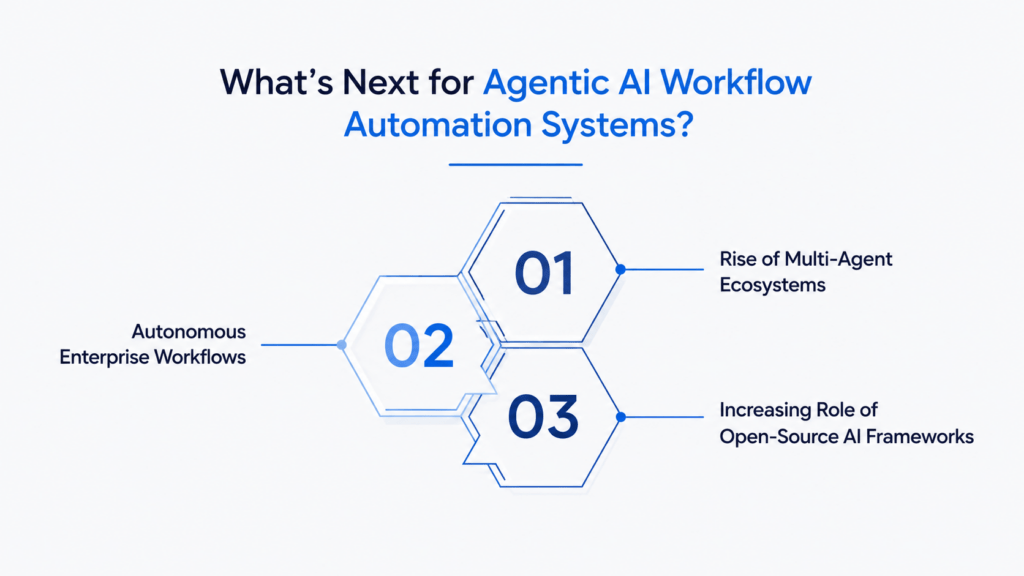
Agentic automation will increasingly coordinate work across functions rather than improve isolated tasks. People will define goals, manage exceptions, and refine operating rules while agents handle more routine investigation and coordination.
Failures and escalations can reveal gaps in data, ownership, or governance. Treating them as operational feedback can improve the workflow and its underlying process.
Conclusion
Agentic AI can help enterprises move from disconnected tasks to coordinated outcomes. Its success depends on selecting an appropriate workflow, limiting autonomy, connecting trusted systems, and retaining human accountability for important decisions.
A measurable first deployment provides evidence of how the workflow performs under real conditions. That evidence gives operations leaders a stronger basis for deciding where agentic automation should expand and where conventional automation or human judgment remains more suitable.
Frequently asked questions
What are the biggest challenges in deploying enterprise AI agents?
The main challenges are fragmented data, poorly documented processes, legacy-system integration, unclear ownership, security risk, unpredictable outputs, and difficulty measuring business value.
Which industries can benefit most from agentic AI workflow automation?
Industries with high-volume, multi-step, and exception-heavy processes have strong potential. These include financial services, healthcare, government, life sciences, retail, industrial production, logistics, and asset-intensive businesses.
How can small and medium enterprises benefit from agentic AI?
SMEs can use agents to extend lean teams, shorten response times, and coordinate work across existing systems. A contained workflow with measurable savings or service improvement offers a practical basis for evaluating the technology.
How can teams keep agentic workflows secure?
Security depends on least-privilege access, strong authentication, encryption, approved connectors, data minimization, and detailed audit logs. Sensitive data should remain within permitted environments, with human approval for high-impact actions and procedures for rollback or shutdown.