Brian, a production manager, opens a work order and sees Revision C of a component drawing. His engineers approved Revision D three days earlier, but the change never reached his production team. Instead, his team builds 40 units using the old specification.
This is the type of failure PLM integration can help you prevent altogether.
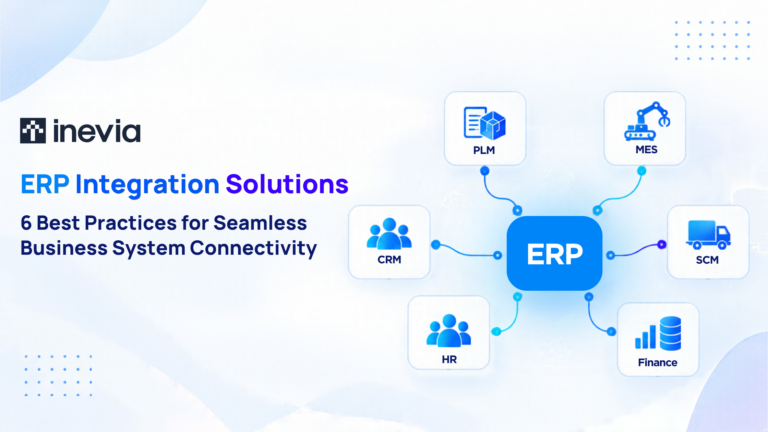
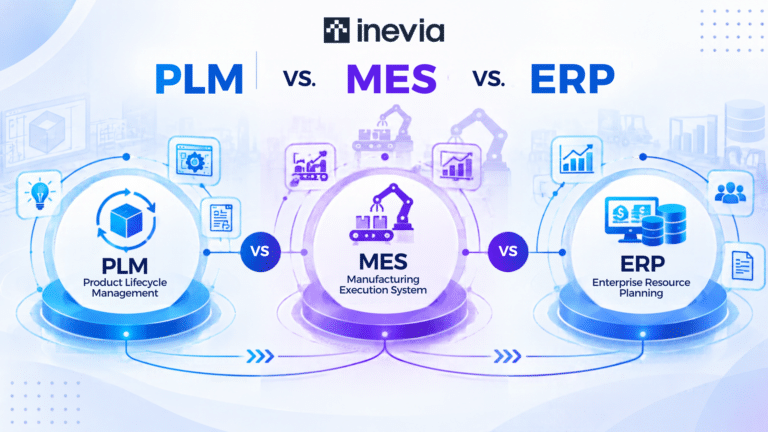
PLM systems manage drawings, bills of materials, specifications, and engineering changes. Production, purchasing, quality, and planning teams often use ERP, MES, and other applications. Connecting these systems helps approved product changes reach the people responsible for buying, building, and inspecting the product.
PLM integration can therefore help discrete manufacturers improve shop-floor operations as well as engineering processes. Let’s explore five key benefits of PLM integration and how Inevia helps manufacturers connect production systems.
| Benefit | Impact on manufacturing |
| Revision accuracy | Production uses current product data |
| Faster changes | Engineering updates reach production sooner |
| Supplier coordination | Suppliers receive current specifications |
| Traceability | Design and production records are easier to compare |
| Less manual work | Product data does not need to be re-entered across systems |
1. Lower Revision Errors on the Shop Floor
Engineering defines the product through drawings, specifications, and an engineering BOM, while manufacturing organizes the product data around how it will be built.
Manual transfer between these processes increases the chance of an old drawing or incorrect BOM reaching production.
PLM integration can pass released drawings, specifications, and BOM changes into the systems used for planning and production.
2. Faster Implementation of Engineering Changes
An approved engineering change still must be reviewed by the planning team and the purchasing department before it can affect the product being manufactured.
Integration can pass released product changes from PLM into ERP and MES instead of depending on spreadsheets, emails, or manually saved updates.
Capgemini’s 2026 report, Enterprise Core for Aerospace and Defence Manufacturing, reports up to a 60% reduction in engineering-change process time through integrated systems and comprehensive impact analysis.
For discrete manufacturers with frequent design changes, faster integration can shorten the time between engineering approval and the updated change being used in production.
| Discrete manufacturer | PLM integration benefit |
| Aerospace & defence manufacturer | Keeps approved drawings, specifications, and engineering changes aligned with production and traceability records. |
| Electronics manufacturer | Reduces the risk of building from outdated component specifications, BOMs, or product revisions. |
| Industrial machinery manufacturer | Helps engineering changes reach material planning, production, and quality teams faster. |
| Rugged computer manufacturer | Connects product configuration changes with purchasing, quoting, and production requirements. |
3. Reduced Supplier Errors from Outdated Product Data
Suppliers and contract manufacturers need the correct drawing, specification, and component requirements before production begins.
When PLM connects with ERP or supplier-facing applications, approved drawings, specifications, and component requirements can be shared with purchasing systems or supplier portals. There is no dependence on someone to send updated files manually.
This is particularly relevant for make-to-order and configure-to-order manufacturers, where specifications can vary between orders.
4. Improved Product Traceability and Quality Control
When a customer questions a finished unit, manufacturers need to demonstrate which product revision was approved, and which version was built by the team.
PLM provides the design history, while MES can record production steps, inspections, material usage, and product genealogy. Integration makes it easier to connect the as-designed product with its as-built production record.
This connection also helps quality teams inspect products against current drawings and specifications. Market Research Future’s PLM in Discrete Manufacturing Market report identifies manufacturing process management as the largest PLM application segment and quality management as the fastest-growing segment.
5. Minimized Manual Data Entry Across Manufacturing Systems
PLM integration reduces the need to enter the same product details into multiple applications.
Released BOMs can update planning systems. Approved specifications can reach production. Engineering changes can be passed to the applications that are dependent on them.
The effect can extend beyond saving administrative time. Capgemini reports up to a 75% reduction in product-configuration errors and up to an 80% reduction in shop-order preparation time in instances of connected manufacturing environments.
Conclusion
For discrete manufacturers, product data can continue influencing your product long after engineering approves it. Drawings, BOMs, specifications, and revisions affect what is purchased, what reaches the shop floor, and what quality teams inspect.
PLM integration helps connect those activities, reducing revision errors, shortening engineering-change cycles, improving traceability, and cutting manual data entry between systems.
Inevia helps manufacturers integrate PLM with ERP, MES, and other business applications so approved engineering changes can move reliably into production and related workflows.
Need help connecting PLM with your manufacturing systems? Talk to Inevia about your system integration requirements.
Frequently Asked Questions
With which systems can PLM integrate?
PLM can connect with ERP, MES, CAD, quality applications, supplier platforms, and other systems that use product and engineering data.
How long does PLM integration generally take?
The timelines depend on the systems involved, existing data, required workflows, and the complexity of the integration.
What should be reviewed before initiating PLM integration?
Review how BOMs, drawings, specifications, and engineering changes move between teams and systems today.
Can PLM integrate with legacy systems in use?
Often, yes. The integration method depends on the APIs, databases, file exchanges, or other interfaces supported by the existing system.