For any product being made, every manufacturer shares the same goal: to produce the highest quality of products, as fast as possible, and at the lowest cost possible.
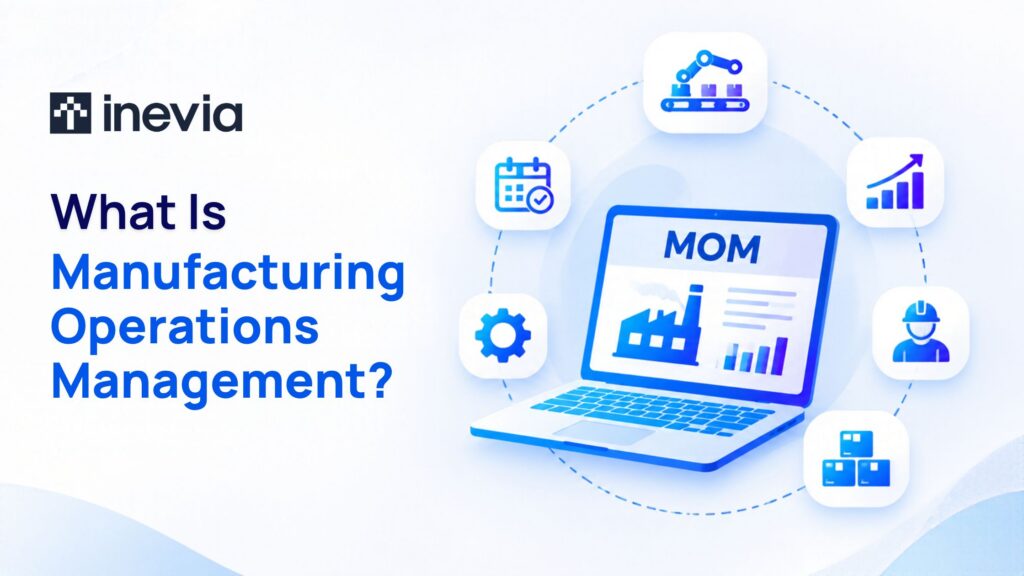
To achieve this goal, manufacturers need the help of Manufacturing Operations Management, or MOM. It is a structural approach to monitoring and optimizing the production process as required.
This guide explains how MOM is an essential approach for manufacturers to stay competitive in the market and run their shop floor smoothly.
What is MOM, or Manufacturing Operations Management?
Manufacturing Operations Management is the discipline of optimizing and coordinating everything that goes on between product planning and delivery. It brings together people, systems, and processes responsible for converting raw materials into finished goods.
MOM is like the connective tissue between operations planning systems and the physical world of machines. It translates the plan into production, specifying the steps, the materials needed, and the machines to be operated upon.
According to UNIDO’s Q2 2026 report, medium-high as well as high technology manufacturing industries are outpacing lower-technology industries in terms of output growth.
For manufacturers, this finding points towards the need for improving productivity, production visibility, and technology adoption as competition moves toward more technology-intensive manufacturing.
Which Functions does MOM Cover?
In practice, Manufacturing Operations Management is designed to optimize all major processes involved in converting raw materials into finished goods. Some of these processes are listed below:
- Production Management
Production management focuses on planning, controlling, and coordinating the manufacturing process to make sure products are manufactured efficiently.
To optimize production management, MOM integrates automated scheduling, real-time monitoring, and workflow optimization.
This integration ensures good coordination between the various stages of production. It minimizes downtime and maximizes output, leading to cost effective and efficient manufacturing operations.
At Inevia, we helped a critical components manufacturer reduce production cycle time by 20% through Traveler MES. Click here to read more about this case study.
- Maintenance Management
Maintenance management essentially keeps equipment and machinery in good working condition. It prevents any unexpected breakdowns.
MOM optimizes maintenance management by enabling preventive and predictive maintenance strategies, providing tools for analyzing performance data, monitoring equipment health, and scheduling regular maintenance tasks.
With this proactive approach, manufacturers are able to extend equipment lifespan and reduce the chances of downtime.
- Logistics Management
Logistics management focuses on the planning and execution of the movement and storage of goods.
These processes are optimized by MOM with the help of real-time tracking and analysis of warehouse activities. These measures are helpful for reducing transit times, optimizing routes, ensuring cost-effective operations, and managing storage efficiently.
This is another way by which MOM contributes to reduced operational costs and improved customer satisfaction.
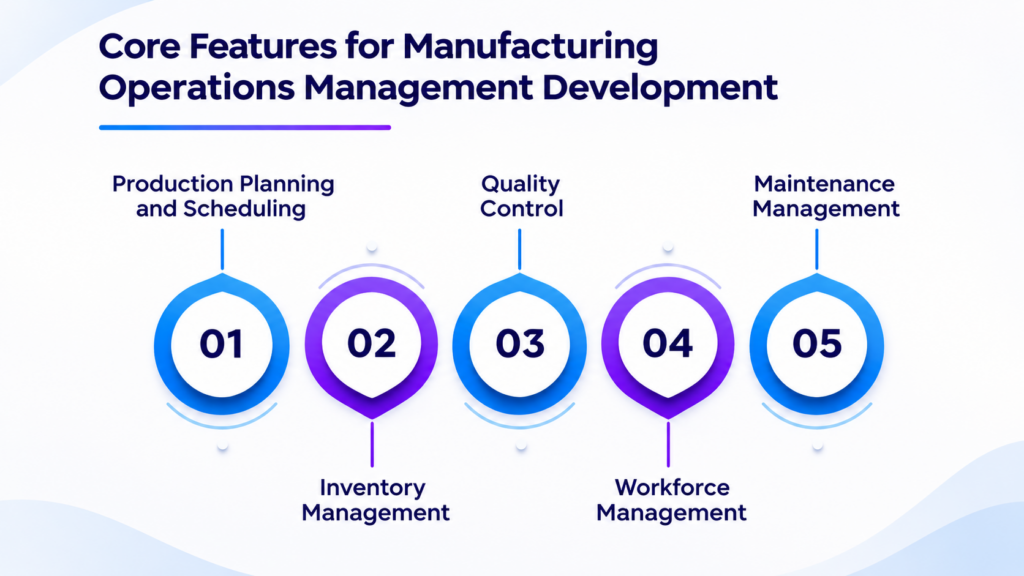
Best Practices for Manufacturing Operations Management
Getting the most out of MOM depends on how it is used. Successful manufacturers follow a connected approach bending people, processes, and data. Some of the best practices of MOM are mentioned below:
- Track the right KPIs: Clearly defined KPIs help you measure performance and identify any areas for improvement. Tracking the right KPIs, such as downtime, yield, and cycle time, helps in building a controllable and predictable production environment over time.
- Connect MOM to the wider digital ecosystem: It is essential for MOM to be integrated with other systems in use. Connecting MOM to supply chain and customer platforms enables end-to-end visibility from raw materials to final delivery. This kind of integration gives leaders a wholesome view of operations.
- Test improvements before implementing: Although it can be tempting to roll out changes across the board, skipping the testing phase can be risky. It is better to first test the new process or technology in a controlled environment. This helps you identify issues, validate results, and build confidence before the initiative is scaled across the organization.
- See to it that leadership and teams are aligned: MOM influences multiple departments, from maintenance and production to IT and supply chain. Having the support of leadership and facilitating cross-functional collaboration ensures all members are working towards the same goals and referring to the same data to make decisions.
Conclusion
Over time, Manufacturing Operations Management is becoming more adaptable and intelligent. With new technologies, manufacturers are going beyond basic optimization towards data-driven and autonomous operations.
AI plays a big role in this shift. With the help of agentic AI, systems can go beyond insights to take actions like optimizing schedules, predicting maintenance needs, and enabling smarter decision making.
Tehnologies like IoT and digital twins are improving the level of visibility. Manufacturers can now simulate production environments, monitor equipment performance in real time, and test changes virtually.
These changes in MOM play a big role in improving outcomes and reducing risks before any major changes are made on the shop floor.
Looking for a manufacturing solutions partner? Contact Inevia to manage your shop floor operations and manage production processes.
Frequently Asked Questions
What is the difference between MOM and MES?
MOM is the larger discipline that coordinates production, maintenance, performance, quality, and materials. On the other hand, MES is a software category for executing and documenting processes of production. Many MOM programs have an MES included, along with other tools for analytics and warehousing.
How does MOM help manufacturers improve inventory accuracy?
MOM moves data capture to the point of work with barcode or RFID. It enforces steps like the right-bin check, and enables frequent cycle counts with variance thresholds. These measures prevent negative shock, reduce transcription errors, and enable faster detection of phantom inventory.
What are the challenges in Manufacturing Operations Management?
Legacy systems, employee adoption, implementation costs, and gaps in training are some of the challenges faced with MOM. A phased approach is needed to tackle such challenges and scale strategically over time.