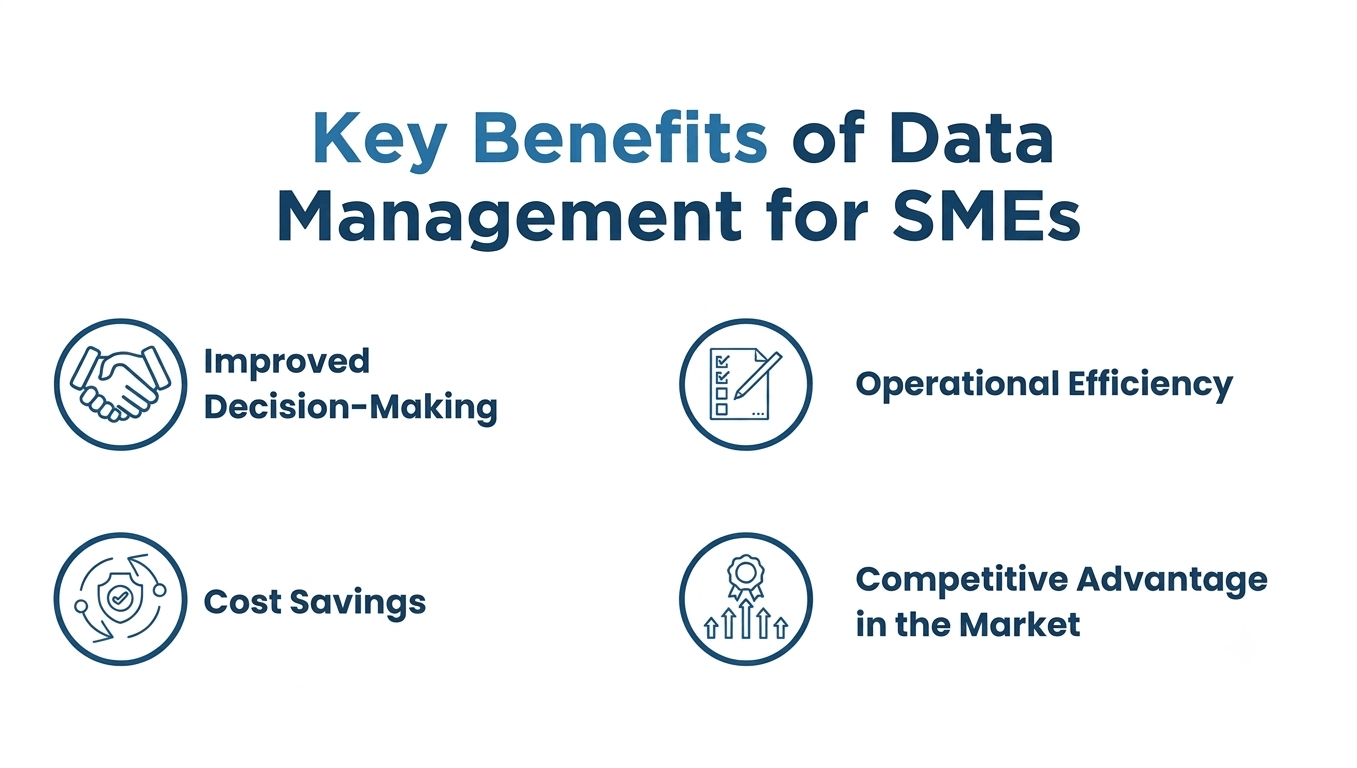
Good data makes running a business easier. You know what is selling, what is in stock, how production is progressing, and where your teams need to act.
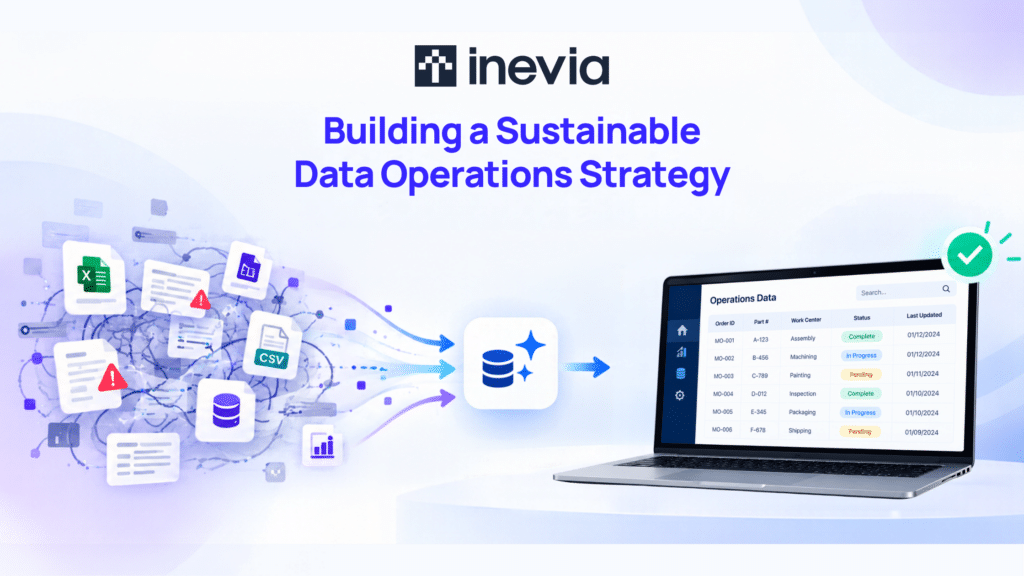
Keeping that information dependable becomes harder as the business grows. New software comes in. Teams develop their own ways of recording information. Older records stay in circulation. Before long, a report that should take minutes to prepare requires someone to check three different sources.
The cost can be substantial. Poor data quality costs organizations an average of $12.9 million a year, according to Gartner research from 2020.
A data operations strategy gives businesses a structured way to manage this challenge. It sets priorities for important data and establishes how that information will be maintained as the company grows.
What Is a Data Operations Strategy?
A data strategy defines how a company plans to use its data to support business goals. A data operations strategy puts that plan into action for the enterprise.
Your data operations strategy puts that direction into practice by establishing ownership, quality standards, and processes for maintaining information and moving it reliably between business systems.
For small and medium enterprises, this does not have to begin as a company-wide data program. The strategy can focus on the information behind a pressing business priority, such as inventory accuracy or production visibility.
Why Do SMEs Need a Data Operations Strategy?
Create a Reliable View of the Business
Leaders need confidence in the information behind their decisions. Common standards can reduce conflicting reports and make it clearer which records should be treated as current.
Reduce Manual Data Work
Data problems often create hidden work. Employees reconcile spreadsheets before meetings or correct records before they can complete a task.
Improving the way this information is managed can return that time to the business.
Maintain Data Quality as You Grow
More customers and processes mean more information to manage. A data operations strategy establishes how important records should be maintained so quality does not steadily decline as the company expands.
Support New Technology
Reliable data also makes it easier to introduce analytics and automation. The quality of the information behind these systems directly affects how useful they can be.
6 Steps for Building a Sustainable Data Operations Strategy
1. Start With a Business Objective
Choose an outcome that matters to the company.
Inventory discrepancies may be disrupting production planning, for example. Another priority could be reducing the time required to prepare management reports.
The objective determines which data needs attention and gives the project a practical scope.
2. Assess Your Current Data
Look at the information involved in that process. Identify where it comes from and where it is updated.
This assessment can uncover missing records or outdated information. It may also reveal areas where teams have created their own methods for maintaining data.
3. Define Data Ownership
Decide who is responsible for the quality of each data source.
Ownership should be clear enough that employees know who maintains a record and who has authority to change it. This forms an important part of data governance and helps prevent quality issues from being left unresolved.
4. Establish Data Quality Standards
A data quality standard defines the level of quality your business data must meet to be trusted and used effectively.
Data quality standard is implemented by:
- Identifying critical data elements
- Defining rules and acceptable thresholds
- Applying validation controls when data is entered, imported, or transferred
- Monitoring quality through automated checks and scorecards
The goal of data quality standards is to ensure that important data is reliable enough to be used for operations, AI, and automation.
5. Improve Data Integration
Review how information moves through the business.
Repeated entry and manual transfers can be good candidates for improvement. Data integration can help relevant applications exchange information directly, while workflow automation can support processes that follow established rules.
Technology choices can then be based on an operational requirement rather than the appeal of a new tool.
6. Measure Your Progress
Use measures connected to the original objective.
If the goal was better inventory accuracy, track how often recorded quantities differ from actual stock. If employees were spending hours correcting reports, measure whether that effort has fallen.
This provides a clearer indication of whether the strategy is working.
Which Data Strategy Methodology Should You Choose?
Companies can organize data strategies in different ways. The right approach depends on how decisions are made and how much operational input the initiative requires.
1. Top-Down
In the top-down approach, leadership sets the business priorities and determines what the company needs from its data.
This provides a clear direction and can work well when the initiative is closely tied to a company-wide goal.
Example: A manufacturer plans to improve on-time delivery. Leadership makes production visibility a company priority and identifies the information needed to track orders from release through completion. Individual teams then align their data practices with that goal.
Best suited when: The company has a clear strategic goal that requires coordination across departments.
2. Bottom-Up
In the case of bottom-up approach, your strategy develops from problems identified by the people working with your data every day.
This can uncover operational issues that are difficult to see at management level, although priorities across departments may need to be brought together.
Example: A purchasing team notices that supplier names and lead times are recorded differently across its systems. The team begins standardizing this information and tracking data quality. Once the approach proves useful, similar practices are introduced in other departments.
Best suited when: Data problems are concentrated within specific teams and leadership wants to build on improvements that have worked in practice.
3. Hybrid
A hybrid approach combines both perspectives. Leadership establishes the direction while teams contribute their knowledge of processes and data requirements.
For an SME, this can provide a practical balance between company priorities and what employees encounter in daily work.
Example: A growing manufacturer wants more accurate inventory information. Leadership sets inventory accuracy as the goal. Warehouse and production teams then identify where discrepancies occur and which records need attention. Their findings shape the final data strategy.
Best suited when: The company needs strategic direction while relying on operational teams to identify the causes of data problems. This is likely to be the most practical approach for many SMEs.
4. Agile
An agile approach develops the strategy in shorter cycles. Progress can be reviewed as work continues, allowing priorities to change when business requirements change.
Companies do not need to treat these methodologies as rigid choices. The approach can be adapted to the structure of the organization and the problem being addressed.
Example: A retailer wants better inventory planning. It begins with one product category and improves the quality of its inventory data. The company measures the results before applying the approach to other categories and locations.
Best suited when: The business wants to start with a limited scope, learn from the results, and expand gradually.
Data Operations Examples Across Industries
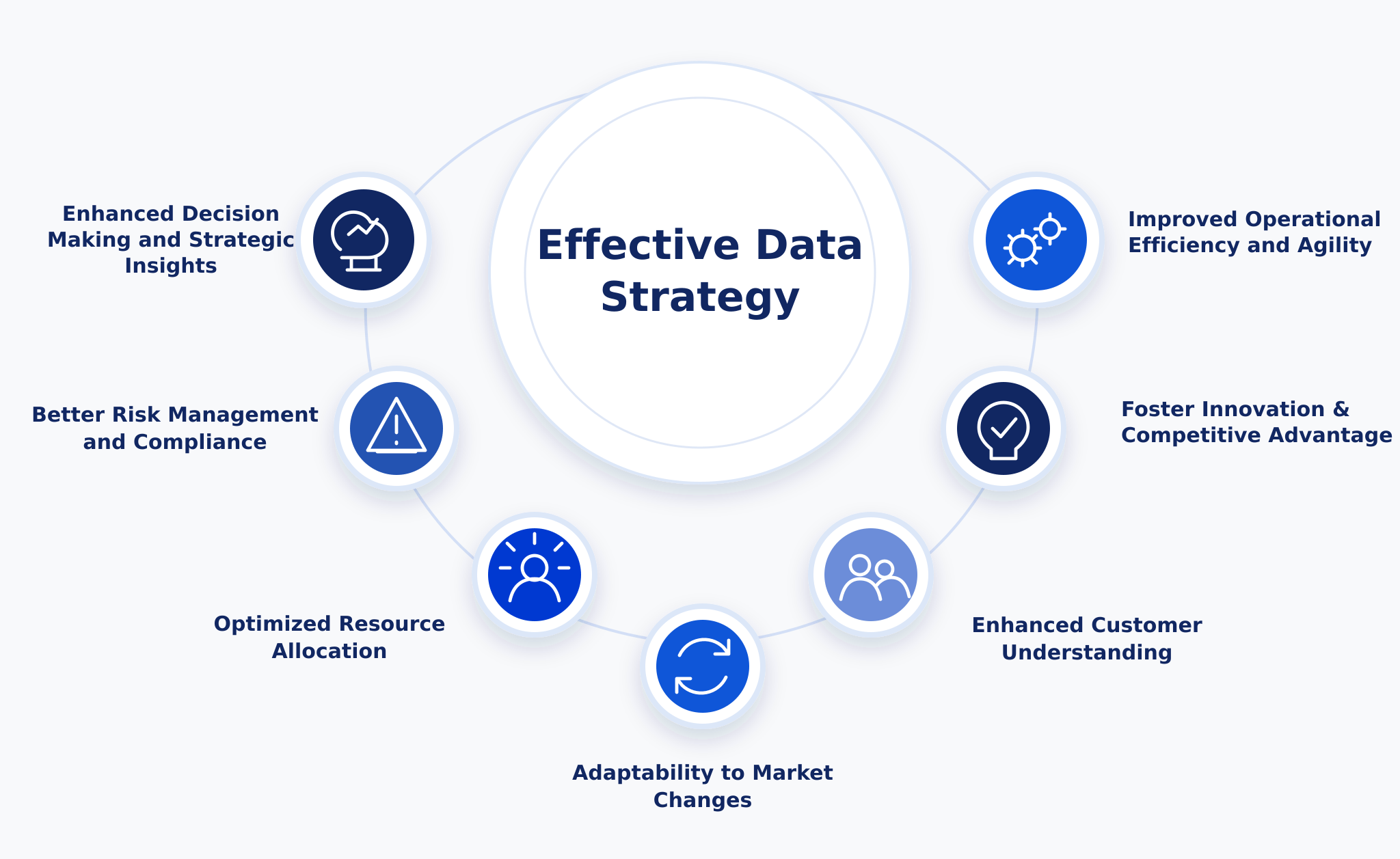
The principles behind a data strategy are generally consistent across industries. What changes is the information companies rely on and how they use it.
1. Manufacturing
Manufacturers work with production records, inventory information, quality data, and supplier information.
A data strategy can help establish consistent records across these processes. This can support production planning and give operations teams a clearer view of what is happening on the shop floor.
2. Healthcare
Healthcare organizations depend on accurate information across clinical and administrative activities.
Their data strategies may address how information is maintained and shared while accounting for privacy requirements. Reliable data can also support scheduling and resource planning.
3. Retail
Retailers collect information through transactions and inventory activity. Customer interactions add another important source.
A data strategy can help bring greater consistency to this information, to help teams improve demand planning and understand purchasing behavior.
4. Financial Services
Financial organizations place strong emphasis on data governance because information supports regulatory reporting and risk management.
Clear controls around data quality and access are therefore important parts of the data strategy.
5. Government
Public organizations manage data that supports planning and service delivery.
A data strategy can help agencies outline common standards for information used across departments and improve how that information supports resource decisions.
Common Challenges When Implementing a Data Operations Strategy
1. Limited Resources
Small companies may not always have the luxury of dedicated employees for data operations strategy or maintaining data. They may not have the required budget too.
A starting point can make the project easier to manage. Business-critical data deserves attention before information with little operational impact.
2. Disconnected Systems
Years of growth can leave information spread across applications that were never designed to work together.
Resolving this may involve cleaning existing records first and then improving how information moves between the systems that need it.
3. Employee Adoption
A policy works only when your people trust it and follow it.
Employees need to understand which standards apply to the information they handle and what responsibility they have for maintaining data quality.
4. Legacy Data
Historical records may follow old formats or contain information that is no longer current.
Businesses need to determine what should be corrected and what should remain available for historical or compliance purposes.
5. An Overly Broad Scope
Trying to improve every dataset at once can consume resources without producing a visible business result.
A defined objective makes it easier to prioritize the data that deserves attention first.impler solution. The strongest case for multi-agent AI is usually a process where coordination itself has become part of the problem.
How to Keep Your Data Operations Strategy Sustainable
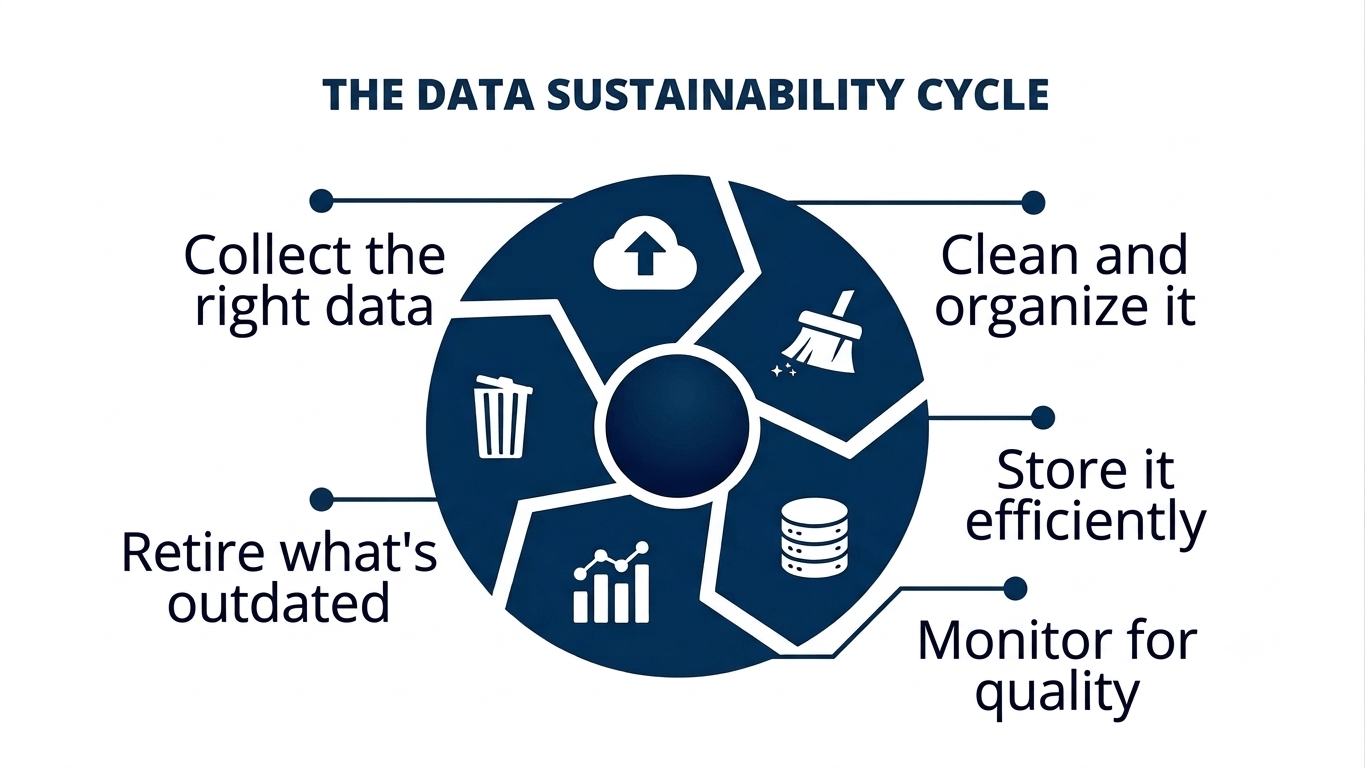
A sustainable strategy becomes part of normal business operations.
Important datasets can be checked at appropriate intervals. Ownership should be updated when responsibilities change. Standards may need revision after a new application or process is introduced.
Recurring errors can also provide useful feedback. When the same problem keeps appearing, the source may lie in the way information is collected or transferred.
The strategy itself can evolve alongside the business instead of remaining tied to the conditions that existed when it was first created.
Build a Stronger Data Foundation With Inevia
Reliable operational data can improve the value businesses receive from the systems they already use.
Inevia helps SMEs address data quality through data cleanup and connect important information through system integration. Workflow automation can further reduce manual effort in processes where information needs to move between teams or applications.
Businesses preparing for AI can also assess the quality of the data required for their intended use case.
With better-managed data, teams have a dependable foundation for reporting and future digital initiatives.
Inevia’s no cost Proof of Concept gives you a way to test an approach, measure the results, and decide whether a wider implementation makes sense for your business.
FAQs
1. What should a data operations strategy include?
It should establish the business objectives for important data and define how its quality will be maintained. Ownership and governance should also be addressed.
2. What is the difference between data strategy and data management?
A data strategy establishes how a company plans to use data to support its goals. Data management covers the practices used to maintain and use that information.
3. Which data strategy methodology works best for small and medium enterprises?
It depends on the organization. A hybrid approach can work well when leadership needs to set priorities while employees contribute knowledge from daily operations.
4. How often should a data operations strategy be reviewed?
The There is no fixed schedule for every business. A review can be useful when important processes change or new systems affect how data is created and used.
5. How does a data strategy support AI readiness?
AI applications depend on the data available to them. Improving data quality and governance can help a business prepare the information required for a specific AI use case.