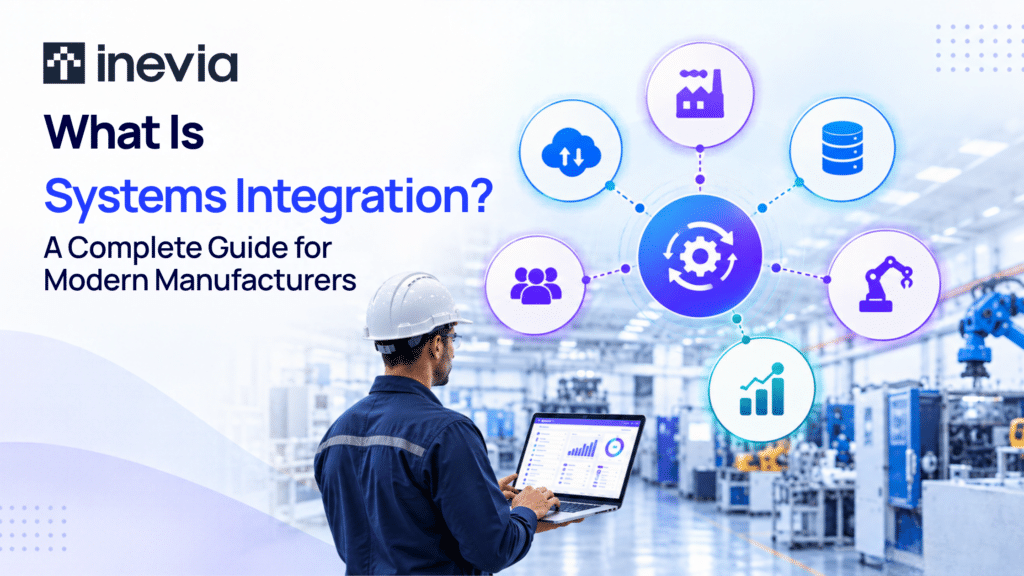
Walk onto any plant floor, and you will see a massive ecosystem of specialized technologies at work. ERP systems track orders and inventory, MES orchestrate shop floor schedules, PLM tools hold engineering blueprints, CRM platforms capture sales orders.
When these platforms run in isolation, information stalls in organizational silos. Workers end up manually copying numbers between spreadsheets, re-entering bill of materials (BOM) changes, and chasing down status updates.
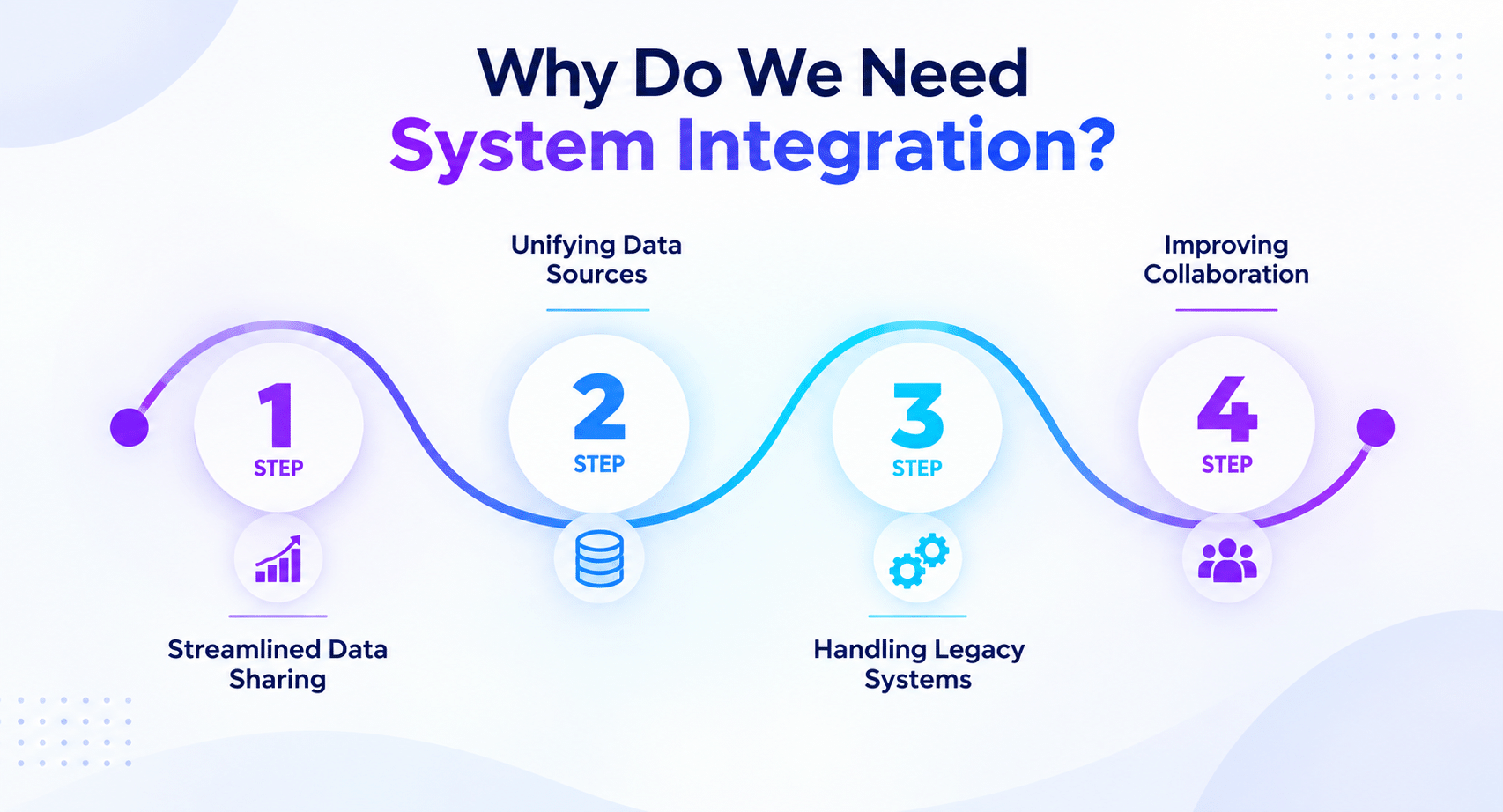
System integration solves this issue by connecting physically or functionally disjointed software applications, hardware, and data streams into a unified operational environment.
For modern manufacturers, successful integration establishes a single source of truth across the entire enterprise.
System integration ensures that when an order changes in your CRM, production schedules, inventory allocations, and procurement plans update instantly across the shop floor.
How Does System Integration Work?
At its core, system integration works by establishing reliable communication channels between applications that were never originally built to talk to each other. It bridges mismatched data formats, different network protocols, and varying system architectures.
The integration process follows three basic steps:
- Data Translation: Middleware or API connectors receive data from a source system, parse the structure, and map field variables into a standardized target format.
- Data Transformation & Routing: Business logic rules dictate how information moves. For instance, a rule might specify that when a CAD drawing reaches “Approved” status in PLM, it should automatically construct a corresponding item master in the ERP.
- Execution & Synchronisation: Connectors push the transformed payload into the receiving application via webhooks, REST APIs, database queries, or file queues. This triggers automated workflows in real time or via scheduled batch cycles.
System Integration in the World of AI
AI has changed the way organizations integrate traditional systems. At the same time, strong system integration is needed for AI to work well in any organization.
How AI is Transforming System Integration:
- Smart data mapping: Machine learning models look at historical patterns, and then automatically recommend field mappings between separate systems.
- Error resolution: In case an API call or data formatting doesn’t work, algorithms understand the reasons behind failure. The algorithms then recommend or run script adjustments autonomously.
- Predictive anomaly detection: AI continuously checks API traffic and integration logs in real time. This is done to detect communication errors and potential issues before they negatively impact your operations.
- Autonomous workflows: AI can interpret any unstructured data, for example vendor mails, by combining Robotic Process Automation with Natural Language Processing. This feature helps move structured data into legacy databases.
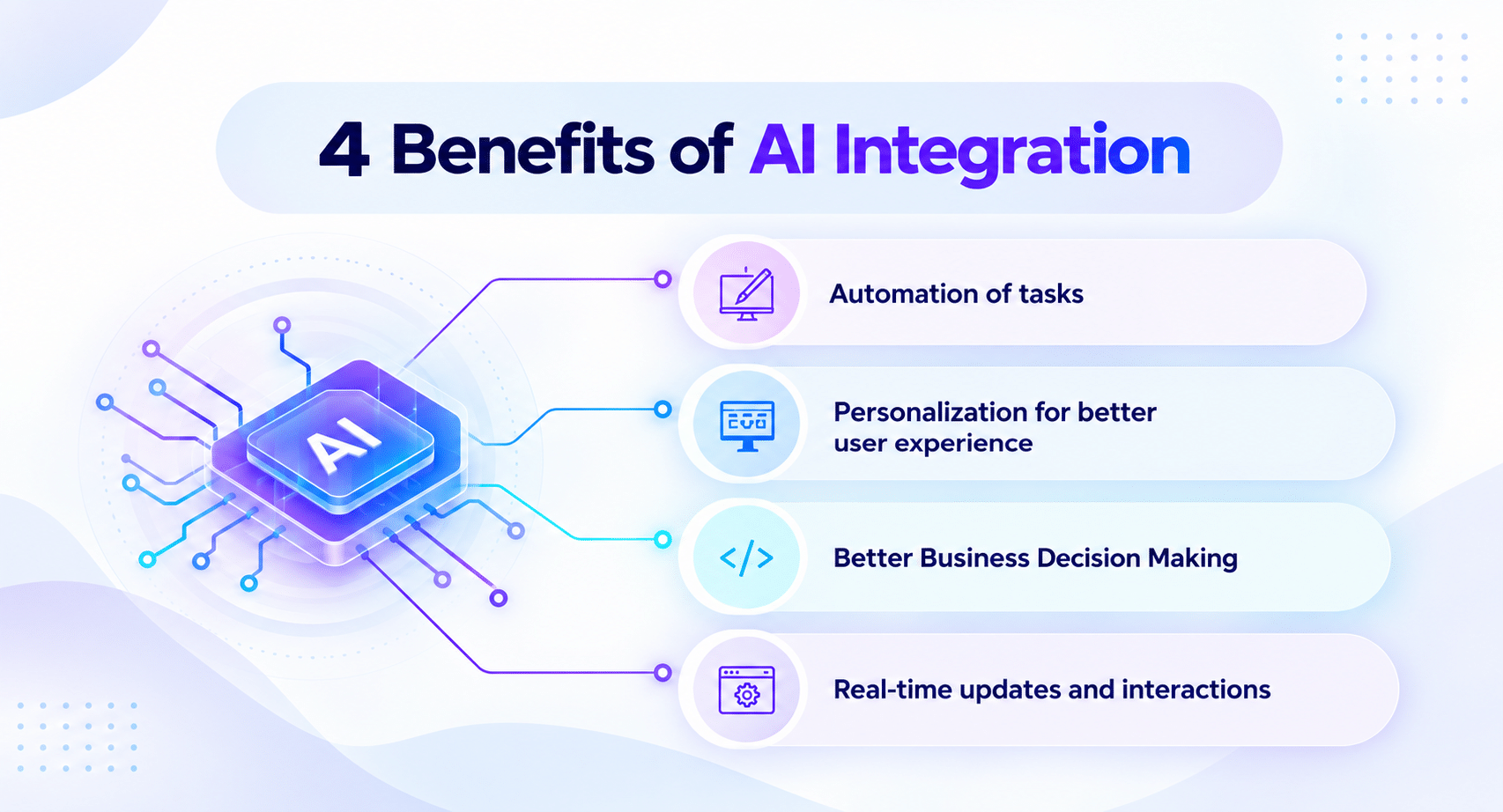
Before the AI era, you needed API mapping, constant maintenance and rigorous coding efforts to connect your different software systems. But now, with AI-powered integration platforms, this layer is automated and optimized.
Types of System Integration
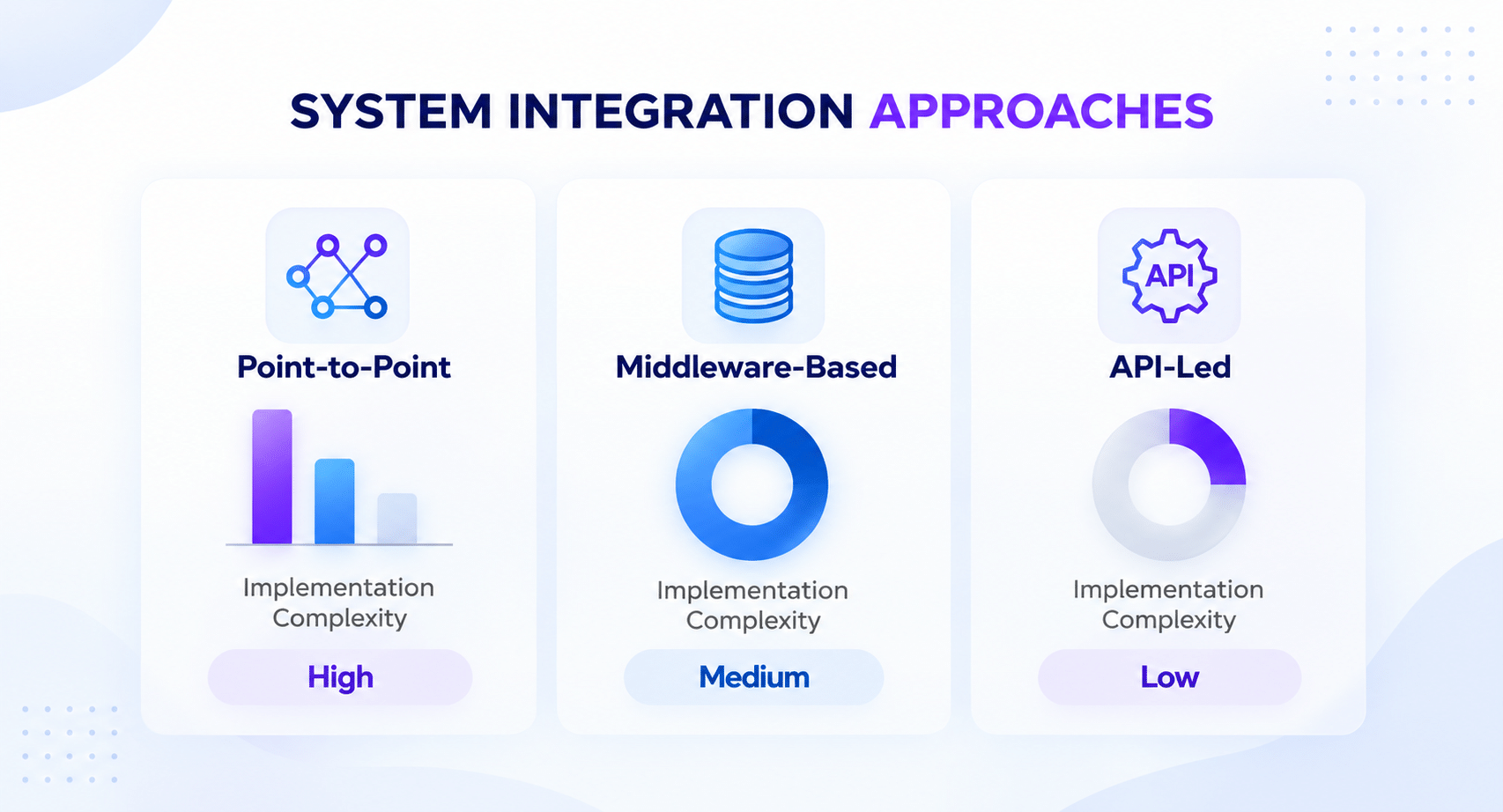
The way software components talk to each other determines how easily your architecture scales over time. Manufacturers generally use the following integration methods:
- Point-to-Point Integration: Direct connections built individually between two specific applications without central middleware. Example: Writing a custom script that periodically exports customer contacts from your CRM directly into a local accounting tool.
- Vertical Integration: Linking systems hierarchically according to their functional layer on the shop floor. Example: Connecting physical shop-floor IoT sensors directly up to an MES, which then pushes completed work order counts into an ERP.
- Star (Spaghetti) Integration: A network of interconnected point-to-point connections where every application connects directly to every other system. Example: Connecting CAD, PLM, MES, and inventory software to one another individually, creating a web of custom code that becomes difficult to maintain as new tools are added.
- Horizontal Integration: Connecting distinct functional systems across the value chain through a central Enterprise Service Bus (ESB) or unified API gateway. Example: Pushing a new web order into a central enterprise bus that simultaneously notifies CRM, triggers inventory holds in ERP, and queues production jobs in MES.
System Integration Challenges
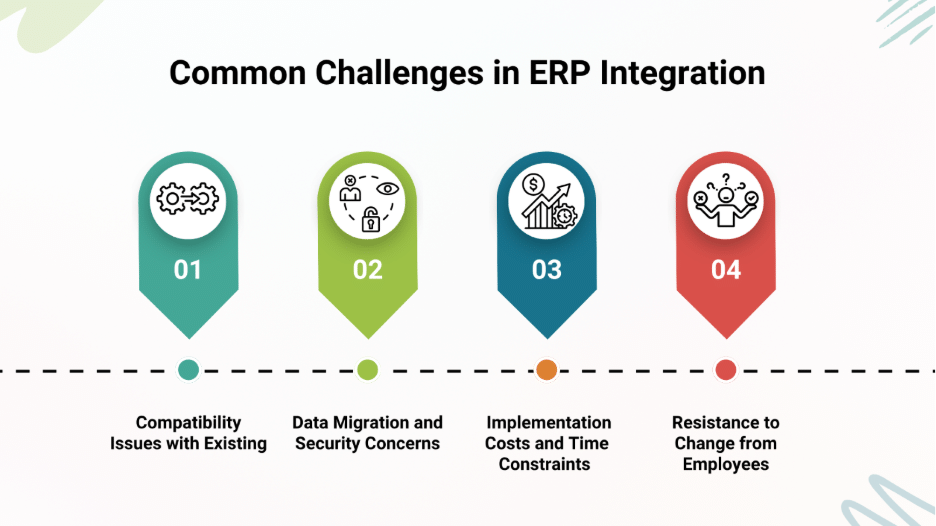
While connecting software delivers clear operational gains, implementation projects often run into hurdles:
1. Legacy systems
Industrial environments frequently rely on legacy equipment and legacy software built decades ago. These tools lack modern REST APIs or native cloud connectors, requiring custom middleware wrappers or OPC-UA adapters to extract operational data safely.
2. Lack of skilled resources
Integrating complex operational technology (OT) with enterprise information technology (IT) requires deep technical expertise across database architectures, web protocols, and industrial automation. In-house teams often lack the bandwidth or specialized skill sets to manage these projects alongside daily support work.
3. Choosing the wrong tool
Selecting an integration architecture that fails to match your operational throughput can stall production. Off-the-shelf connectors might handle basic field mapping, but struggle with complex manufacturing logic, custom bill-of-materials structures, or high-frequency machine data streams.
4. Lack of accountability
When integrations span multiple software vendors, internal IT departments, and shop floor managers, project ownership often gets diluted. Without a clear lead taking end-to-end accountability, integration efforts risk stalling during testing and user adoption.
Best Practices for Implementing Manufacturing Systems Integration
Successfully modernizing plant operations requires a thoughtful strategy that aligns technical architecture with business goals.
1. Start with main goals
- Define clear operational outcomes before writing code. Are you aiming to reduce scrap rates, accelerate customer quote generation, cut manual data entry errors, or gain real-time visibility into work order progress?
- Grounding your integration in concrete business metrics keeps the project focused on what matters most.
2. Audit existing systems and data health
- Review every software platform, custom database, and manual spreadsheet in your current workflow.
- Document existing data structures, API capabilities, and data quality issues. Connecting systems that contain dirty or duplicated records will only push bad information across your business faster.
- Clean up item masters, customer records, and vendor catalogs beforehand.
3. Adopt open communication standards
- Avoid building rigid, proprietary bridges between applications.
- Standardize on open protocols like REST, GraphQL, MQTT, or OPC-UA.
- Using open communication standards ensures your integration framework scales easily as you swap out legacy tools or add new machinery down the road.
4. Implement defense-in-depth security
- Connecting operational technology (OT) to cloud platforms and business IT networks creates new potential security risks.
- Implement robust defense-in-depth security measures, including role-based access controls, encrypted API tokens, strict network segmentation, and secure webhooks.
5. Pilot before full rollout
- Avoid attempting a global rollout across all plant locations at once.
- Choose a single high-impact workflow, such as automating CAD-to-ERP BOM transfers or implementing a CRM integration with order entry, and test it in a controlled environment.
- Validate data accuracy, refine error-handling procedures, and collect feedback from operators before expanding across the factory.
Conclusion
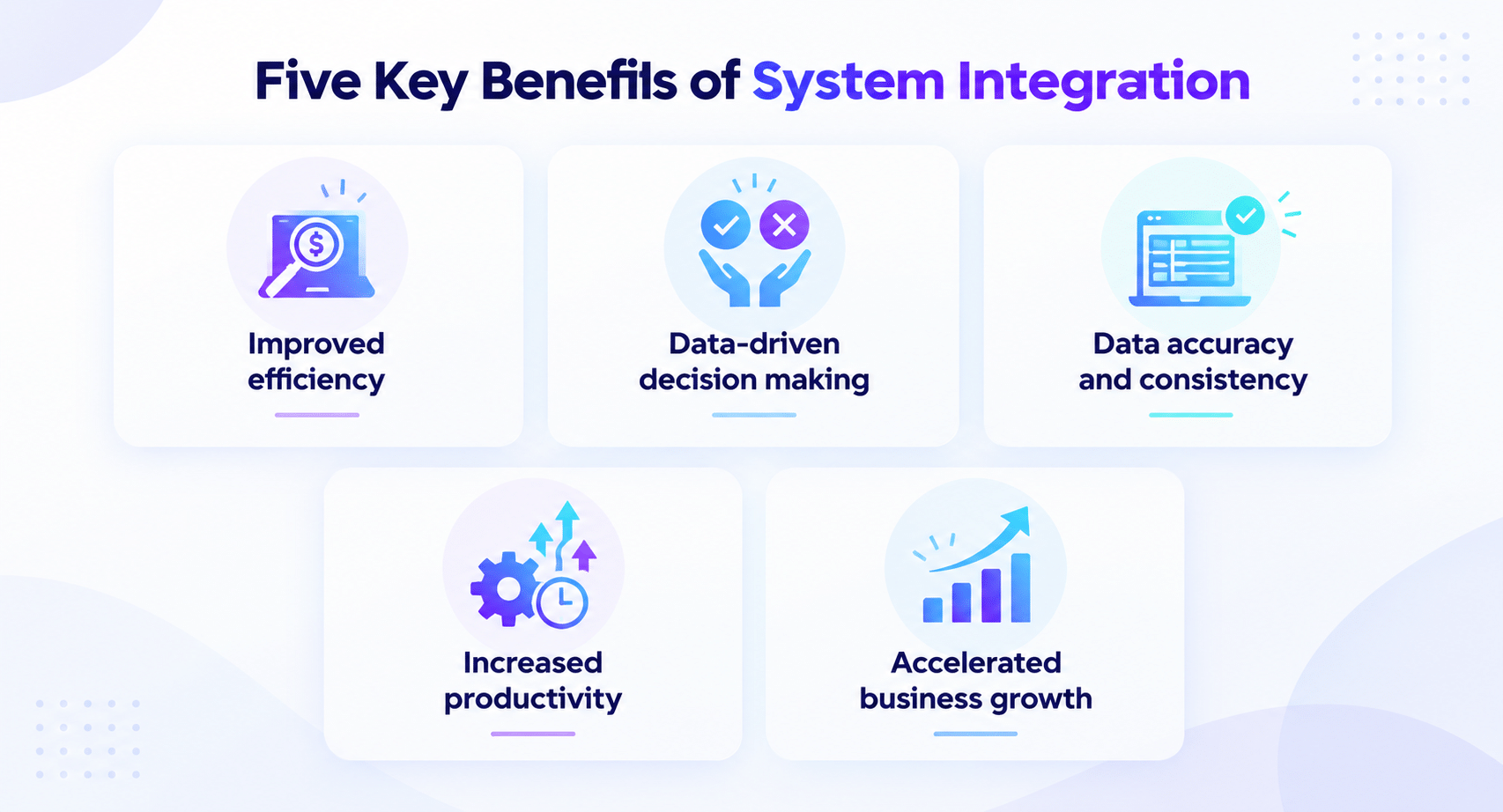
Systems integration transforms fragmented production lines into connected, agile digital ecosystems. By linking your ERP, PLM, MES, and business platforms, you eliminate manual double-handling, improve inventory accuracy, and gain live operational visibility across your factory floor.
Navigating legacy software, complex manufacturing data flows, and custom API architectures requires a partner with deep technical and industrial experience. Inevia is a trusted partner for system integration. We design and deploy tailored integration solutions that unify your business software, clean up operational data pipelines, and keep your production running smoothly.
Need help to manage your IT systems? Contact Inevia for your system integration requirements.
FAQs
1. What are the key benefits of system integration for manufacturers?
System integration eliminates manual data entry, cuts operational errors, accelerates order-to-delivery cycles, and gives decision-makers real-time visibility across the entire manufacturing value chain.
2. How long does a typical system integration project take?
Project timelines vary based on scope and system complexity. A targeted point-to-point API integration might take a few weeks, while an enterprise-wide integration connecting ERP, MES, and PLM platforms across multiple plants typically spans several months.
3. What is the difference between data integration and system integration?
Data integration focuses specifically on consolidating, transforming, and centralizing data from multiple sources into a unified repository (like a data warehouse). System integration goes further by connecting live software applications so they can exchange functional requests and trigger automated actions in real time.
4. Do we need to replace our legacy machinery and software to integrate?
No. Custom API bridges, modern middleware platforms, and specialized industrial connectors allow modern integration frameworks to extract data from legacy systems without requiring expensive hardware or software overhauls.