Why Digital Transformation Fails in Manufacturing

In manufacturing, failure rarely looks dramatic.

There is no single moment when a digital transformation initiative collapses. No red flag that signals “this is not working.” Instead, failure arrives quietly, wrapped in progress updates, partial adoption, and polite optimism.

The systems go live. The dashboards populate. The transformation is technically “completed.”

And yet, months later, leadership still asks the same questions.
Operations still rely on manual follow-ups.
Decisions are still made based on experience rather than insight.

This is the most dangerous kind of failure, the kind that appears functional on the surface while slowly draining belief underneath.

Digital transformation in manufacturing does not fail because leaders don’t care or teams don’t try. It fails because the problem is framed too narrowly, and by the time the gap becomes visible, the organization has already moved on.

The Fundamental Misread: Treating Digital Transformation as an Upgrade, not a Redesign

Most manufacturing organizations approach digital transformation the way they approach equipment upgrades, and options are evaluated, a vendor is selected, the system is implemented, and performance improvements are expected to follow. 

This logic works for physical assets, where output changes once the machine is installed. Digital transformation, however, does not behave like physical infrastructure. While machines alter production capacity, digital systems fundamentally change how people think, make decisions, and respond under pressure, and that difference is where many transformation efforts begin to struggle. 

Where Digital Transformation Actually Starts to Unravel

1. Visibility Is Improved, but Control Remains Fragmented

Many transformation initiatives succeed in creating visibility. Far fewer succeed in creating alignment.

Data becomes accessible, but authority does not move with it.

Supervisors can see deviations but cannot intervene without escalation. Managers receive insights that arrive too late to influence outcomes. Executives see performance indicators without clarity on what action is possible at each level.

Over time, data becomes something people observe rather than use.

This creates a subtle but damaging dynamic: information without agency. When teams are shown problems they are not empowered to solve, engagement declines. Systems are viewed as reporting tools, not operational assets.

Transformation stalls not because information is missing, but because decision rights were never redesigned alongside visibility.

2. Digital Systems Are Built on Top of Old Thinking

In many factories, manual processes are simply translated into digital form.

  • The same approvals.
  • The same exceptions.
  • The same unwritten rules.

Only now, they exist inside software.

This approach feels safe because it minimizes disruption. But it also locks inefficiencies into code. When pressure increases,  missed targets, quality deviations, urgent orders –  people revert to what they trust. Emails. Calls. Side conversations. Spreadsheets.

The system remains technically active, but operationally optional. This is not resistance to change. It is a signal that the system failed to absorb reality, so reality bypassed it.

Tip: If your systems work best on calm days and get ignored on hard ones, transformation has not truly occurred. 

3. Transformation Lives in Programs, Not in Daily Work

A recurring issue in manufacturing is where digital transformation actually “lives” within the organization. In many cases, it exists on paper as a roadmap, within a steering committee, or as part of a quarterly update to leadership.

Meanwhile, real manufacturing performance lives elsewhere – in daily execution, shift handovers, and decisions made under pressure on the shop floor. When transformation remains confined to formal structures instead of operational reality, its impact stays limited.

It lives in:

  • How shifts hand over responsibility
  • How deviations are handled at 2 a.m.
  • How priorities are reset when plans break

When digital transformation does not directly change these moments, it remains peripheral. The organization learns to speak the language of transformation without experiencing its impact.

This disconnect is why many leaders feel transformation is always “in progress” but never complete,  because it never entered the operating rhythm of the business.

4. The Shop Floor Is Expected to Adapt to Decisions It Didn’t Shape

Another quiet failure point is how frontline teams are involved. Operators and supervisors often encounter transformation as something already decided. Their role becomes adoption, not contribution.

But manufacturing work is deeply contextual. People closest to the process understand:

  • Where bottlenecks actually form
  • Which data points are unreliable
  • Which steps break down under variability

When this insight is excluded, systems are designed for how work should happen, not how it does happen. Adoption issues follow, not because people resist technology, but because technology ignores lived experience.

5. Data Becomes Abundant While Understanding Remains Thin

Digital initiatives often succeed in capturing more data than ever before.

What they fail to do is help organizations decide:

  • What matters most
  • What requires action
  • What can be ignored

As metrics multiply, attention fragments.

Teams track indicators without context. Leaders receive reports without narrative. Meetings focus on numbers rather than decisions.

Eventually, confidence in data erodes, not because it is inaccurate, but because it is unprioritized. Transformation fails when data exists everywhere but insight exists nowhere.

Reality Check: Manufacturing does not suffer from a lack of data. It suffers from a lack of shared interpretation. 

6. Transformation Is Timed Like a Project, Not Treated Like a Capability

Many manufacturing organizations expect transformation to follow a predictable arc:

  • Implement
  • Stabilize
  • Optimize
  • Move on

But real transformation behaves differently. It evolves, and exposes new constraints, and demands continuous adjustments. 

When leaders expect closure instead of continuity, disappointment follows. Investment slows just as learning accelerates. Momentum is lost not because progress stopped, but because expectations were misaligned.

The most resilient organizations treat digital transformation as infrastructure for decision-making, not an initiative to be completed.

The Deeper Issue Most Strategies Miss: Manufacturing Runs on Judgment

Manufacturing is not just process execution. It is constant judgment under constraint.

  • When to intervene.
  • When to wait.
  • When to prioritize speed over perfection.

Digital systems that ignore judgment undermine trust. Systems that support judgment earn it.

Transformation succeeds when technology:

  • Reduces cognitive overload
  • Makes trade-offs explicit
  • Supports decisions instead of policing behavior

This is where many initiatives fall short, they optimize reporting but neglect thinking.

What Leaders Who Get This Right Understand

They understand that digital transformation:

  • Changes how authority flows
  • Alters how accountability works
  • Forces clarity where ambiguity once existed

They do not rush implementation. They redesign decisions first. They accept discomfort as part of progress.

Most importantly, they recognize that transformation is as much about leadership behavior as operational efficiency.

A More Useful Question to Ask Before the Next Initiative
Instead of asking – What should we digitize next? Leaders should ask – What decisions are hardest for us today, and why? The answer to that question determines whether digital transformation becomes a strategic advantage or another quiet disappointment.

FAQs

  1. Why does digital transformation fail even in advanced manufacturing organizations?

Because digital tools are often introduced without changing how decisions actually get made on the ground. The factory may look more modern, but the underlying habits remain the same. When systems don’t influence daily decisions, they slowly lose relevance.

  1. Is resistance to change the main reason digital initiatives fail?

What’s often labeled as resistance is usually confusion or misfit. People struggle with systems that don’t reflect real working conditions or add friction to already demanding roles. When tools feel disconnected from reality, teams naturally fall back on what they trust.

  1. Why do manufacturers struggle to see ROI from digital transformation?

Many organizations expect quick financial returns while overlooking operational improvements that take time to compound. Benefits like better decision speed, reduced firefighting, and fewer errors are real, but they are rarely measured upfront. When value isn’t clearly defined, success is hard to recognize.

  1. What is the earliest sign that a digital transformation is failing?

When new systems are live, people still rely on spreadsheets, calls, or side conversations to get work done. This usually means the tools haven’t earned trust or solved real problems. Over time, this gap only widens.

Edge Computing and MES: The Fastest Way to Smarter Decisions on the Shop Floor

American manufacturing doesn’t slow down for anyone,  not market volatility, not supply chain challenges, and definitely not outdated systems that push data back and forth like it’s still 2010.

Across production floors in the U.S., leaders are waking up to one uncomfortable reality of Edge Computing and MES.

The farther your data has to travel, the more money you lose.

Every delay, even a few seconds, can mean scrap, missed orders, rework, or a line coming to a standstill. Decisions that should happen instantly get stuck waiting for cloud roundtrips, manual checks, or legacy systems that weren’t built for real-time operations.

That’s why more manufacturers are turning to a powerful combination built for speed:
Edge Computing and MES.

When intelligence moves closer to your machines, operators, and workflows, your factory doesn’t just run faster, it starts thinking faster.

Why Edge Computing and MES Is Becoming Non-Negotiable for US Manufacturers

Speed used to be a competitive advantage.
Today, it’s survival.

In industries where minutes matter, automotive, electronics, industrial equipment, aerospace, medical devices, delays are more expensive than ever. Edge computing and MES flip the traditional architecture by shifting processing power directly to the source.

Instead of sending everything to the cloud, the edge handles:

  • Machine signals
  • Quality checks
  • Sensor data
  • Workflow triggers
  • Operator inputs

Right where events occur.

This means zero waiting, zero lag, and zero dependency on unstable connectivity.

What this unlocks for manufacturers:

  • Faster cycle-time decisions
  • Instant alerts for deviations
  • Automated responses to machine behavior
  • Real-time quality enforcement
  • Consistent performance even with weak or fluctuating connectivity

In short, your shop floor becomes self-aware and self-correcting.

Why Edge and MES Is So Powerful Together

Edge computing alone is fast.
MES alone is structured.

Together, they turn real-time speed into real-time action.

1. Immediate Response to Machine Events

If a spindle overheats, torque value shifts, or a sensor detects material variation, the edge triggers the MES instantly. No round trip. No latency.

2. Local Decisions That Improve Global Performance

The edge makes micro-decisions where they matter. The MES maintains big-picture clarity across production, planning, quality, and scheduling.

3. Offline Resilience

Cloud down? Internet unstable? No problem.
The edge keeps collecting, validating, and responding until sync resumes.

4. Smart Automation at the Source

Workflows become genuinely automated:

  • Pause a machine
  • Trigger an inspection
  • Notify an operator
  • Redirect a job
  • Flag a deviation

All within milliseconds.

Key Benefits of Edge Computing and MES for Modern Manufacturing

Below is a balanced mix of paragraphs and bullets for clarity, flow, and readability.

1. Real-Time Production Visibility Without Latency

Most factories rely on systems that process data upstream before making it useful. That delay hurts accuracy. When sensor data and machine signals are processed at the edge, visibility becomes immediate.

This delivers:

  • Real-time equipment status
  • Live production dashboards
  • Up-to-the-second throughput tracking
  • Faster root-cause analysis

Visibility becomes actionable the moment it happens.

2. Zero-Lag Quality Control

Quality issues emerge in milliseconds, not at the end of a shift.

With edge and MES-enabled checks, manufacturers can:

  • Catch deviations early
  • Trigger instant alerts
  • Prevent scrap by stopping machines
  • Enforce digital work instructions
  • Validate operator and measurement inputs

The result is tighter control, lower defects, and higher consistency.

3. Stronger Compliance and Traceability

For precision-driven industries, accurate records are mandatory.

Edge and MES support compliance through:

  • Localized data capture
  • Automatic audit trail creation
  • Real-time recordkeeping
  • Operator verification embedded in workflows
  • Full material and process genealogy

Traceability becomes built-in, not manual.

4. Better Machine Utilization

When machines communicate instantly, planning becomes dynamic.
Manufacturers see improvements in:

  • OEE
  • Downtime reduction
  • Changeover times
  • Scheduling accuracy
  • Predictive adjustments

This allows teams to extract more value from existing equipment without additional capital expenditure.

5. A Future-Proof Architecture for Scaling

As US factories scale, they need an infrastructure that can keep up.
Edge Computing and MES provide:

  • Support for more machines and sensors
  • Higher data throughput
  • Flexible integration with new technologies
  • Industry 4.0 capabilities
  • Reduced reliance on cloud bandwidth

The architecture grows with your operations, not against them.

Where Edge Computing and MES Makes the Biggest Impact

Here are the real-world environments where this combination drives the highest ROI:

  • High-speed assembly lines
  • Multi-line manufacturing plants
  • Electronics and semiconductor operations
  • Aerospace and automotive production
  • Contract manufacturing environments
  • Food and beverage processing lines

Each benefits from faster responses, fewer errors, and more control.

How inevia Makes Edge Computing and MES Actually Work on the Shop Floor

Many systems promise real-time insights.
Inevia delivers them with architecture built for real factory conditions.

The platform enables:

  • Seamless multi-protocol machine data capture
  • Ultra-fast local processing
  • Continuous sync with enterprise systems
  • Operator-friendly interfaces
  • Real-time alerts and workflows
  • Flexible integration for any machine or line

It’s built to reduce friction and simplify operations.

The Bottom Line: Fast Factories Win
Speed isn’t a nice-to-have anymore, it’s the deciding factor in whether a modern factory keeps up or falls behind. Pairing Edge Computing and MES gives manufacturers what cloud-only systems simply can’t: immediate decisions, zero operational lag, and uninterrupted clarity across every line and every shift.

In a market where customer expectations, demand changes, and supply chain pressures move fast, the factories that act fastest win. And with edge-enabled intelligence powering your operations, you’re not just keeping pace, you’re staying ahead.

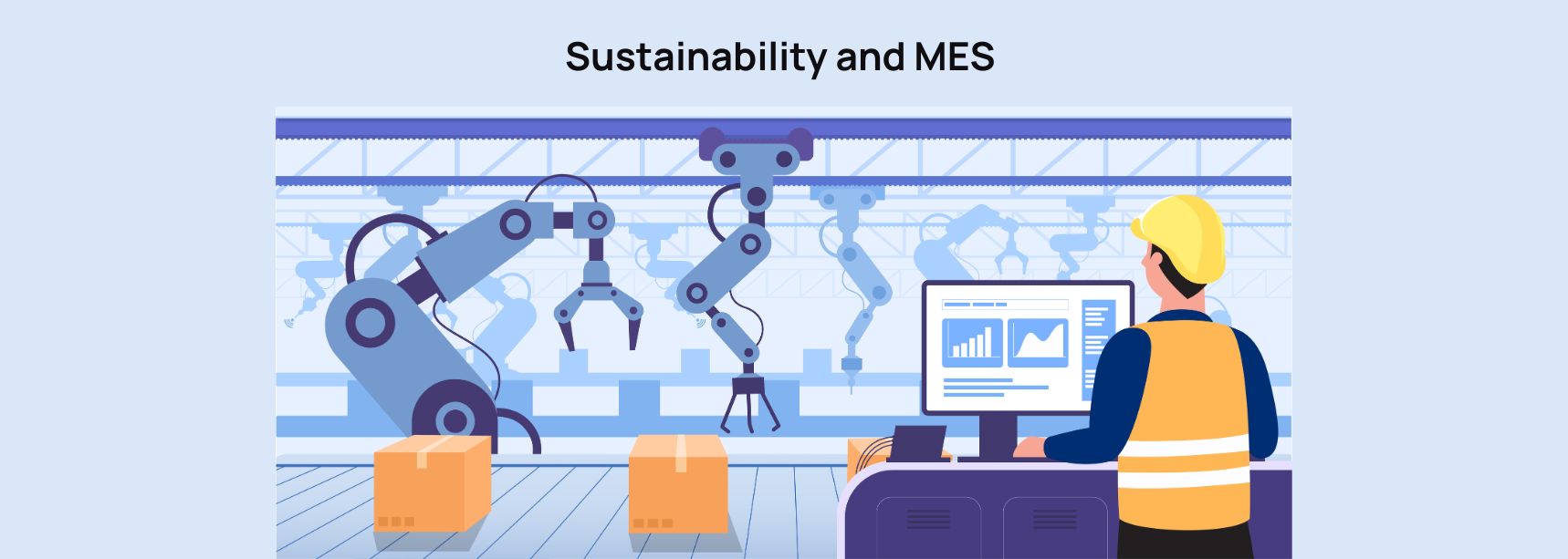
Sustainability and MES: How Smart Execution Systems Cut Waste, Energy Use and Costs Without Slowing You Down

Sustainability and MES once meant compliance. It focused on meeting regulations, submitting reports, and ensuring operations passed audits. Today, sustainability is directly tied to efficiency, profitability, and long-term resilience. Manufacturers are expected to produce more with fewer resources, reduce waste without compromising output, and manage rising energy costs while staying competitive.

These challenges cannot be solved through effort alone. They require visibility into what is actually happening on the shop floor and the ability to act on that information in real time. This is where a modern Manufacturing Execution System, or MES, becomes essential. Sustainability improves not because teams work harder, but because they can finally see clearly and execute precisely.

The Real Sustainability Challenge on the Shop Floor

Waste and energy loss rarely happen because teams do not care. They happen because manufacturing environments are complex and often disconnected. Data lives in silos, feedback is delayed, and decisions are made without full context.

In many plants, scrap is discovered only during final inspection. Rework occurs because instructions were unclear or outdated. Machines continue running and consuming power while waiting for materials or approvals. Operators rely on experience instead of real-time data to make decisions.

These inefficiencies may seem small in isolation, but over time they compound into significant cost and environmental impact. A modern MES addresses this challenge by connecting people, machines, materials, and processes into a single execution layer that supports informed decisions at the exact moment they matter.

MES as the Foundation of Sustainable Manufacturing

An MES acts as the digital backbone of production operations. It ensures that what is planned is executed correctly, consistently, and efficiently on the shop floor. For small and mid-sized discrete manufacturers, systems like Traveler MES by inevia provide enterprise-level visibility and control without unnecessary complexity.

By capturing real-time production and quality data, MES platforms help manufacturers reduce waste and energy use as part of daily operations. Sustainability and MES is no longer a separate initiative or afterthought. It becomes embedded into how work is executed every day.

Reducing Material Waste Through Better Execution Control

Material waste is one of the most visible and costly sustainability challenges in manufacturing. Scrap and rework consume raw materials, energy, and labor while creating no additional value.

Digital work instructions and standardized execution

MES reduces material waste by bringing structure and consistency to execution. Digital work instructions ensure that every operator follows the same approved process, regardless of shift or experience level. This reduces variability and prevents common execution errors.

In-process quality checks and real-time alerts

In-process quality checks further limit waste by identifying defects as soon as they occur. Instead of discovering problems at the end of production, teams can correct them immediately. Real-time alerts help supervisors intervene before issues escalate.

Over time, manufacturers see:

  • Lower scrap and rework rates
  • Reduced raw material consumption
  • Fewer rejected lots
  • Less energy spent on producing unusable output

Producing the right part the first time is one of the most effective Sustainability and MES strategies available.

Cutting Energy Waste Through Real-Time Production Visibility

Energy consumption in manufacturing is often treated as fixed, but much of it is driven by operational behavior. Idle machines, inefficient scheduling, and unbalanced workloads contribute significantly to unnecessary energy use.

Machine Utilization and Idle Time Visibility

MES provides real-time visibility into machine utilization and production flow. Teams can quickly identify when equipment is running without producing value and adjust schedules accordingly. Production sequencing can also be optimized to reduce frequent start and stop cycles, which consume excess energy.

Supervisors gain access to dashboards and performance metrics that highlight inefficiencies and long-term trends. Over time, this insight helps reduce energy consumption per unit produced and supports more efficient use of power across shifts and lines.

When energy usage is connected directly to execution data, it becomes measurable and controllable.

Continuous Improvement That Makes Sustainability and MES Scalable

Sustainability and MES cannot be achieved through one-time fixes. It requires continuous improvement driven by reliable data and feedback.

Data-Driven Performance Tracking

MES supports this process by collecting detailed production, quality, and performance data over time. Teams can identify recurring bottlenecks, inefficiencies, and sources of waste by comparing performance across shifts, products, and production lines.

Because MES tracks the impact of changes, improvement initiatives can be measured and refined. Decisions are based on evidence rather than assumptions. Over time, small improvements accumulate into meaningful reductions in waste, energy use, and operating costs.

This data-driven approach ensures Sustainability and MES efforts are practical, repeatable, and scalable.

Traceability That Supports Responsible Manufacturing

Sustainability and MES also involves accountability and transparency. Manufacturers need to understand how materials are used, how products move through production, and where issues originate.

End-to-End Production and Material Traceability

MES provides end-to-end traceability by recording key production details such as:

  • Material usage and consumption
  • Process steps and machine activity
  • Operator actions and timestamps
  • Quality outcomes and deviations

This centralized record supports regulatory compliance, sustainability reporting, and faster root-cause analysis. It also allows manufacturers to demonstrate responsible practices to customers, partners, and stakeholders with confidence.

Traceability ensures Sustainability and MES efforts are backed by data, not assumptions.

Optimizing Resources Without Overburdening Teams

Effective Sustainability and MES balances machines, materials, and people. MES helps manufacturers optimize resource utilization without increasing pressure on the workforce.

By aligning workloads with actual capacity and reducing manual coordination, MES creates more predictable and stable operations. Operators work with clear instructions and timely feedback. Machines run more efficiently, and materials are used intentionally.

Sustainable manufacturing is not only about reducing environmental impact. It is also about building operations that are resilient, efficient, and humane.

Why MES Turns Sustainability into a Competitive Advantage

When Sustainability and MES are embedded into daily execution, it becomes a source of operational strength rather than a cost center. MES enables manufacturers to reduce waste, lower energy consumption, and improve productivity at the same time.

With real-time visibility and structured execution, sustainability becomes part of how work is done every day. Manufacturers no longer need separate initiatives to become more sustainable. They need better execution supported by the right digital systems.

Building Sustainable Manufacturing Through Smarter Execution

Sustainable manufacturing is built through everyday decisions on the shop floor. When manufacturers have real-time visibility, standardized execution, and reliable data, sustainability becomes a natural outcome rather than an added responsibility.

Manufacturing Execution Systems play a critical role in this shift. By reducing material waste, improving energy efficiency, enabling continuous improvement, and strengthening traceability, MES helps manufacturers operate with greater intent and accountability. Systems like Traveler MES support this transformation by embedding sustainability directly into how production is planned, executed, and improved.

As manufacturing continues to evolve, the organizations that succeed will be those that align efficiency with responsibility. Smarter execution leads to lower waste, better energy usage, and more resilient operations. With the right MES in place, sustainability becomes a competitive advantage built into the core of manufacturing operations.

Cloud-Native MES: Why U.S. Manufacturers Are Moving Off Premises

In factories across the U.S., something big is changing. Clipboards are being replaced by dashboards. Machine data flows not through cables, but through the cloud. The shift isn’t just technological; it’s strategic.

The modern U.S. manufacturer is chasing agility, scalability, and insight. And right at the center of this transformation lies the Manufacturing Execution System (MES), the digital core that synchronizes people, machines, and production in real time.

For years, MES platforms lived on-premises tied to local servers, expensive IT upkeep, and siloed data. But as production networks expand, costs rise, and hybrid teams become the norm, a new generation of MES has taken over: cloud-native MES.

Unlike older systems that were merely “lifted and shifted” to a remote server, cloud-native platforms like Traveler MES are designed from day one to live, breathe, and evolve in the cloud.

What Is a Cloud-Native MES?

Imagine your MES not as a heavy system bolted to your plant floor, but as a connected, flexible network that grows with your business. That’s the essence of a cloud-native MES built using microservices and APIs that exist entirely in the cloud, enabling real-time visibility across multiple plants, lines, and shifts.

In simpler terms, it’s not your old MES just sitting on a virtual server. It’s an ecosystem engineered for speed, scale, and continuous improvement.

Here’s what defines a true cloud-native MES:

  • Scalability: Add or remove plants and production lines with ease.
  • Resilience: Continuous uptime and automatic recovery.
  • Integration readiness: Plug seamlessly into ERP, IoT, and analytics platforms.
  • Security by design: Role-based access and end-to-end encryption.
  • API-first architecture: Ensures modular updates without downtime.

Traveler MES, for instance, was designed around these principles offering U.S. manufacturers a system that adapts to them, not the other way around.

Why U.S. Manufacturers Are Moving Off-Premises

This shift cloud-native MES isn’t theory. It’s happening across automotive, aerospace, electronics, and precision engineering plants. And it’s being driven by five key factors:

1. Cost and Infrastructure Pressures

Running local servers and managing IT infrastructure is costly and rigid. Every upgrade requires hardware, technicians, and downtime. With cloud-native MES, manufacturers switch from CAPEX to OPEX, paying only for what they use,and never worrying about obsolete servers again. 

2. The Agility Imperative 

The pandemic revealed a hard truth: manufacturing can’t afford silos anymore. When plants shut down, remote access became a survival need. Cloud-native MES platforms allowed teams to monitor KPIs, quality alerts, and performance dashboards from anywhere, keeping operations moving when it mattered most.

3. Multi-Site and Supply-Chain Visibility

Many U.S. manufacturers now run distributed operations from Ohio to Mexico to Southeast Asia. A cloud-native MES centralizes visibility, offering leadership a unified view of productivity, bottlenecks, and quality across sites.

4. Faster Deployment & Continuous Improvement

Legacy MES implementations could take months or years to roll out. Cloud-native platforms deploy in weeks, with continuous updates that enhance performance and security, no lengthy IT tickets, no disruption.

5. Data-Driven Decision Making

Data is the new raw material. Cloud-native MES brings all operational data into a single environment, enabling analytics that fuel predictive maintenance, quality optimization, and performance benchmarking.

Cloud-Native vs. Cloud-Hosted MES: The Big Difference

Here’s the truth most overlooked: putting a legacy MES on a cloud server doesn’t make it cloud-native it only makes it hosted.

FeatureCloud-Hosted MESCloud-Native MES
ArchitectureLegacy system hosted on a virtual serverBuilt with microservices for cloud environments
ScalabilityLimited, manual setup for new plantsAutomatic scaling and provisioning
UpdatesManual, scheduled downtimeContinuous deployment and updates
IntegrationComplex, IT-heavyAPI-first, plug-and-play
Cost ModelHigh CAPEX + maintenanceOPEX subscription, pay-as-you-scale
ExampleRe-engineered legacy MESTraveler MES, Pico MES

Key Benefits of Cloud-Native MES for U.S. Manufacturers

1. Real-Time, Multi-Plant Visibility

Manufacturers can now view OEE, quality, and throughput across every facility from a unified dashboard. Traveler MES makes this possible by offering cross-plant analytics that pinpoint inefficiencies in minutes not hours.

2. Rapid Scalability

Expanding to a new state or adding a production line? Cloud-native MES scales automatically, letting teams replicate proven workflows without additional IT overhead.

3. Lower Total Cost of Ownership

No more servers, local maintenance, or manual patching. Manufacturers using Traveler MES report significantly reduced operational costs within the first year of adoption.

4. Seamless Integration

Modern MES like Traveler MES integrate easily with ERP, IoT sensors, AI tools, and quality systems, enabling one connected manufacturing ecosystem.

5. Continuous Improvement through Data

Access real-time KPIs, traceability reports, and operator logs that fuel process optimization essential for lean and Six Sigma practices.

6. Enhanced Security and Compliance

Top-tier cloud infrastructure comes with advanced security certifications (SOC 2, ISO 27001). Traveler MES adds role-based permissions and secure audit trails that meet FDA 21 CFR Part 11 and ISO 9001 standards.

Addressing Common Concerns

Even with these advantages, some manufacturers hesitate. Let’s address the key concerns:

Concern 1: “What about data security?”
Cloud security has matured far beyond traditional setups. Traveler MES uses end-to-end encryption, MFA, and geo-redundant backups, ensuring uptime and compliance at every level.

Concern 2: “What if connectivity drops?”
Traveler MES bridges this with offline caching and hybrid edge connectivity, so production continues uninterrupted even with unstable internet.

Concern 3: “Can we still customize?”
Absolutely. Modern MES platforms are modular and configurable. Traveler MES offers role-based dashboards and workflow templates that fit each manufacturer’s unique environment.

Traveler MES: Powering the Cloud-Native Revolution

Traveler MES was built on a single idea: manufacturing data should flow freely, securely, and instantly.

Unlike traditional MES tools that struggle with scalability, Traveler MES offers a true cloud-native architecture designed for U.S. manufacturers that need speed, insight, and flexibility.

Traveler MES empowers manufacturers to:

  • Access real-time dashboards across every facility.
  • Monitor work orders, traceability, and quality in one interface.
  • Eliminate paper-based processes with digital traveler records.
  • Connect operators, machines, and managers seamlessly.
  • Achieve smarter, faster decision-making without IT bottlenecks.

Whether you’re scaling your production footprint or integrating AI-driven analytics, Traveler MES lays the digital foundation for intelligent manufacturing.

Making the Move Seamless

Moving from an on-premise to a cloud-native MES doesn’t have to be disruptive.
Here’s a simple roadmap for U.S. manufacturers:

  1. Audit your current MES infrastructure:  Identify which modules are critical (production, quality, maintenance, traceability).
  2. Define success metrics: Align MES KPIs with business outcomesOEE improvement, downtime reduction, faster NPI (new product introduction).
  3. Choose a partner, not just a vendor: Work with providers like Inevia (Traveler MES) who support phased migration, integration, and training.
  4. Start with a pilot site: Validate performance improvements before scaling enterprise-wide.
  5. Train teams for adoption:  Ensure operators and supervisors understand digital workflows and dashboards.
  6. Iterate and expand:  Once results are visible, roll out across additional sites.

The Future of MES Is in the Cloud

Manufacturing is no longer confined by walls or servers. It’s defined by data flowing freely, securely, and intelligently. As U.S. manufacturers chase global competitiveness and sustainability, cloud-native MES systems like Traveler MES are becoming not just an advantage, but a necessity.

Because the factory of the future isn’t bound to a location, it’s connected by information, powered by insight, and built on the cloud.

How Downtime is minimized by Traveler MES

In small and mid-sized factories, time isn’t just money; it’s reputation, customer satisfaction, and operational momentum. One small delay can trigger a domino effect, stalling production lines, missing deadlines, and stretching costs beyond control.

For discrete manufacturers who rely on precision, traceability, and timely delivery, these delays can be costly in more ways than one. But what if downtime wasn’t just monitored after the fact, but prevented altogether?

Traveler MES by Inevia is built specifically to tackle these challenges from the ground up. Not only does it align with your production workflow and it actively improves it, helping you reduce downtime at every critical point in your cycle.

Why Downtime is More Than Just Lost Time

In discrete manufacturing, every part is unique, every batch has a story, and every process must follow a strict sequence. When production stops, you don’t just lose minutes you lose trust.

Downtime can come from:

  • Miscommunication between teams
  • Missing or incomplete instructions
  • Poor visibility into where a product is in its cycle
  • Unlogged quality issues
  • Delays in raw material prep or inspection

These aren’t just technical hiccups, they’re blockers to operational efficiency. They slow your team, stress your delivery timelines, and weaken your competitive edge.

The Hidden Costs of Production Delays

You might not always see the numbers, but they’re there.

  • Idle time: Machines wait, people wait, orders wait.
  • Confusion and rework: Operators miss steps due to outdated instructions.
  • Delayed shipments: One late order means a missed customer window.
  • Wasted materials: Without clear tracking, you might scrap parts that could’ve been fixed.

For small and mid-sized businesses where resources are tight, these losses hit harder. Traveler MES helps you cut through the noise and focus on what matters smooth, traceable production with minimal downtime.

How Traveler MES Works Across Your Manufacturing Cycle

Let’s walk through how Traveler MES supports each step of your discrete manufacturing workflow while actively reducing downtime throughout the process.

1. Knitting: Organizing the Production Plan

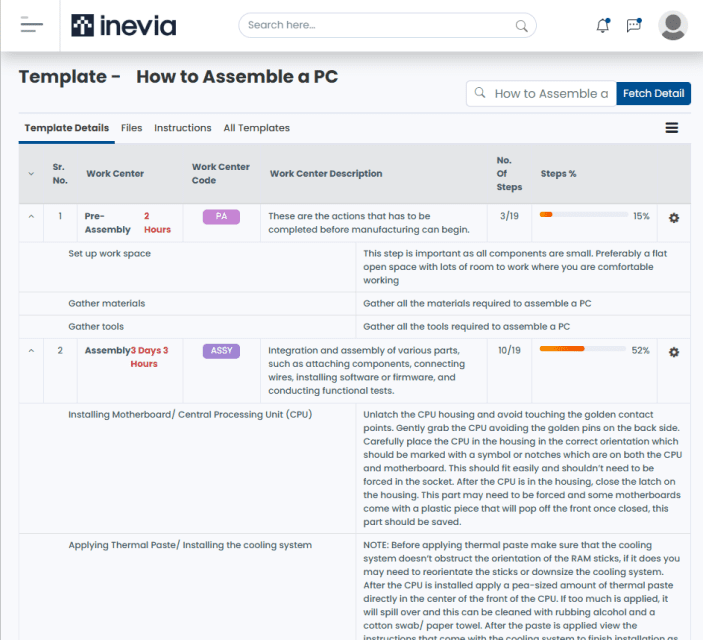
Every manufacturing process begins with a clear plan and that’s exactly what the knitting stage is all about. This is where you define the part, create a work order, and get your team aligned before production even begins. With Traveler MES, this stage becomes incredibly efficient. You can set up each job using a standardized template that includes the part’s identity defined by an 8-digit code, security level, and the appropriate work centers assigned for production. Everything is structured and centralized, reducing the back-and-forth and confusion that usually eats into valuable production time.

How it helps reduce downtime: Instead of teams losing time trying to figure out next steps or searching for missing instructions, everything they need is already documented and ready to go from the beginning. It sets the tone for a smooth, uninterrupted production cycle.

2. Product Genealogy: Serial Number Tracking and Traceability

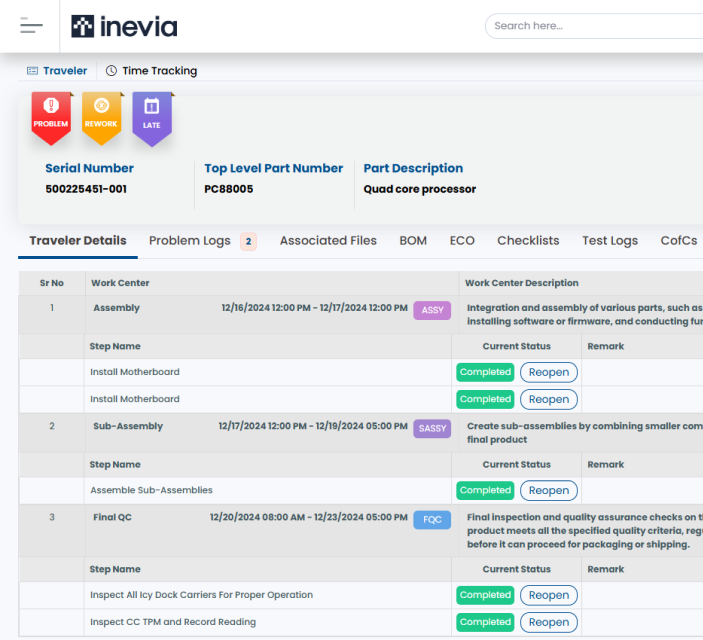
Every unit you produce carries a story. From raw material to finished product and traveler MES makes sure you never lose track of your story, With serial number tracking built right into the system, you get a complete view of each product’s journey. You can trace where it’s been, who worked on it and what exactly was done at each step in the product genealogy phase.

How it helps to reduce downtime: 

Let’s say a defect pops up later during QA or after delivery. Instead of pausing production to dig through paperwork or guess where things went wrong, you already have the full trail. That means less disruption and faster resolution.

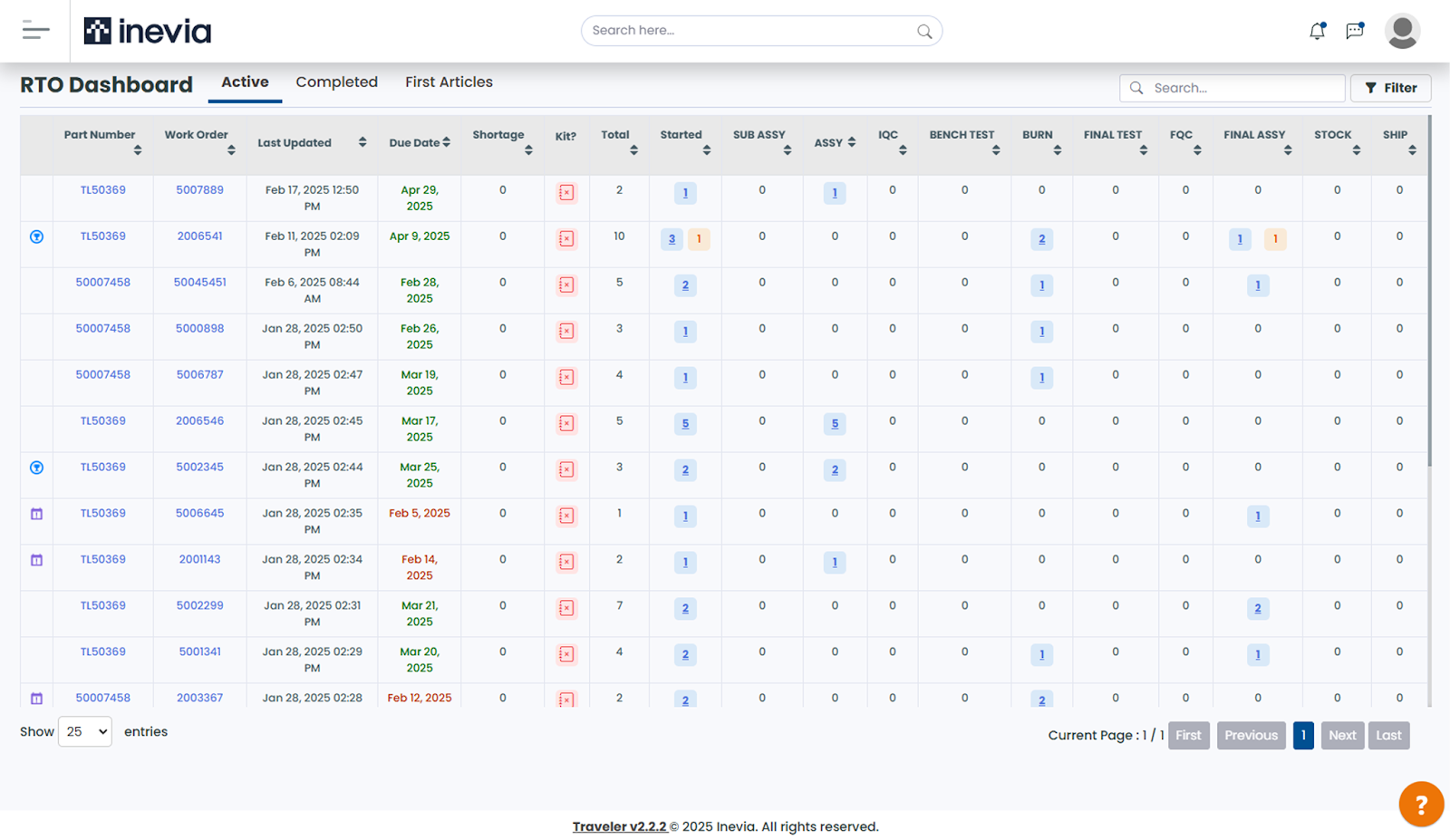
3. Production Tracking: Live Status with Real-Time Order (RTO) Dashboards

As each product makes its way through your shop floor, Traveler MES keeps you in the loop with real-time production tracking. The RTO dashboards show live updates on where every order stands whether it’s moving ahead smoothly or stuck at a work center.

How it helps reduce downtime: 

You don’t need to send someone to chase down status updates. If there’s a bottleneck or delay, you see it right away and so you can fix it before it escalates. It keeps the production line flowing without unnecessary interruptions.

4. Quality Inspection: Built-In Reporting for Immediate Action

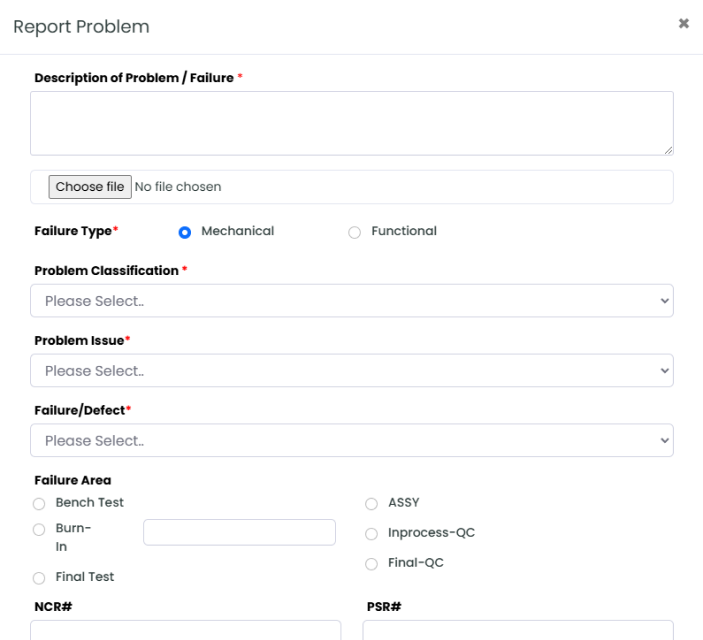
When a defect is found, timing is everything. Traveler MES enables your operators to report issues on the spot right inside the traveler document. There’s no need to stop the line or wait to fill out paper forms. Quality checks become part of the flow, not a separate task.

How it helps reduce downtime: Since problems are logged instantly, your team can act faster and avoid the snowball effect of unresolved issues. There’s no backlog of QA reports to deal with later.

5. Digital Work Instructions: Clarity at Every Step

Printed SOPs often become outdated or get misplaced, slowing down your operators and causing unnecessary errors. Traveler MES solves that with dynamic, digital work instructions. These are easy to follow, always current, and tailored to each specific task.

How it helps reduce downtime: 

There’s no more confusion or delay while waiting for clarifications. Operators get accurate, step-by-step guidance directly on their screens, so they can do the job right the first time.

6. Dashboards: Centralized Oversight for Smarter Decisions

Traveler MES doesn’t just help on the floor it empowers your leadership too. Everyone from supervisors to department heads can access dashboards customized to their role. These dashboards give a clear view of productivity, user activity, issue logs, and more.

How it helps reduce downtime:

With no blind spots, your team leads can act on real-time data rather than assumptions. They see where support is needed and can make informed decisions faster keeping production on track.

Why Traveler MES Stands Out

Unlike many traditional MES systems that feel overloaded with features you’ll never use, Traveler MES is different. It’s lean, focused, and built from real, on-the-ground manufacturing experience and not just a software wishlist. Developed in-house by a team that understands the daily challenges of discrete manufacturing, it’s designed to solve problems not create new ones.

With Traveler MES, you’re not just capturing data. You’re taking charge of your production process. Here’s what you get:

  • Full traceability of every part and every process, so nothing slips through the cracks
  • Clear, standardized workflows that guide your team step by step
  • Dashboards that reveal bottlenecks before they slow things down
  • Live production tracking that gives you confidence in your next move

See It in Action

Traveler MES is already improving production for manufacturers just like you. If you’re facing recurring delays, unclear instructions, or scattered tracking systems, this is your chance to try something that fits the way you work. Book a demo today and discover how a smarter system can lead to smoother production, fewer delays, and better outcomes for your business.

Most manufacturers are set up and running within a few days. Our team ensures your system is tailored to your workflow.

FAQs

  1. Will it disrupt my existing processes?

Not at all. Traveler MES enhances your current process and it doesn’t replace it. It integrates seamlessly into what you already do.

  1. Do we need any special hardware or ERP system?

No. Traveler MES works independently and is cloud-ready, simple to access from your existing shop-floor systems.

  1. What kind of support do we get?

Our product team is hands-on, responsive, and ready to support your floor teams, not just your IT department.