Best Manufacturing Execution System

We track twenty-dollar pizza deliveries on our phones with pinpoint accuracy. Yet, according to common industry surveys, many managers still rely on clipboards and guesswork to track a twenty-thousand-dollar factory order. Imagine a production floor where every worker knows exactly what to do next, machines run smoothly, and nothing is wasted.

Bringing order to this chaos means closing the information gap between office planners and shop floor machines. If your business software acts as the brain making big-picture schedules, you might ask: exactly what is a manufacturing execution system? Think of it as the factory’s digital nervous system that actually moves the muscles.

Instead of waiting for an end-of-shift paper report to see what went wrong, leaders use real-time data capture to catch problems instantly. The real-time production monitoring benefits are immense, allowing managers to spot a missing part before it causes an expensive assembly line jam. Keeping a live pulse on operations prevents those frustrating daily bottlenecks.

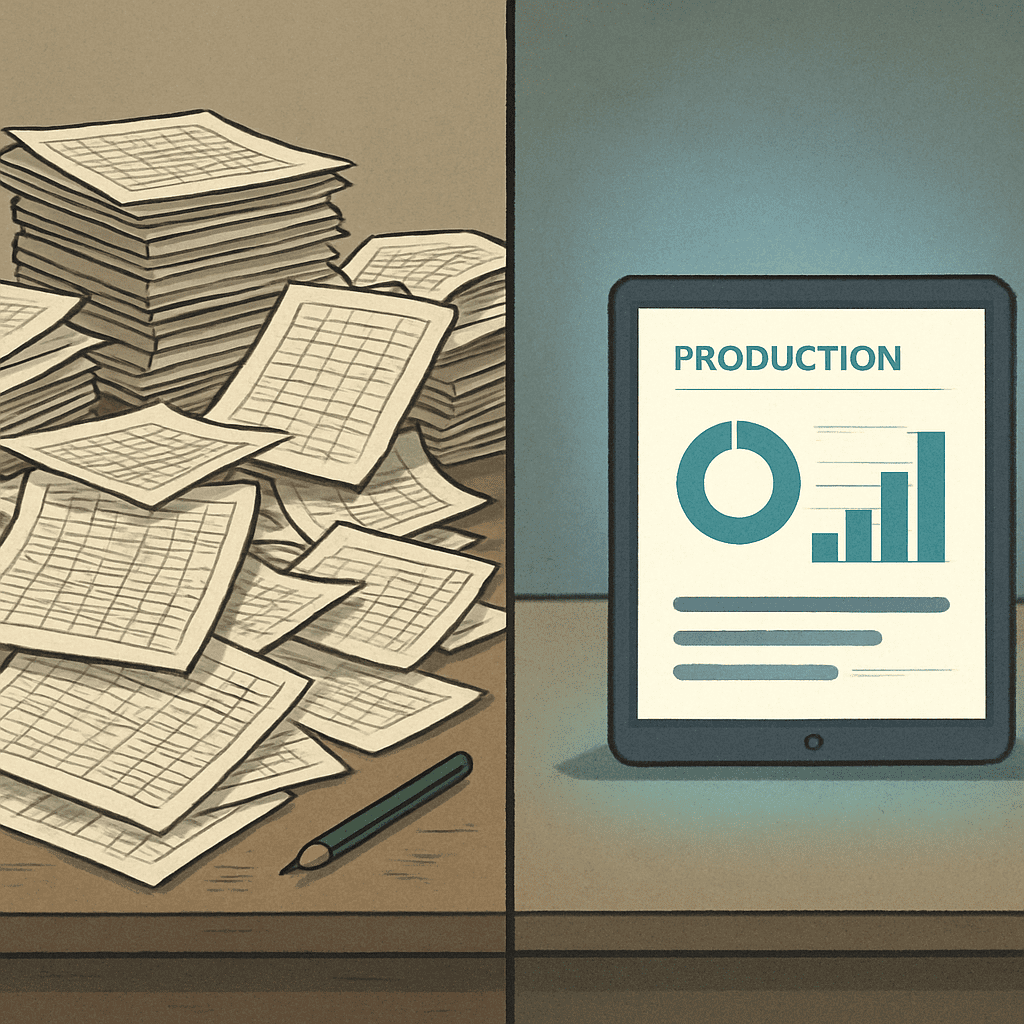
Trading messy spreadsheets for digital tracking delivers a rapid return on investment through fewer errors and less stress. Finding the best manufacturing execution system requires looking at your specific goals and daily routines. Once installed, this software turns unpredictable workshops into profitable, well-oiled machines.
The ‘Head Chef’ of the Factory: Defining MES Through a Simple Kitchen Analogy

Imagine a bustling restaurant where the front-of-house host takes your reservation and plans the evening. It is the head chef, however, who actually shouts the tickets, times the steaks, and ensures your food arrives hot. In the industrial world, a Manufacturing Execution System (MES) plays the exact same role.

Instead of managing line cooks and fresh ingredients, an MES directs machines and factory workers. It translates a high-level business plan into physical action by focusing on three essential jobs:

  • The Organizer (Scheduling): Telling everyone exactly what to build and when.
  • The Watchman (Tracking): Functioning as shop floor data collection software to monitor real-time progress.
  • The Inspector (Quality): Catching mistakes before a defective product leaves the line.

Building countable items like bicycles or smartphones- an industry known as discrete manufacturing- makes this oversight incredibly powerful. The system creates a “digital birth certificate” for every single product, permanently recording exactly which parts were used and who assembled them. Catching a missing screw early delivers real manufacturing process optimization, saving companies thousands of dollars in wasted materials.

Knowing how to perfectly cook the meal is crucial, but someone still needs to pay the rent, take customer orders, and buy the bulk ingredients. This separation of duties perfectly illustrates why your business brain needs a separate system to control physical production.

ERP vs. MES: Why Your Business Brain Needs a Central Nervous System to Move

Most owners use Enterprise Resource Planning (ERP) software as their business brain for handling financial orders and payroll. Yet, relying solely on that brain to run physical machines causes missing parts, panicked phone calls, and mysterious production delays. Grasping mes vs erp differences is straightforward: the ERP decides what needs to be made, while the MES acts as the central nervous system that actually builds it.

Information must flow instantly from the front office to the machines and back again. Manual paper logs create data latency- the costly delay between a factory mistake occurring and management finding out. This lag kills profit margins by ruining hours of raw materials before anyone notices. While basic sensors detect equipment issues, comparing scada vs mes functionality shows that the MES actually translates those raw machine alerts into immediate, corrective instructions for your workers.

Pairing both systems creates a perfect communication loop where front-office data drives automated inventory tracking and traceability solutions to stop errors instantly.

3 Features That Turn Raw Data into Real-Time Profit

Ever wonder how top factories know exactly how well they are running? They use a metric called Overall Equipment Effectiveness (OEE). Think of OEE as a “Factory Health Score” measuring speed, perfect products, and machine reliability. Tracking this score helps a best in class manufacturing execution system instantly spot profit leaks, like a conveyor belt running five percent too slow.

To boost that health score, factory managers rely on an essential feature checklist:

Instead of workers waiting around for materials, smart production scheduling and dispatching features assign daily tasks automatically based on priority and machine availability. If predictive maintenance alerts detect a motor overheating before it breaks, the system immediately shifts the workload to another station. This proactive approach excels at reducing production downtime with software, turning what used to be a frantic factory emergency into a simple, scheduled repair.

Catching mistakes early also saves a fortune in materials. When automated quality gates block a flawed bicycle frame from entering the expensive paint booth, you avoid wasting resources finishing a ruined product.

Finding the Best Value MES: Solutions for Metal Fabrication and High-Tech Growth in 2026

Buying software for a factory is a lot like buying a suit: a custom fit always looks and works better than something bought off the rack. While “one-size-fits-all” software might seem easier initially, factories save far more money by choosing purpose-built solutions designed for their specific rules. For example, the best value manufacturing execution system for metal fabrication will include “out-of-the-box” tools- features that work perfectly right away without expensive custom programming- built specifically to track scrap metal and manage intense furnace temperatures.

Precision matters even more when building electronics or medical devices, where a tiny mistake can ruin a product. Therefore, the best manufacturing execution system for high-tech industries 2026 focuses heavily on strict compliance and tracing every tiny microchip back to its exact origin. These advanced systems prevent costly recalls by ensuring every step meets tight safety standards, acting as an automatic digital bodyguard for your brand’s reputation.

Global manufacturing hubs are already upgrading to meet these highly specialized demands. To stay competitive, factories seeking the best manufacturing execution system USA has to offer are prioritizing “Industry 4.0” readiness, where machines, software, and human workers seamlessly communicate in real time over the internet.

The Cloud-Based Revolution: Why Small Businesses No Longer Need Million-Dollar Budgets

Years ago, factory software required buying massive computer servers- an “On-Premise” setup only giant corporations could afford. Today, everything is shifting toward Software as a Service (SaaS). Think of SaaS like renting movies online instead of buying the DVD player; you simply log in and start working. This makes a cloud based mes for small business a highly affordable reality.

Browsing modern mes software reviews reveals why smaller factories are eagerly upgrading. The top mes solutions store data securely in the cloud, crushing the myth that off-site servers are unsafe- they actually utilize world-class security teams that outmatch local backroom servers. This modern model brings three distinct advantages:

  • Lower upfront cost: You pay an affordable monthly subscription instead of buying expensive hardware.
  • No server maintenance: The software provider handles all the complicated technical updates.
  • ‘Work from Anywhere’ visibility: Managers can check production speeds live from their phones.

Scaling becomes effortless because you can expand from monitoring one machine to an entire floor without installing new hardware.

The 5-Step Selection Guide: How to Pick an MES Provider That Won’t Outgrow Your Team

Figuring out how to choose an mes provider starts with focusing on the people actually using it. Many buyers fall into the trap of “Feature Bloat”- paying for hundreds of complex tools they will never use. Instead, prioritize a clean User Interface (UI), which is simply the digital screen your workers tap. If the UI looks as confusing as an airplane cockpit, your team will resist it.

Once you find a system your team likes, the financial math needs to make sense. When evaluating manufacturing software roi (Return on Investment), the easiest method is comparing “Paper-Time” to “Digital-Time.” Calculate the hours your team spends hunting down paper work orders or fixing manual counting errors, then multiply that by their hourly wage. A good system pays for itself just by eliminating this hidden administrative waste.

Protecting that investment means avoiding “Vendor Lock-in”- a situation where a software company traps your factory’s data so you cannot easily switch to a competitor. To keep your business safe, use The ‘Vendor Litmus Test’ by asking these 5 questions before signing:

  • Can we easily export our production data if we leave?
  • Is live customer support included in the base monthly price?
  • Will this connect smoothly with our current business accounting tools?
  • Do you charge extra fees for regular software updates?
  • Can we run a small trial before committing?

Securing clear answers guarantees you select the best manufacturing execution system software for your real-world needs and sets a strong foundation for deployment.

Moving from Clipboards to Computers: 4 Steps to a Smooth MES Implementation

Rushing a software transition is a guaranteed recipe for a factory shutdown. Before beginning your manufacturing execution system implementation steps, you must organize your existing information. If old clipboards hold incorrect inventory counts, moving them into new software just creates faster mistakes. This is known as “Garbage In, Garbage Out” (GIGO). Set realistic timelines to clean your data first, ensuring your new system is built on a flawless foundation.

Next, test the waters using a Pilot Program on a single production line. Just like a restaurant trying a new dish on a few tables first, this small trial run prevents costly disruptions. It allows you to safely test new tools like automated quality control systems to catch physical product defects early without stopping the whole factory.

How do you get hesitant staff to embrace these updates? Find your “Internal Champions”- respected floor workers who learn the software first and guide their peers. When employees see a trusted coworker easily navigating this Industry 4.0 smart factory integration, they drop their resistance.

Your Smart Factory Action Plan: How to Start Small and Scale Fast

You no longer have to view factory upgrades as a daunting mystery. Because you now understand how shop floor data collection software tracks every part and process, you can approach vendors as a confident, informed buyer. Remember, digital transformation is an ongoing journey of steady improvements, not a single overnight purchase.

Start your journey today with this 30-Day ‘Digital Readiness’ Checklist:

  • Audit paper logs to see exactly where your team loses time.
  • Identify the ‘bottleneck’ machine slowing down your overall production.
  • Request software demos from providers to compare solutions.

We track our pizza deliveries in real-time; your production line deserves that same clarity. Finding the best manufacturing execution system means securing a platform that integrates seamlessly with your supply chain tools and keeps operations running efficiently. Take these simple steps now, and steadily evolve your business into a true smart factory.
What is Poka-Yoke in Manufacturing 

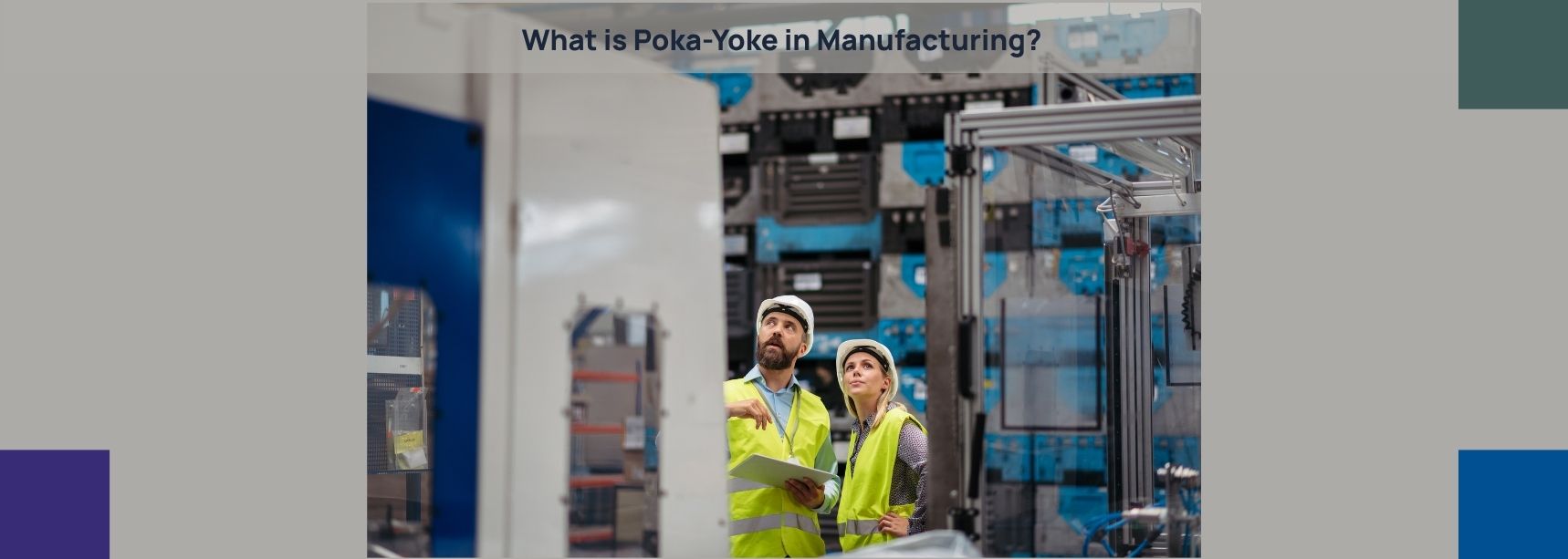
Did you know over 80% of manufacturing defects come from simple human mistakes? This shows how important it is to prevent errors in your production line. Poka-yoke, a Japanese term for mistake-proofing, is a key method to stop these mistakes before they start. It helps make your manufacturing more efficient. 

Poka-yoke is based on quality control and lean manufacturing. It finds, stops, or fixes defects early to keep your products perfect. Using poka-yoke is key to avoiding mistakes, saving money on rework, and making your workflow smoother. It also helps your manufacturing line grow and keep up with digital changes. 

Adding poka-yoke to your processes means better quality control and more efficient production. It’s not just about fixing mistakes. It’s about building a culture that encourages innovation and efficiency at every step. 

Key Takeaways 

  • Poka-yoke is a mistake-proofing methodology aimed at eliminating errors at the source. 
  • It plays a vital role in boosting manufacturing efficiency by stopping defects before they happen. 
  • Based on lean manufacturing and quality control, poka-yoke helps reach zero defects. 
  • It makes workflows smoother and cuts down on expensive rework. 
  • This approach fits with digital transformation goals, making operations scalable and agile. 
  • Poka-yoke encourages a culture of ongoing improvement and excellence in operations. 

Understanding Poka-Yoke 

Poka-Yoke is key to making your manufacturing better and always improving. It makes your work more efficient and changes how you handle mistakes. Instead of just finding errors, you prevent them from happening. 

Definition and Origins of Poka-Yoke 

The poka-yoke definition is about making systems that stop mistakes before they start. These systems make errors easy to spot if they do happen. It all started in Japan in the 1960s, thanks to Shigeo Shingo. He saw how important it was to stop mistakes early in production. 

Using poka-yoke means adding tools and methods to help workers do things right the first time. This lowers the chance of mistakes and makes things more consistent. 

Importance of Poka-Yoke in Manufacturing 

Using poka-yoke in your factory does more than just stop mistakes. It’s a big step towards digital change and helps grow production while keeping quality high. It’s all about making every step in the process better and mistake-free. 

  • Reduces dependency on stringent quality control checks by preventing errors beforehand. 
  • Boosts confidence in the reliability of production processes and products. 
  • Enhances customer satisfaction through consistent product quality. 

By following poka-yoke, you’re not just making your processes better. You’re also helping your whole company grow and stay ahead in the market. This focus on quality and efficiency gives you a strong edge in today’s fast-paced world. 

The Principles of Mistake-Proofing 

Understanding mistake-proofing is key to better manufacturing. These principles help prevent errors and improve quality control processes and process optimization

Key Concepts of Error Prevention 

Mistake-proofing principles focus on stopping errors before they happen. They design systems that are easy to use and safe. This makes mistakes less likely. 

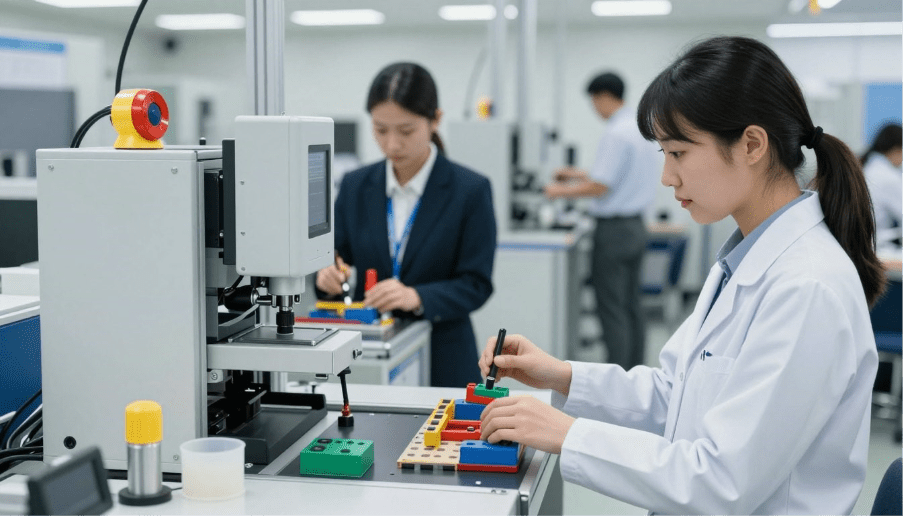
  • Incorporation of sensors and alarms to alert operators immediately when a deviation occurs. 
  • Use of physical guides or templates to ensure parts are assembled correctly without the possibility of error. 
  • Application of color-coding or different shapes for components that should not be interchanged. 

These methods make sure every part of production aims for top efficiency and quality. 

How Mistake-Proofing Works in Practice 

Putting a mistake-proof system in place makes theory real in factories. It uses checks and feedback to quickly find and fix errors. This cuts down on defects and rework. 

  1. Detection of assembly issues before they move down the line, ensuring that problems can be rectified at the earliest stage. 
  1. Integration of real-time data collection tools that monitor quality parameters and alert staff to any anomalies. 
  1. Enhanced training modules that focus on preventing common errors and improving operator awareness and responsiveness. 

Combining error prevention with mistake-proofing leads to better manufacturing. By using these systems, your factory gets closer to perfect production. 

Poka-Yoke Techniques in Lean Manufacturing 

As your business looks to improve, it’s key to understand poka-yoke techniques and lean manufacturing. These methods improve product quality and fit well with lean principles. They help make your operations more efficient and scalable. 

Let’s explore how these techniques work in lean manufacturing

Types of Poka-Yoke Techniques 

  • Contact Method: Uses sensors to check if a part is there or not, making sure it’s in place before moving on. 
  • Fixed-value Method: Counts items or movements to ensure the right amount is done, stopping errors by being precise. 
  • Motion-step Method: Watches the order of steps to make sure they’re done right and on time. 

Integration with Lean Manufacturing Principles 

Using poka-yoke with lean manufacturing changes how you make things. It helps cut down on waste and focus on adding value. It also stops defects and checks quality as it happens. 

By using poka-yoke, you keep things consistent and reduce mistakes. This is key to lean. It also helps with continuous improvement and makes your factory more flexible. Together, they make your business better and ready for the future. 

In short, using poka-yoke in lean manufacturing makes your business stronger. It improves quality and shows you’re serious about doing things right. It helps your factory be quick to change and keep high efficiency. 

Benefits of Implementing Poka-Yoke Systems 

Introducing poka-yoke systems to your manufacturing can lead to better performance and happier customers. These systems are great at reducing defects and saving costs. They help improve quality and move towards making products without errors. Let’s explore how these benefits affect your operations. 

Enhancing Quality Control and Reducing Defects 

Poka-yoke is all about improving quality control. It’s a powerful tool against defects. It catches problems early, so you don’t have to check quality as much later. This means fewer defects, which makes customers trust your products more and reduces the need for costly fixes. 

Cost Savings Through Error-Proofing 

Poka-yoke also helps your bottom line by saving money. It reduces the need for rework, scrap, and warranty claims. This saves materials and labour, which can be a big deal for keeping prices low and investing in new technology. By using poka-yoke, you can make more without sacrificing quality. 

  • Error-proofing advantages: Predominantly reduces operation disruptions. 
  • Quality control enhancement: Boosts consistency and compliance with industry standards. 
  • Defect reduction: Lowers the frequency and severity of manufacturing errors. 
  • Cost efficiency: Optimizes resource use and increases financial savviness. 
  • Scalable manufacturing: Supports the expansion of production capacities without diminishing quality standards. 

By using poka-yoke systems, your business is set for success now and in the future. These systems help you handle more production without losing quality. Poka-yoke is more than a method; it’s a key to ongoing improvement in your operations. 

Poka-Yoke Examples in Various Industries 

Looking at poka-yoke examples in different fields shows its key role in improving how things work. It helps in making manufacturing better and in preventing mistakes in services. This shows how useful and important it is in today’s industries. 

Case Studies in Manufacturing 

In manufacturing, poka-yoke has been a gamechanger. It helps in making things better over time. For example, car factories use sensors to make sure parts are put together right. This cuts down on expensive mistakes. 

These examples show how well people and machines can work together. They make products of higher quality. 

  • Automotive firms use poka-yoke to prevent installation errors. 
  • Electronics manufacturers implement sensor-driven systems to avert soldering flaws. 

Poka-Yoke Applications in Service Industries 

Poka-yoke is also used in service industries, making things better from billing to talking to customers. It helps make things run smoother and reduces mistakes. Hospitals, for example, use it to keep patients safer by avoiding wrong diagnoses or medication. 

  • Financial services employ automated checks to reduce transaction errors. 
  • Healthcare settings utilize mistake-proofing to boost patient care and safety. 

Poka-yoke is used everywhere, from making things to providing services. It helps make things better and more efficient in many areas. Starting your journey to being better could begin with using these strategies. They are designed to fit your specific needs. 

Conclusion 

Using Poka-Yoke is a smart move that boosts your manufacturing efficiency. This system helps avoid mistakes, aiming for zero defects. It makes your quality control better and encourages ongoing improvement. 

By adopting Poka-Yoke, you improve your operation’s reliability. It fits well with lean manufacturing and digital changes. This makes your processes flexible and ready for growth. 

Poka-Yoke does more than just prevent errors. It leads to better production and saves costs. It means aiming for excellence in your operations. Companies using Poka-Yoke are ready for future challenges. 

Adding Poka-Yoke to your manufacturing path helps improve every step. It drives innovation and gives you an edge over competitors. Use this tool to fully benefit from digital changes and growth. 

FAQ 

What is Poka-Yoke and how does it improve manufacturing? 

Poka-Yoke is a method to stop mistakes in manufacturing. It finds and fixes problems before they happen. This makes workflow better, products better, and helps reach zero defects

Who developed Poka-Yoke and why is it important in quality control? 

Shigeo Shingo created Poka-Yoke. It changes quality control from fixing mistakes to stopping them before they start. This makes production better and more efficient. 

How do Poka-Yoke systems prevent errors in practice? 

Poka-Yoke uses safety features like sensors to stop mistakes. It also finds mistakes fast. This makes things better and more reliable. 

What types of Poka-Yoke techniques are used in lean manufacturing? 

Lean uses different Poka-Yoke methods. These include checking if something is there, counting things right, and making sure steps are done in order. These methods help make things better and faster. 

What are the key benefits of implementing a Poka-Yoke system? 

Poka-Yoke makes things better and saves money. It cuts down on mistakes, which means less waste and more efficiency. It also helps grow and improve over time. 

Can Poka-Yoke be applied outside manufacturing? 

Yes. Poka-Yoke helps other areas too. It makes billing, documents, and customer service better. This leads to better service and growth. 

How does Poka-Yoke contribute to digital transformation in manufacturing? 

Poka-Yoke fits well with digital changes. It makes processes better, more efficient, and quality higher. It helps make manufacturing agile and smart. 

What role does Poka-Yoke play in achieving zero-defect manufacturing? 

Poka-Yoke is key to making products perfect. It stops mistakes early, so every product is top quality. This is important for lean goals and perfect products. 

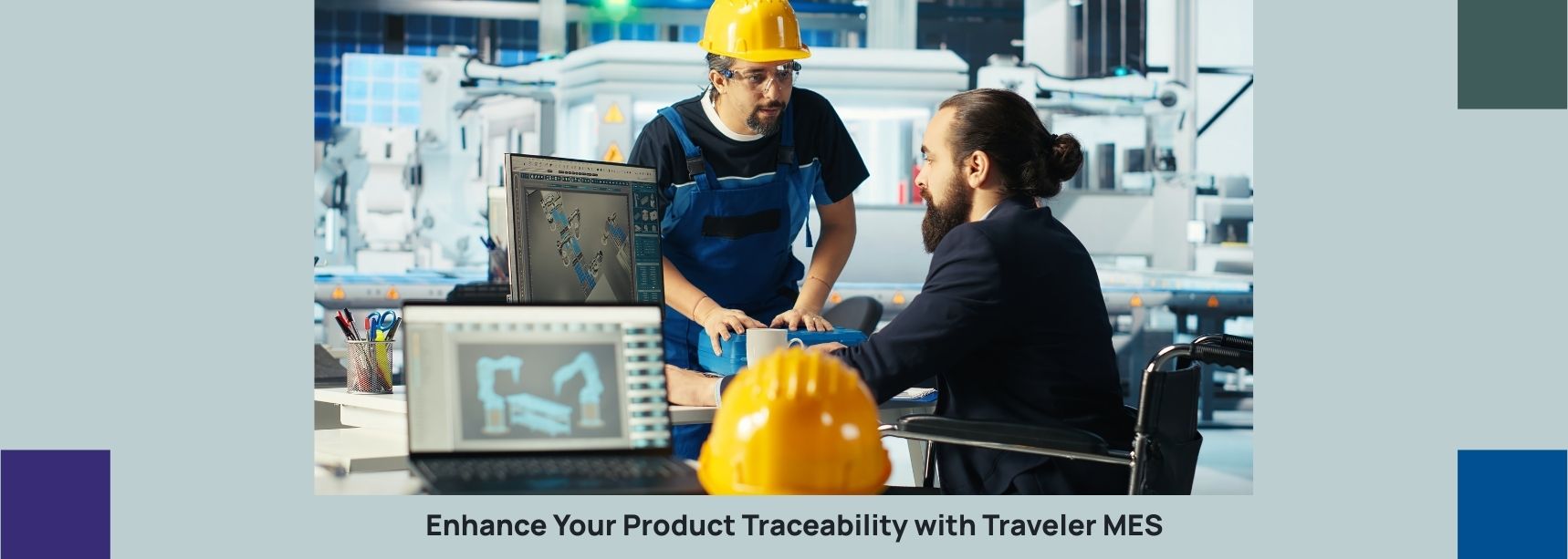
Enhance Product Traceability with Traveler MES

Did you know one product recall can cost over $10 million? Your factory needs clear data to avoid these huge financial hits. A modern manufacturing system keeps every part under your watch.

This digital change lets you see the whole production journey clearly. You can optimize growth while keeping quality high. Every step becomes part of a larger, efficient business plan.

Traceability in Traveler MES

By using traceability in inevia’s traveler mes, you gain a comprehensive product lineage. You can track serial tracking data easily from start to final delivery.

This streamlined implementation helps you reduce waste and keep customers happy. Your manufacturing operations will become more efficient and ready for growth.

Key Takeaways

  • Achieve full visibility throughout the product lifecycle.
  • Mitigate risks associated with expensive manufacturing recalls.
  • Implement real-time tracking for every unique serial number.
  • Build a scalable foundation for future business expansion.
  • Improve quality control with detailed production data.
  • Streamline operations using flexible and modern software.

Why Product Traceability Is Critical in Modern Manufacturing

Today’s manufacturing supply chains are very complex. It’s vital to track and trace products to keep quality high, follow rules, and gain customer trust.

The Growing Complexity of Manufacturing Supply Chains

Modern manufacturing has many suppliers, makers, and distributors. This makes it hard to keep track of everything. Supply chain traceability helps manage this complexity and track every part and product.

With global supply chains, things get even harder. Products and parts move around the world. Manufacturers must follow many rules and deal with lots of people.

Regulatory Compliance and Customer Demand for Transparency

Rules on product safety and quality are getting stricter. Manufacturers must follow these to avoid fines and harm to their reputation. Traceability management in MES (Manufacturing Execution System) is key here.

Customers want to know where and how products are made. Good traceability systems help meet these needs and build trust.

Benefits of TraceabilityDescriptionImpact
Regulatory ComplianceEnsures adherence to safety and quality regulationsReduces risk of non-compliance penalties
Customer TransparencyProvides visibility into product origin and productionBuilds customer trust and loyalty
Quality ControlEnables swift identification and isolation of quality issuesMinimizes the impact of quality issues

The Financial Impact of Inadequate Traceability

Not having good traceability can cost a lot. It can lead to expensive recalls, lost time, and harm to your brand.

Traceability benefits in manufacturing include saving on recalls, better quality, and more efficient work. Good traceability systems help avoid these problems and boost profits.

supply chain traceability

Traceability in Traveler MES: A Complete Manufacturing Solution

Traveler MES changes how we manage traceability by giving us real-time views of our manufacturing. It’s a full MES solution for tracking materials, parts, and assemblies. This makes our production more efficient and cuts down on mistakes.

How Traveler MES Transforms Traceability Management

Traveler MES makes tracking in manufacturing much better. It collects data automatically and tracks things in real-time. This gives us comprehensive product lineage. We can see where our products come from, how they’re made, and where they go. This helps us meet rules and makes customers happier.

With Traveler MES, we can watch production as it happens. We can spot problems early and make smart choices to improve our processes.

mes solution for traceability

Core Capabilities That Set Traveler MES Apart

Traveler MES is special because of its strong features. It has automated data collection, real-time tracking, and full product history. These features make tracking easy and seamless. They help us:

  • Track materials, parts, and assemblies in real-time
  • Ensure compliance with regulatory requirements
  • Improve quality control by identifying and addressing quality issues swiftly
  • Enhance customer satisfaction through transparent and traceable production processes

Using Traveler MES boosts traceability. This leads to better efficiency, lower costs, and more trust from customers.

Comprehensive Product Lineage and Real-Time Serial Tracking

Traveler MES gives you full visibility into your production process. It tracks products in real-time. This is key for modern makers to work better and meet strict rules.

Track Materials, Components, and Assemblies for Complete Visibility

Traveler MES lets you follow materials, parts, and finished goods. This ensures you see everything from start to finish. It’s vital for making things better and following rules.

Real-Time Serial Number Tracking

Traveler MES tracks serial numbers live. This means you can keep up with products as they’re made.

Automated Serial Capture and Recording

Serial numbers are automatically recorded. This cuts down on mistakes and keeps your records current.

Bidirectional Traceability Across the Production Chain

You can track products both ways through the making process. This is key for finding and fixing quality problems.

Traveler MES makes your manufacturing better. It helps follow rules and makes customers happy with quality products.

Advanced Quality Management Through Enhanced Traceability

Enhanced traceability is key to advanced quality management. It helps you find and fix problems fast. With Traveler MES, your quality management gets a big boost.

Root Cause Analysis: Identify and Trace Quality Issues Swiftly

Root cause analysis is vital for spotting and tracing quality issues. It lets you explore the production process to find the root of problems.

Rapid Issue Identification and Investigation

Traveler MES makes rapid issue identification easy with real-time data and detailed tracking. Your team can then quickly and well investigate these issues.

Historical Data Analysis for Pattern Recognition

Looking at historical data helps you spot patterns and trends. This can show you where quality issues might pop up. It’s a smart way to stop problems before they start.

Efficient Quality Control: Isolate and Address Affected Products

Good quality control is not just about finding problems. It’s also about quickly isolating and fixing affected products.

Precise Product Isolation Capabilities

Traveler MES lets you precisely isolate affected products. This limits the damage from quality issues, keeping your operations and customers safe.

Streamlined Recall and Remediation Processes

The system also makes streamlined recall and remediation processes possible. This ensures fast and effective actions to keep customer trust and follow regulations.

Process Optimization and Manufacturing Accuracy

Traveler MES helps you reach new heights in manufacturing accuracy. It does this with advanced tools that make your production processes better and more precise.

As-Built vs. As-Planned BOM Comparison

Checking the as-built product against the as-planned Bill of Materials (BOM) is key. This check is essential to make sure the final product is as designed and meets the specs.

Ensure Design Accuracy with Real-Time Verification

Traveler MES lets you check the as-built product against the as-planned BOM in real-time. This way, any differences are found and fixed right away, keeping the design on track.

Detect and Manage Manufacturing Deviations

By comparing the as-built and as-planned BOMs, you can spot any manufacturing issues. This lets you handle and fix these problems, making sure the product is up to standard.

Standardized Processes Using Templates for Product Families

Standardizing your processes is vital for better efficiency and consistency. Traveler MES helps you create and use templates for different product families, making your manufacturing smoother.

Improve Efficiency Through Standardization

Using templates for standardizing processes boosts your efficiency. It cuts down the time and effort needed for planning and making products, helping you meet market demands faster.

Consistent Quality Across Product Lines

Standardized processes also mean consistent quality across all your products. With templates for product families, you keep quality high and errors low.

FeatureBenefitOutcome
As-Built vs. As-Planned BOM ComparisonEnsures design accuracy and detects manufacturing deviationsImproved product quality and reduced errors
Standardized Processes Using TemplatesImproves efficiency and consistency across product linesStreamlined operations and enhanced product quality

Conclusion

Traveler MES can greatly improve traceability in your manufacturing. This leads to better quality control and fewer recalls. It lets you track materials, components, and assemblies in real-time. This gives you full visibility into your supply chain.

Traveler MES helps you optimize your manufacturing. It makes your operations more efficient and scalable. Its advanced features, like real-time tracking and BOM comparison, help you make smart decisions.

Choosing Traveler MES means embracing digital transformation. It helps you grow while keeping quality high and disruptions low. Your operations will become more agile and focused on the customer, leading to long-term success.

FAQ

Why is supply chain traceability essential for users of inevia’s Traveler MES?

In today’s complex global market, supply chain traceability is key. It gives you full visibility from raw materials to the finished product. With inevia’s Traveler MES, your organization can avoid risks, meet strict rules, and show transparency to customers. This ensures uncompromising integrity in every unit shipped.

How does real-time traceability in MES improve your quality control?

Real-time traceability in MES lets you watch components and assemblies as they move. This immediate data helps you quickly find and fix defects. It enhances traceability in MES and keeps your brand reputation strong through fanatical customer service.

What are the primary traceability benefits in manufacturing when using Traveler MES?

The main traceability benefits in manufacturing include lower costs and more efficient recall management. It also improves accuracy in comparing As-Built vs. As-Planned BOM. Plus, it helps keep a comprehensive product lineage. This MES software for traceability turns your production data into a strategic asset for scalable growth.

How does Traveler MES handle traceability management in MES for serial numbers?

Traceability management in MES via Traveler MES automates serial number capture and recording. It creates a bidirectional digital thread that links materials, components, and final assemblies. This ensures a complete, searchable history for every item in your inventory.

How does this MES solution for traceability support process optimization and accuracy?

As a strong MES solution for traceability, Traveler MES uses templates for product families. This standardizes your processes and ensures consistent quality. It also lets you detect manufacturing deviations in real-time, streamlining operations and driving digital transformation with minimal disruption.

How does enriching traceability in MES help minimize the financial impact of production errors?

By enhancing traceability in MES, you can pinpoint exactly which batches or components are affected by a quality issue. This reduces the scope and cost of recalls, streamlining the remediation process. It lets your business maintain absolute ownership of its production standards.

Can Traveler MES track materials at both the component and assembly level?

Yes. inevia’s Traveler MES offers end-to-end material tracking, from individual components to complex assemblies. This level of detail ensures complete visibility into your manufacturing lifecycle. It allows your team to optimize the manufacturing execution system traceability for maximum efficiency and precision.

AI & MES: How Traveler MES Uses Predictive Maintenance to Prevent Downtime

Every minute of unplanned downtime costs more than production loss-it affects delivery timelines, customer trust, and profitability. Traditional maintenance often reacts after the problem appears. Predictive maintenance changes that story. When powered by Artificial Intelligence (AI) and integrated with a modern Manufacturing Execution System (MES), it allows manufacturers to prevent breakdowns before they happen.

Traveler MES is at the center of this transformation. It connects machine data, operator inputs, and AI insights to build a system that sees issues coming long before operators do.

The Shift from Reactive to Predictive Maintenance

For decades, manufacturers depended on reactive and preventive maintenance models. Equipment was serviced after breakdowns or on fixed schedules, regardless of its real condition. This approach wasted both time and resources.

Predictive maintenance brings intelligence into the process. Instead of relying on fixed intervals, it uses real-time data from sensors, IoT devices, and MES logs to identify early warning signs. AI algorithms then analyze vibration patterns, temperature changes, and energy consumption to forecast when a component will fail.

This proactive approach eliminates guesswork. Maintenance teams can plan interventions during non-peak hours, keeping the entire production line running efficiently.

How AI and MES Work Together

AI and MES are not separate technologies; they form a feedback loop that strengthens with every production cycle.

  1. Data Collection: MES systems like Traveler MES capture data from every point on the shop floor machines, operators, quality checks, and sensors.
  2. Data Processing: AI models analyze that data to detect unusual trends that humans might overlook.
  3. Prediction: The AI predicts potential failures, inefficiencies, or quality deviations.
  4. Actionable Insights: MES turns those predictions into clear instructions for maintenance teams, automatically creating alerts or maintenance work orders.

This loop enables continuous learning. Every maintenance event improves the AI’s future predictions, reducing false alarms and increasing accuracy over time.

The Role of Traveler MES in Predictive Maintenance

Traveler MES doesn’t treat predictive maintenance as an additional module; it’s woven into the system’s architecture. The platform gathers machine performance data in real time, processes it through AI algorithms, and helps manufacturers take action before downtime occurs.

Here’s what sets Traveler MES apart:

  1. Real-Time Machine Monitoring: Every parameter, vibration, temperature, and pressure is continuously tracked to detect anomalies.
  2. AI-Powered Insights: Integrated AI models analyze years of historical data to predict failures before they happen.
  3. Automated Maintenance Alerts: When a pattern signals risk, Traveler MES automatically notifies maintenance teams through dashboards and mobile alerts.
  4. Digital Traceability: Every maintenance event is logged digitally, helping teams track machine health across its lifecycle.
  5. Seamless Integration: Traveler MES connects effortlessly with ERP and IoT systems, creating a unified ecosystem for smart manufacturing.

This built-in intelligence transforms maintenance from a cost center into a competitive advantage.

Key Benefits for Manufacturers

Manufacturers adopting Traveler MES for predictive maintenance experience improvements that go far beyond uptime:

  1. Reduced Downtime: Early detection of anomalies prevents unexpected breakdowns, ensuring smoother production schedules.
  2. Extended Equipment Lifespan: Regular monitoring and timely maintenance reduce wear and tear.
  3. Lower Maintenance Costs: Teams perform maintenance only when needed, saving time, parts, and labor.
  4. Improved Product Quality: Machines that run within optimal parameters produce more consistent results.
  5. Operational Visibility: Managers gain a complete view of machine health across lines and facilities through a single dashboard.

Every insight that Traveler MES delivers helps manufacturers achieve leaner, smarter, and more efficient operations.

Real-World Use Cases

Predictive maintenance powered by AI and Traveler MES is reshaping industries across the board.

  1. Automotive Manufacturing: Assembly lines rely on thousands of moving parts. Traveler MES monitors equipment health continuously, allowing maintenance teams to replace components before they fail, preventing costly stoppages.
  2. Aerospace Components: In high-precision industries, even slight deviations can be critical. Traveler MES integrates with sensor networks to maintain exact tolerances and prevent production loss.
  3. Food and Beverage: Traveler MES enables hygienic and uninterrupted operations by predicting wash-down schedules and component wear, maintaining compliance with safety standards.
  4. Electronics Manufacturing: With narrow margins and fast cycles, Traveler MES ensures uninterrupted operations by forecasting maintenance needs during production downtimes.

Steps to Implement Predictive Maintenance with Traveler MES

Transitioning to predictive maintenance doesn’t have to be overwhelming. Traveler MES simplifies the process with a structured roadmap:

  1. Assess Current Maintenance Strategy: Identify which equipment causes the most downtime and where data is missing.
  2. Deploy Smart Sensors: Connect critical machines with IoT sensors for data collection.
  3. Integrate with Traveler MES: Connect existing systems (ERP, SCADA, PLC) to Traveler MES for centralized data flow.
  4. Train the AI Models: Allow Traveler MES to analyze historical production and maintenance data for accuracy.
  5. Set Alert Thresholds: Define parameters for vibration, temperature, and cycle times to trigger automated alerts.
  6. Monitor and Improve: Review insights and fine-tune models regularly as new data enhances predictions.

The Road Ahead for Smart Manufacturing

Predictive maintenance is only the beginning. As AI, MES, and IoT technologies continue to mature, manufacturing plants are becoming self-aware systems that learn, adapt, and optimize on their own.

Traveler MES is building toward that future. Its AI-driven capabilities ensure that maintenance becomes an invisible part of production working quietly in the background to keep machines healthy, data accurate, and workflows uninterrupted.

The result is a manufacturing ecosystem where downtime is predictable, efficiency is measurable, and growth is continuous. For manufacturers seeking reliability, agility, and profitability, Traveler MES is more than a system, it’s the foundation for intelligent manufacturing.

Why Most Manufacturing Teams Miss Deadlines (And How Traveler MES Can Actually Help)

In manufacturing, hitting delivery deadlines isn’t a bonus it’s expected. Your customers rely on you, and when you don’t deliver on time, it hits more than just your schedule. It chips away at trust. But if you’re part of a manufacturing team, you know this already. You’re not slacking off. You’re doing your best with the tools and visibility you’ve got.

And yet, things still slip.

Orders get stuck. Machines go down. People lose track of what’s where. Sometimes, despite your best efforts, a job just doesn’t go out the door when it should.

It’s frustrating. It’s exhausting. But here’s the good news: most of these problems aren’t because of bad teams, they’re because of broken systems. And that’s something we can fix.

Let’s break down 10 of the most common reasons delivery deadlines get missed and how Traveler MES can help turn things around.

1. Too Many Tools, Not Enough Connection

You’ve got machines talking one language, spreadsheets talking another, and half the floor working off printed instructions from last week. No wonder things fall through the cracks.

How Traveler MES Helps:
It pulls everything into one place. Live dashboards, job status, instructions it’s all connected. Everyone’s looking at the same source of truth.

2. You Can’t See What’s Stuck Until It’s Too Late

If you find out a job’s delayed after it misses its ship date, that’s a system issue not a people issue.

With Traveler MES:
You can track jobs in real time. You’ll know if something’s behind before it becomes a problem. That gives you time to fix it.

3. Work Instructions Are Outdated or Missing

Ever had a team wait around because no one knew what the next step was? Or worse someone follows the wrong instructions and now it’s rework time.

Traveler MES’s Fix:
Operators get step-by-step digital instructions that update automatically. No paper floating around. No guesswork.

4. Downtime Doesn’t Just Happen It Lingers

Unexpected stoppages are one thing. But not knowing why something went down? That’s what really hurts.

What Traveler MES Does:
It flags downtime right when it happens and logs why. So your team can act fast, not waste time figuring out what broke.

5. You’re Flying Blind on Operator Performance

If you don’t have a way to see who’s doing what (and how well), you can’t coach, adjust, or support your team effectively.

Traveler MES Helps You See:
Who’s working on which job. How long it’s taking. What might be slowing them down. It’s not about monitoring, it’s about making sure people have what they need to succeed.

6. Quality Checks Are Too Late in the Process

Catching defects after a full run is like finding out your cake is burnt after you’ve frosted it. Waste of time, waste of product.

Traveler MES Fixes That:
It builds inspections into each step of the workflow. So issues get caught early not after it’s already cost you hours.

7. Your Schedule Looks Great Until Reality Hits

On paper, the plan works. But in real life, machines get overbooked, people call in sick, and jobs shift last minute.

What Traveler MES Brings:
It gives you a schedule that adapts in real time so you’re not locked into a plan that no longer works.

8. You Can’t Trace What Went Wrong

A customer calls asking about a batch that had issues. And all you’ve got is a stack of papers and half a memory.

With Traveler MES:
Every step is logged. You know exactly who did what, when, and how. It’s not about pointing fingers it’s about solving problems quickly.

9. Problems Sneak Up on You

You don’t notice delays building up until you’re buried under them. And by then, recovery is tough.

Traveler MES Keeps You Ahead:
It sends alerts when things are starting to slide so you can course-correct early, not scramble later.

10. Everyone’s Working Hard but Not Together

Planning is done in one room. Production lives on the floor. Quality’s doing its own thing. And it’s nobody’s fault there’s just no shared space.

Traveler MES Changes That:
It gives every team one shared view of the work. Less miscommunication. More alignment. Fewer surprises.

Final Thoughts: The Team Isn’t Broken, The System Is

If you’re a plant manager, operations head, or just someone trying to get orders out the door on time, this might all sound familiar.

That’s what Traveler MES is built for:

  • Fewer delays
  • Fewer surprises
  • Fewer missed deadlines

And way more confidence in your day-to-day operations.

 Want to see it in action?
Book a free walkthrough here and let us show you how Traveler MES works, live.

How Downtime is minimized by Traveler MES

In small and mid-sized factories, time isn’t just money; it’s reputation, customer satisfaction, and operational momentum. One small delay can trigger a domino effect, stalling production lines, missing deadlines, and stretching costs beyond control.

For discrete manufacturers who rely on precision, traceability, and timely delivery, these delays can be costly in more ways than one. But what if downtime wasn’t just monitored after the fact, but prevented altogether?

Traveler MES by Inevia is built specifically to tackle these challenges from the ground up. Not only does it align with your production workflow and it actively improves it, helping you reduce downtime at every critical point in your cycle.

Why Downtime is More Than Just Lost Time

In discrete manufacturing, every part is unique, every batch has a story, and every process must follow a strict sequence. When production stops, you don’t just lose minutes you lose trust.

Downtime can come from:

  • Miscommunication between teams
  • Missing or incomplete instructions
  • Poor visibility into where a product is in its cycle
  • Unlogged quality issues
  • Delays in raw material prep or inspection

These aren’t just technical hiccups, they’re blockers to operational efficiency. They slow your team, stress your delivery timelines, and weaken your competitive edge.

The Hidden Costs of Production Delays

You might not always see the numbers, but they’re there.

  • Idle time: Machines wait, people wait, orders wait.
  • Confusion and rework: Operators miss steps due to outdated instructions.
  • Delayed shipments: One late order means a missed customer window.
  • Wasted materials: Without clear tracking, you might scrap parts that could’ve been fixed.

For small and mid-sized businesses where resources are tight, these losses hit harder. Traveler MES helps you cut through the noise and focus on what matters smooth, traceable production with minimal downtime.

How Traveler MES Works Across Your Manufacturing Cycle

Let’s walk through how Traveler MES supports each step of your discrete manufacturing workflow while actively reducing downtime throughout the process.

1. Knitting: Organizing the Production Plan

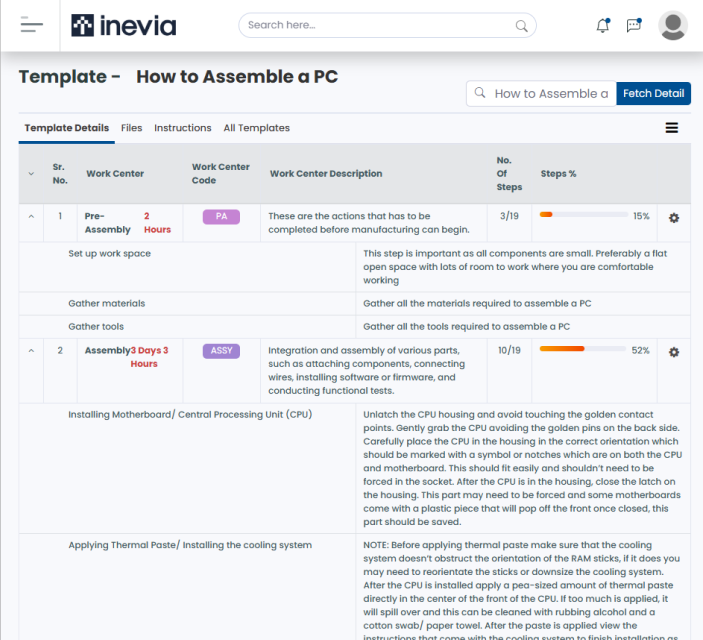
Every manufacturing process begins with a clear plan and that’s exactly what the knitting stage is all about. This is where you define the part, create a work order, and get your team aligned before production even begins. With Traveler MES, this stage becomes incredibly efficient. You can set up each job using a standardized template that includes the part’s identity defined by an 8-digit code, security level, and the appropriate work centers assigned for production. Everything is structured and centralized, reducing the back-and-forth and confusion that usually eats into valuable production time.

How it helps reduce downtime: Instead of teams losing time trying to figure out next steps or searching for missing instructions, everything they need is already documented and ready to go from the beginning. It sets the tone for a smooth, uninterrupted production cycle.

2. Product Genealogy: Serial Number Tracking and Traceability

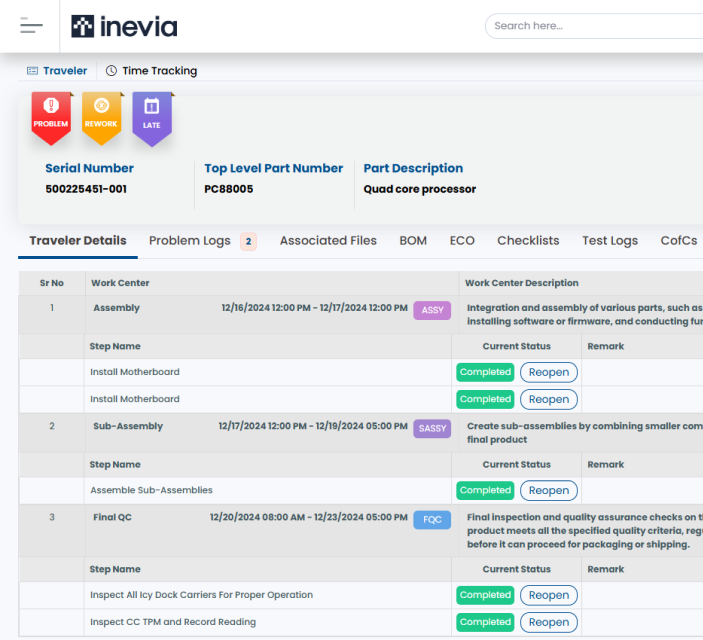
Every unit you produce carries a story. From raw material to finished product and traveler MES makes sure you never lose track of your story, With serial number tracking built right into the system, you get a complete view of each product’s journey. You can trace where it’s been, who worked on it and what exactly was done at each step in the product genealogy phase.

How it helps to reduce downtime: 

Let’s say a defect pops up later during QA or after delivery. Instead of pausing production to dig through paperwork or guess where things went wrong, you already have the full trail. That means less disruption and faster resolution.

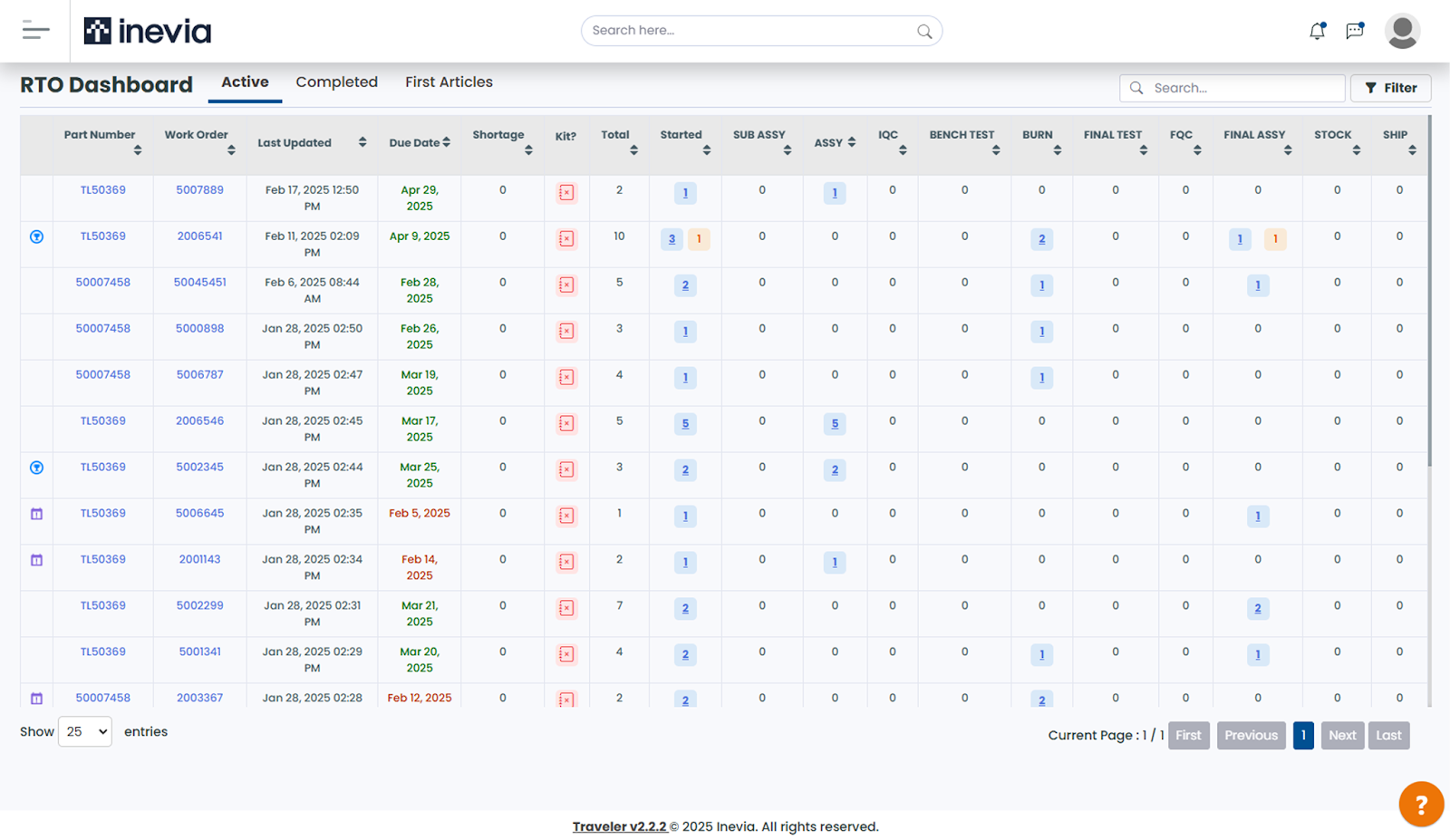
3. Production Tracking: Live Status with Real-Time Order (RTO) Dashboards

As each product makes its way through your shop floor, Traveler MES keeps you in the loop with real-time production tracking. The RTO dashboards show live updates on where every order stands whether it’s moving ahead smoothly or stuck at a work center.

How it helps reduce downtime: 

You don’t need to send someone to chase down status updates. If there’s a bottleneck or delay, you see it right away and so you can fix it before it escalates. It keeps the production line flowing without unnecessary interruptions.

4. Quality Inspection: Built-In Reporting for Immediate Action

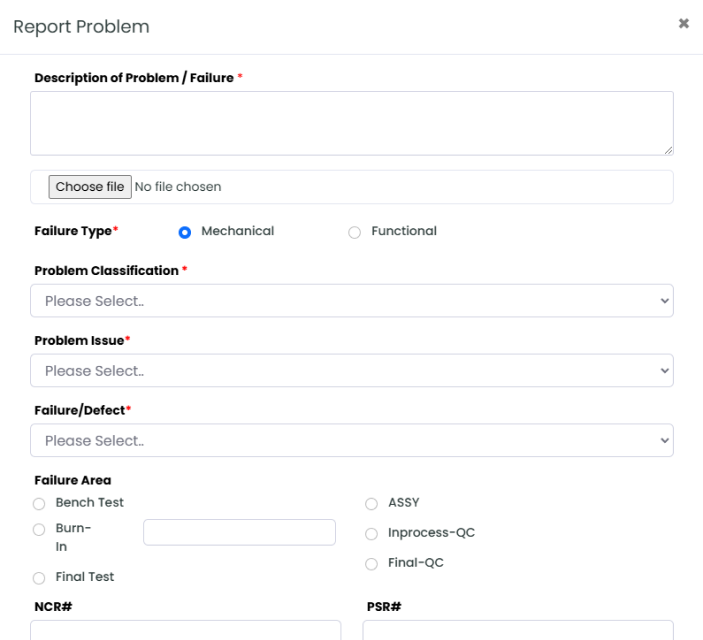
When a defect is found, timing is everything. Traveler MES enables your operators to report issues on the spot right inside the traveler document. There’s no need to stop the line or wait to fill out paper forms. Quality checks become part of the flow, not a separate task.

How it helps reduce downtime: Since problems are logged instantly, your team can act faster and avoid the snowball effect of unresolved issues. There’s no backlog of QA reports to deal with later.

5. Digital Work Instructions: Clarity at Every Step

Printed SOPs often become outdated or get misplaced, slowing down your operators and causing unnecessary errors. Traveler MES solves that with dynamic, digital work instructions. These are easy to follow, always current, and tailored to each specific task.

How it helps reduce downtime: 

There’s no more confusion or delay while waiting for clarifications. Operators get accurate, step-by-step guidance directly on their screens, so they can do the job right the first time.

6. Dashboards: Centralized Oversight for Smarter Decisions

Traveler MES doesn’t just help on the floor it empowers your leadership too. Everyone from supervisors to department heads can access dashboards customized to their role. These dashboards give a clear view of productivity, user activity, issue logs, and more.

How it helps reduce downtime:

With no blind spots, your team leads can act on real-time data rather than assumptions. They see where support is needed and can make informed decisions faster keeping production on track.

Why Traveler MES Stands Out

Unlike many traditional MES systems that feel overloaded with features you’ll never use, Traveler MES is different. It’s lean, focused, and built from real, on-the-ground manufacturing experience and not just a software wishlist. Developed in-house by a team that understands the daily challenges of discrete manufacturing, it’s designed to solve problems not create new ones.

With Traveler MES, you’re not just capturing data. You’re taking charge of your production process. Here’s what you get:

  • Full traceability of every part and every process, so nothing slips through the cracks
  • Clear, standardized workflows that guide your team step by step
  • Dashboards that reveal bottlenecks before they slow things down
  • Live production tracking that gives you confidence in your next move

See It in Action

Traveler MES is already improving production for manufacturers just like you. If you’re facing recurring delays, unclear instructions, or scattered tracking systems, this is your chance to try something that fits the way you work. Book a demo today and discover how a smarter system can lead to smoother production, fewer delays, and better outcomes for your business.

Most manufacturers are set up and running within a few days. Our team ensures your system is tailored to your workflow.

FAQs

  1. Will it disrupt my existing processes?

Not at all. Traveler MES enhances your current process and it doesn’t replace it. It integrates seamlessly into what you already do.

  1. Do we need any special hardware or ERP system?

No. Traveler MES works independently and is cloud-ready, simple to access from your existing shop-floor systems.

  1. What kind of support do we get?

Our product team is hands-on, responsive, and ready to support your floor teams, not just your IT department.

How MES Can Be Leveraged by SMEs To Compete With Larger Manufacturers

Small or Medium sized manufacturing companies are under constant pressure to deliver high quality goods on-time in today’s fast paced market. Compared to larger manufacturers, SMEs face unique struggles that keep them from hustling with big names in the industry.

Key Challenges Faced by SMEs in Manufacturing

  • Limited Resources: Constrained budgets, smaller workforces, and outdated equipment often limit growth and operational efficiency.
  • Operational Inefficiencies: Manual processes and disconnected systems contribute to delays, errors and reduced productivity.
  • Difficulty in Scaling: SMEs may lack the tools and systems to adapt quickly to changing market demands.
  • Quality Management Issues: Maintaining consistent quality across production batches is challenging without automated monitoring and tracking tools.

How MES is Transforming SME Manufacturing

In the digital age, Manufacturing Execution Systems (MES) are playing a key role in centralizing operational activities and helping SMEs compete with manufacturing giants. These systems have become essential for operational excellence amongst SMEs and they are getting better at it every year. Today MES can be integrated with almost any existing manufacturing system and replace it with high-tech features that are both easy to use and productive for operations.

What is a Manufacturing Execution System (MES)?

An MES is a digital software system that centralizes all your manufacturing execution activities and goods production in one place. It connects, manages, optimizes, tracks and monitors production processes from the factory floor in real time, which can be analyzed through a single dashboard.

In the manufacturing industry, MES is playing a crucial role in cutting waste and improving output. For example, Inevia’s Traveler MES is designed to consolidate data, improve efficiency, and enable SMEs to manage operations through a customizable, user-friendly platform. It helps businesses:

  • Streamline operations
  • Optimize workflows
  • Ensure quality control

How can MES help SME compete with larger manufacturers?

Empower Operations

Help employees make the most of their work through a systematic and streamlined approach to
work. MES transforms complex processes into structured workflows, enabling them to track their
tasks, measure productivity, and reduce operational gaps.

Real-time Monitoring

MES provides live updates on your workflows, inventories, product defects, worker productivity,
machine utilization and so on. It consolidates data and presents them in the form of appealing
updates and charts through user-friendly system.

Confident Decision-Making

SMEs need to make quick decisions to stay ahead of the manufacturing trends. MES helps businesses
make those decisions with confidence through factual data. Managers can make active decisions on
things like scheduling, resource allocation, and capacity planning.

Comprehensive Data

Many SMEs rely on old systems or individual systems for different departments to manage
communication and reporting. MES can replace those fragmented systems and centralise the data
through cutting-edge functionality, saving time and assuring transparency, high quality goods and
productivity.

Competitive Pricing

By reducing waste and improving manufacturing cycles, SMEs can save on production/operational
cost, enabling them to provide competitive pricing on their goods and services to clients. It
empowers them to compete with bigger manufacturing firms and stake a place in the market share.

Start scaling up business with Traveler MES

Traveler is a user-friendly and customizable manufacturing execution system crafted to help SME’s
grow. It is a software solution created by manufacturers for manufacturers to help them keep up
with industry standards. With Traveler MES you can:

  • Create workflows tailored to your business needs.
  • Access real-time audit logs and production insights.
  • Integrate seamlessly with your existing ERP systems.
  • Save costs with a budget-friendly implementation.
  • Rely on dedicated support to help you scale.

Don’t let size hold you back. Adopt MES to streamline your operations, improve efficiency, and
compete with larger manufacturers. Discover how Traveler MES can transform your SME into a
powerhouse of productivity.