

What Workflow Management Really Means in Practice
At its core, workflow management is the discipline of ensuring that work flows predictably from one step to the next, without constant intervention. In theory, this sounds simple. In reality, workflows break when:

Ownership is unclear
When no one knows who owns the work, nothing really moves.

Dependencies are hidden
Hidden dependencies turn small delays into big surprises.

Exceptions are handled manually
Manual exception handling creates confusion, not control.

Progress is tracked after the fact
Tracking progress after it happens is already too late.
Effective workflow management systems are built to surface these issues early, not document them later.
Why Most Workflow Management Software Falls Short

Workflow Management That Scales, Executes, and Delivers Results
True workflow management brings structure without rigidity. It creates enough guardrails to maintain control, while still allowing teams to respond intelligently when plans break. When done right, workflows stop being instructions and start becoming shared operating logic.
A Workflow Management System Built Around Execution
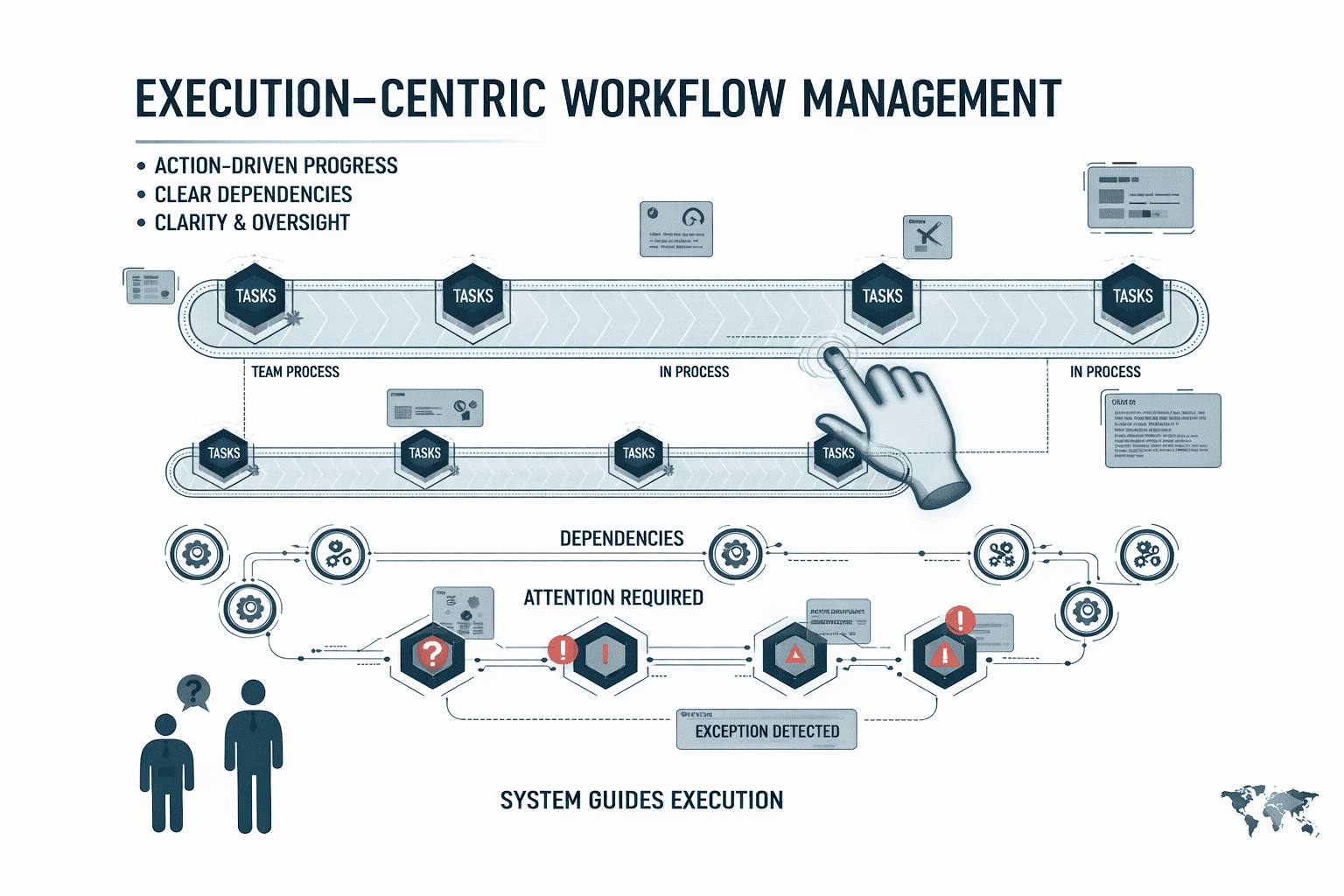
A strong workflow management system supports work in motion, not just work planned.
This means:
- Tasks move only when action is taken
- Dependencies are explicit and visible
- Exceptions trigger attention, not confusion
Instead of relying on reminders and escalations, the system itself guides execution. This reduces reliance on individual memory and constant supervision.

Scaling Workflow Management Without Adding Complexity
As organizations grow, workflows become interconnected. One delay can ripple across teams and timelines.
The best workflow management systems are designed to scale without increasing coordination overhead. They allow multiple workflows to run in parallel while maintaining clarity around ownership, status, and impact.
This makes workflow management sustainable, even as processes evolve.
Why Leaders Invest in Workflow Management Systems
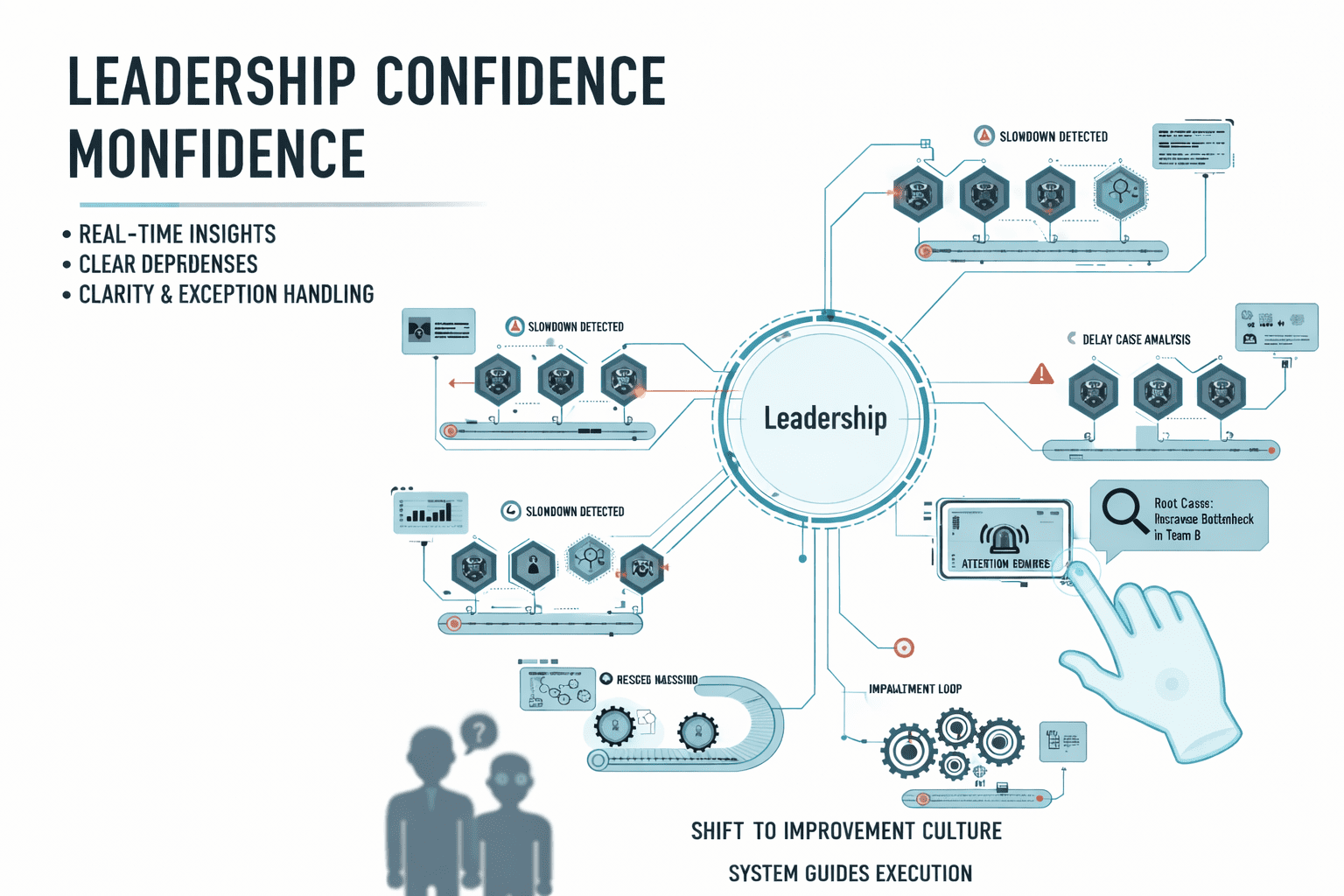
For leadership teams, workflow management is not about control. It’s about confidence.
With the right workflow management software, leaders can:
- See where work slows down in real time
- Understand why delays occur, not just where
- Improve processes without micromanaging teams
This shifts conversations from explanations to improvements.

When Workflow Management Starts Driving Results
When workflow management is done well, teams spend less time coordinating and more time executing.
Organizations begin to notice:
- Faster turnaround times
- Fewer operational surprises
- Higher consistency across teams
Over time, workflow management becomes a competitive advantage rather than an administrative layer.

Workflow Management Is a Long-Term Capability
Workflow management is not a one-time implementation. It is a capability that matures as organizations learn from their own operations. The most successful teams treat workflow management as a living system, one that improves with use, feedback, and iteration.
Teams refine workflows by analyzing real execution data rather than relying on assumptions.
Small adjustments are made regularly instead of large, disruptive overhauls.
Input from operators, managers, and stakeholders is used to optimize how work actually happens.
Workflows evolve as business priorities, tools, and team structures change.
Clear responsibility ensures workflows are maintained, governed, and improved continuously.
That mindset is what separates systems that get abandoned from systems that become essential.
FAQs
s
Workflow management is the practice of designing, tracking, and improving how work moves from one step to the next. It ensures tasks are completed in the right order, by the right people, with minimal friction.
Task management focuses on individual actions, while workflow management focuses on the flow between actions. Workflow management looks at dependencies, ownership, and handoffs, not just checklists.
Most companies adopt tools that document workflows instead of supporting execution. When systems don’t reflect real work conditions, teams bypass them.
The best workflow management system is one that teams actually use during high-pressure situations. Adoption, clarity, and adaptability matter more than feature lists.
The best workflow management system is one that teams actually use during high-pressure situations. Adoption, clarity, and adaptability matter more than feature lists.
Ready to Strengthen Your Workflow Management?
If workflows feel fragile, slow, or overly dependent on individual effort, the issue isn’t performance. It’s the system behind it. Explore how modern workflow management can bring clarity, accountability, and momentum back into daily execution. Start by seeing your workflows the way they actually run.
Contact Us