
Ever thought your shop floor might be losing money while you wait for reports? Most leaders rely on outdated stats. Without Real-Time Data in MES, you’re making decisions based on yesterday’s reality. To stay competitive, you need instant insights.
Switching to digital is no longer optional for growth. It’s essential. Knowing what’s happening now is key to staying ahead.
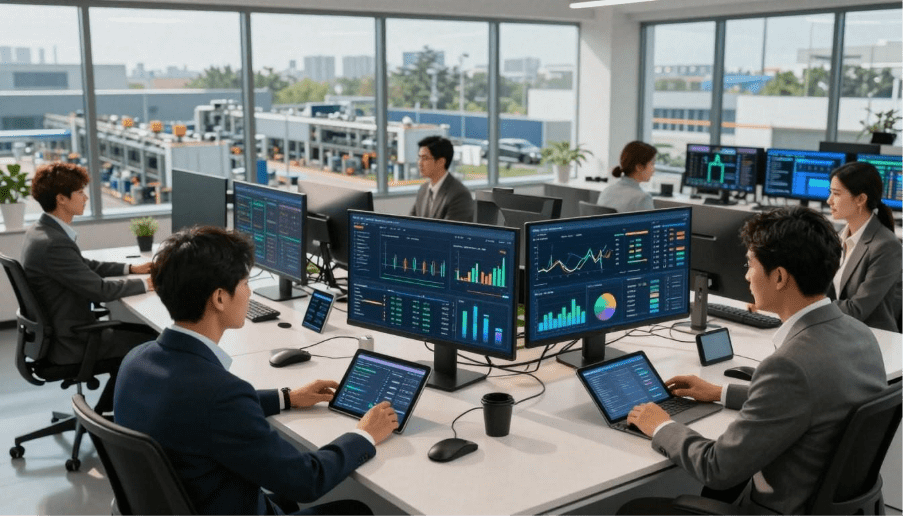
Traveler MES changes your work by ditching manual tracking for digital work instructions. This smart, modular system uses real-time manufacturing data to quickly stop errors. It replaces old methods with a scalable framework that grows with you.
Digitizing operations makes every process clear. This shift ensures absolute ownership of your production quality. It lets you focus on innovation, not fixing the same mistakes over and over.
With production analytics, you get complete visibility and better traceability. This forward-thinking approach empowers your team to make confident choices for growth. See the shift to proactive excellence with a solution built for success.
Key Takeaways
- Eliminate paper errors with digital tracking.
- Gain total visibility into every production stage.
- Improve traceability for better quality control.
- Empower teams with evidence-based decision-making.
- Scale operations easily with modular software.
- Boost shop productivity through optimized workflows.
1. Enhanced Production Visibility and Control
To stay ahead, manufacturers need solutions that offer full production visibility and control. Your production floor is key to your operations. Real-time insights are vital for smart decisions.
Complete Shop Floor Transparency with Digital Dashboards
Traveler MES gives you complete shop floor transparency with digital dashboards. You can watch production in real-time. This lets you track metrics, find bottlenecks, and make better decisions.
Digital dashboards offer a single view of your production. It’s easier to manage complex tasks and solve problems quickly.
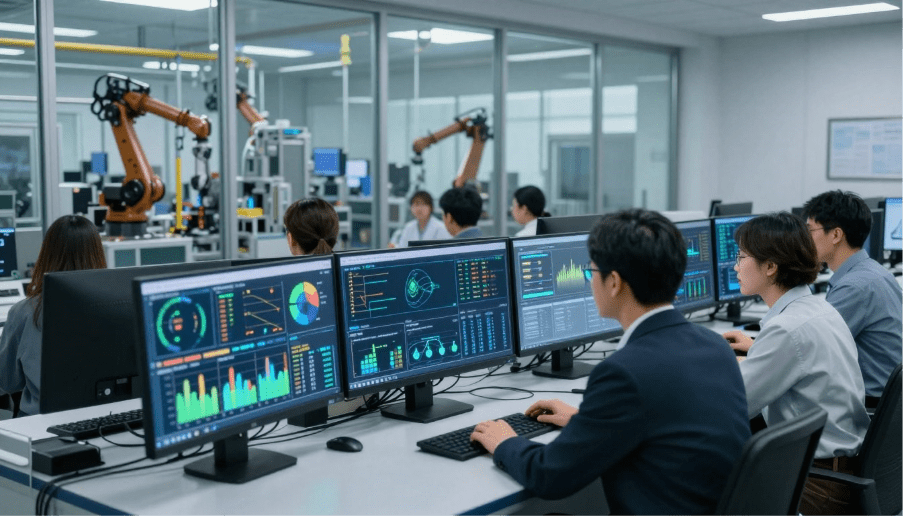
Real-Time Process Monitoring Eliminates Blind Spots
Real-time monitoring is key to spotting issues before they grow. By tracking production, you can find and fix problems early. This keeps your processes running smoothly.
This approach helps you optimize production processes and boost efficiency.
Replacing Paper Travelers with Digital Tracking Systems
Traveler MES uses real-time tracking and digital work instructions. It replaces paper travelers with a digital system. This makes tracking more efficient and cuts down on errors.
Using digital systems ensures your production is well-documented. It helps meet regulatory needs.
2. Real-Time Manufacturing Data Enables Faster Decision-Making
Real-time manufacturing data is changing how you make decisions on the shop floor. You can now get critical information instantly. This lets you handle production changes and challenges more quickly.
Instant Access to Critical Manufacturing Analytics
Your manufacturing operations create a lot of data. Traveler MES gives you instant access to important manufacturing analytics. You can watch production performance, find bottlenecks, and improve processes right away.
This quick access to data helps you make fast, informed decisions. You don’t have to wait for manual reports or old information.
Data-Driven Production Optimization Strategies
Real-Time Data in MES and advanced analytics help you create data-driven production optimization strategies. You analyze production data to find ways to improve. Then, you make changes to boost efficiency and productivity.
Data visualization tools make it easy to understand complex data. They help you see your production processes clearly.
Reducing Response Time from Hours to Minutes
One big advantage of real-time manufacturing data is faster response times. You can solve production problems in minutes, not hours. This is because you have instant access to important information.
How Traveler MES Centralizes Decision-Making Data
Traveler MES brings all decision-making data together. It combines information from different sources into one place. This makes it easy to find all the data you need for informed decisions.
By bringing data together, you avoid data silos. Everyone can see the same information. This helps with teamwork and consistent decision-making.
3. Improved Quality Control and Traceability
Traveler MES helps you improve quality control and traceability. This ensures you meet standards and follow rules efficiently. Quality control is key to keeping high standards and following rules.
Traveler MES has several important features for quality control.
Automated Defect Detection and Real-Time Alerts
Traveler MES can find defects automatically and send alerts right away. This means any problems are caught and fixed quickly. It helps avoid making products that don’t meet standards.
Automated defect detection finds issues early. This lets you take action fast.
End-to-End Product Genealogy and Batch Tracking
Traveler MES tracks your products from start to finish. This is important for keeping detailed records of your products.
Maintaining Compliance Records Automatically
The system keeps compliance records for you. This saves time and makes sure your records are correct and up-to-date.
This saves time and makes your records more reliable.
Streamlined Audit Processes and Regulatory Compliance
Traveler MES makes audits easier and ensures you follow rules. It helps you get ready for audits and show you follow rules.
4. Predictive Maintenance and Reduced Downtime
Your manufacturing efficiency depends on your equipment’s health. Traveler MES helps you predict and prevent downtime. It uses IoT technology to monitor equipment health in real-time, allowing for proactive maintenance.
Leveraging IoT in Manufacturing for Equipment Health Monitoring
The Internet of Things (IoT) has changed the manufacturing world. It gives real-time insights into equipment performance. With Traveler MES, you can use IoT for:
- Real-time monitoring of equipment health
- Early detection of problems
- Data-driven maintenance decisions
Sensor Integration and Data Collection
Predictive maintenance starts with data from sensors in your equipment. Traveler MES makes it easy to integrate these sensors. This gives you detailed and accurate data on equipment performance.
Predictive Maintenance Models Through Advanced Analytics
Advanced analytics are key in predictive maintenance. They analyze sensor data to predict when maintenance is needed. Traveler MES uses advanced analytics to:
- Find patterns and anomalies in equipment behavior
- Predict equipment failures before they happen
- Optimize maintenance schedules based on equipment condition
Converting Reactive Maintenance to Proactive Strategies
Predictive maintenance helps you move from reactive to proactive maintenance. This reduces downtime and extends equipment life. Traveler MES gives you the insights to:
- Anticipate and prevent equipment failures
- Reduce unplanned downtime
- Use maintenance resources better
Quantifying Downtime Reduction and Cost Savings
Predictive maintenance lets you measure downtime reduction and cost savings. With Traveler MES, you can track and analyze the impact of predictive maintenance. This makes it easier to justify investments in this area.
Traveler MES uses IoT and advanced analytics to support scalable manufacturing growth. It minimizes downtime and maximizes efficiency.
5. Optimized Resource Utilization and Workflow Efficiency
Your manufacturing operations can reach new heights of efficiency. This is thanks to optimized resource utilization and workflow efficiency. By using Real-Time Data in MES and advanced analytics, you can make your production processes better. This means less waste and more productivity.
Dynamic Production Scheduling Based on Live Data
Traveler MES makes your production scheduling dynamic and based on live data. This ensures your production is always at its best. You can quickly respond to changes in demand, cut down on lead times, and boost efficiency overall.
- Real-time production monitoring
- Automated scheduling adjustments
- Improved resource allocation
Material Tracking and Waste Reduction Initiatives
Effective material tracking is key to reducing waste and improving resource use. Traveler MES supports material tracking and waste reduction initiatives. It helps you spot inefficiencies and take action to fix them.
Real-Time Inventory Management
Real-time inventory management lets you track inventory levels and optimize stock levels. This reduces the chance of overstocking or understocking.
- Real-time inventory tracking
- Automated inventory updates
- Optimized stock levels
Boosting Labor Productivity with Digital Work Instructions
Digital work instructions can greatly improve labor productivity. They give workers clear, step-by-step guidance. Traveler MES lets you create and deploy digital work instructions. This reduces errors and boosts overall efficiency.
6. Seamless Integration with Smart Factory Technology
To lead in manufacturing, integrating with smart factory tech is key. Your operations must be flexible and ready for growth. Traveler MES is made to fulfill these needs.
Traveler MES works well with smart factory tech. It uses IoT connectivity and top-notch data tools for a full view of your operations.
IoT Connectivity and Advanced Data Visualization Tools
IoT connects your gear and devices, giving you Real-Time Data in MES. Advanced tools then make this data easy to understand and use.
Machine Learning in Manufacturing for Continuous Improvement
Traveler MES uses machine learning in manufacturing for betterment. It analyzes data to spot ways to improve and predict problems.
Pattern Recognition and Process Optimization
Machine learning finds patterns in your data, leading to better processes. This boosts efficiency, cuts waste, and raises quality and productivity.
Modular Architecture Supporting Scalable Manufacturing Growth
Traveler MES’s design supports growth. It adjusts as your operations grow, keeping you competitive and agile.
How Traveler MES Adapts to Expanding Operations
Traveler MES grows with your business. It handles new lines, products, or markets smoothly. Its design ensures smooth adaptation to your evolving needs.
7. Conclusion
Using real-time data in MES like Traveler MES can change how you make things. It makes production clearer, helps you make quick decisions, and boosts quality. This leads to big improvements in how things get made.
Real-Time Data in MES lets you use resources better, predict when things need fixing, and work smoothly with smart factory tech. This keeps your operations quick and competitive in a fast-changing world.
Traveler MES helps your manufacturing grow without getting stuck. It makes tracking, productivity, and making decisions based on data better. By using this tech, you can grow while keeping quality high and avoiding problems.
FAQ
Q: How does Traveler MES enhance my shop floor visibility?
A: Traveler MES makes your shop floor transparent by switching to digital dashboards. It tracks and monitors in real-time, removing blind spots. This gives you a clear view of your production cycle, helping you act quickly and optimize production.
Q: In what way does Real-Time Data in MES accelerate decision-making?
A: Traveler MES gives you instant access to key manufacturing data. This lets you make decisions based on data, not waiting for reports. You can respond faster, keeping your operations agile and competitive.
Q: How can Traveler MES help me maintain quality control and traceability?
A: Traveler MES keeps quality high with automated defect detection and alerts. It tracks products from start to finish, making traceability easy. This simplifies audits and ensures you meet strict standards.
Q: Does the platform support predictive maintenance and downtime reduction?
A: Yes. Traveler MES uses IoT to monitor equipment health. It applies machine learning for predictive maintenance, cutting downtime and boosting equipment value.
Q: Can Traveler MES improve my resource utilization and labor productivity?
A: Absolutely. It schedules production based on Real-Time Data in MES, using resources efficiently. Digital instructions and inventory management also increase productivity and reduce waste.
Q: Is this smart factory technology built for scalable manufacturing growth?
A: Yes. Traveler MES has a modular design for growth. It uses data and machine learning for continuous improvement, adapting to your needs without disruption.
Q: How does the integration of IoT and machine learning benefit my long-term strategy?
A: Combining IoT with machine learning in manufacturing leads to advanced monitoring and pattern recognition. This ensures your facility evolves, achieving higher efficiency and scalability.