Systems integration for connected business operations
Inevia creates custom system integrations that connect PLM, CRM, ERP and other business applications into a single flow of information. Whether you're connecting cloud applications or modernizing legacy software, we build integrations that benefit you.
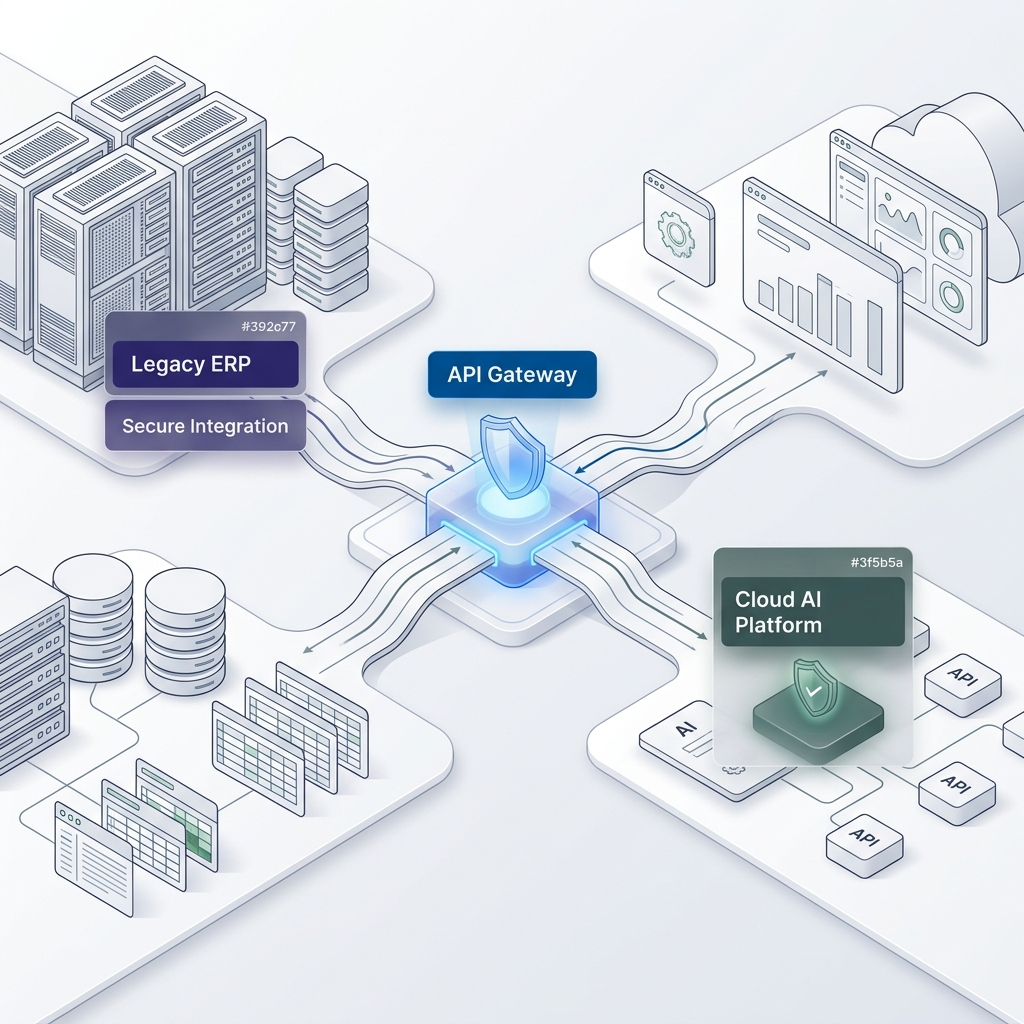
Trusted by operations teams outgrowing manual work
Reduced
MANUAL DATA ENTRY
Connected
BUSINESS SYSTEMS
Secure
DATA TRANSFER
Why businesses struggle to integrate current systems
Information Stays in Silos
Customer records, product data, inventory levels and production updates often exist in different applications with no automatic connection between them. Teams are forced to compare spreadsheets, verify records and manually update multiple systems, increasing both effort and risk of errors.
Manual Processes Slow Down Operations
Many businesses still rely on emails, Excel files and repeated data entry to move information from one system to another. As transaction volumes increase, these manual processes become difficult to maintain and consume valuable time across departments.
Limited Visibility Across the Business
Without connected systems, every department sees only part of the picture. Reports take longer to prepare, operational issues are harder to identify and decision-makers often work with outdated information instead of real-time business data.
Legacy Systems Create Barriers
Many organizations continue to rely on legacy applications. These applications may struggle to communicate with newer business systems. This can restrict automation and hamper digital transformation targets.
Duplicate Data Across Applications
The same supplier, product, operational information, and customer may be present in multiple systems. This can make it tough to efficiently maintain consistency across your business.
Growing Integration Complexity
While adopting additional business applications and cloud platforms with operational systems, ensuring reliable exchange of information can get more challenging without a real implementation strategy.
Give us your integration work. Win back your time.
01. Discover
We review your existing software landscape, understand how information flows across departments, and identify the points where manual intervention, delays, or duplicate work occurs.
02. Design
Our team designs an integration architecture that matches your business requirements, whether through APIs, middleware, database integration, file exchange or custom-built connectors.
03. Test
Every integration is developed, validated and tested against real business scenarios to ensure data accuracy, reliability, and secure communication between systems.
04. Support
After deployment, we monitor performance, resolve issues quickly, and continue improving integrations as your systems and business processes evolve.
Ensuring your business systems stay connected
Reliable Information
Make sure each department functions from up to date and accurate data. Eliminate outdated and duplicate records.
Faster Operations
Bring down the movement of manual data. Enable information to flow automatically across your systems.
Better Collaboration
Keep your departments aligned by ensuring each employee can Keep your departments aligned by ensuring each employee can
Scalable Integrations
Create integration solutions that provide support to your business, keeping pace with growth in transaction volumes.
Low Operational Risk
Reduce errors coming from disconnected applications or duplicate data entry. Minimize inconsistent business records.
Integration solutions built for your business systems
ERP Integration
We integrate ERP systems with CRM, PLM, MES, WMS, finance platforms and third-party applications to eliminate duplicate data entry, automate business processes, and improve operational visibility.
Explore CapabilityCRM Integration
Our CRM integrations connect customer-facing processes with operational systems, helping sales, service and production teams work from the same information.
Explore CapabilityPLM Integration
We integrate PLM platforms with ERP, CAD, production and quality systems, ensuring product revisions, BOMs and engineering changes are available wherever they're needed.
Explore CapabilityLegacy System Modernization
Increase the life of current applications through integration of your legacy software with modern CRM, ERP, and cloud platforms without replacing your critical systems in use.
Explore CapabilityAPI Integration
With secure APIs, connect your enterprise platforms and modern cloud applications. Enable data to move between business systems in a reliable way in real time.
Explore CapabilityCustom Integration Development
Design custom connectors, integration workflows, and middleware solutions that are built keeping in mind your current technology landscape and operational needs.
Explore CapabilityEvery integration is designed around your existing technology stack, ensuring reliable data exchange, easier maintenance, and the flexibility to scale as your business grows.
4-Step
Delivery Methodology
Scalable
Integration Architecture

Compare Integration Approaches
| Feature | Inevia | Generic Tools | Enterprise Platforms |
|---|---|---|---|
| Integration Strategy | Tailored to your business | Ad hoc processes | Template-based |
| Legacy System Support | Yes | Limited | Depends on platform |
| API & Database Integration | Supported | Manual development | Supported |
| Data Synchronization | Automated | Manual updates | Basic automation |
| Custom Connectors | Fully custom | Not available | Limited customization |
| Scalability | Built for growth | Difficult to scale | Platform limitations |
| Ongoing Support | Continuous optimization | Internal IT only | Vendor support |
| Time to Value | Fast implementation | Long deployment | Moderate |
Frequently Asked Questions
Systems integration helps you connect business applications like ERP and CRM. Through systems integration, information moves automatically between your applications. This reduces dependence on manual effort. It also improves overall business efficiency.
Yes. At Inevia, we work with modern cloud platforms along with your legacy business applications. We use APIs, middleware, file exchange, database integration, and custom connectors. This is done keeping your existing technology landscape in mind.
Every integration project is planned around your current business processes wherever possible. Integrations are tested in detail before deployment to make sure disruption is minimized and business continuity is maintained.
Connected systems can be beneficial for all departments that rely on shared business information. Departments like sales and procurement, along with finance teams, customer service, and warehouse operations can benefit hugely from systems integration efforts.
Stop the manual data re-entry.
Connect your silos and let your data flow automatically.
Request Operations Audit