Real-Time Operations Data - Traveler MES
Real-time operations data is not about collecting more information. It is about ensuring the right data is available at the moment decisions need to be made.
In manufacturing environments, delays in visibility often lead to delayed action. When operations data is reviewed hours or days after events occur, teams are left reacting instead of controlling outcomes. A modern approach to real-time operations data brings live visibility directly into daily execution.
When real-time operations data is embedded into workflows rather than analyzed after the fact, organizations gain faster response times, tighter control, and greater operational confidence.

What Real-Time Operations Data Really Means in Practice
At its core, real-time operations data reflects the current state of work as it is happening on the shop floor. It connects machines, people, and processes into a continuously updating operational view. In practice, organizations struggle with real-time operations data because:

Delayed Operations Data
Operations data is delayed or batch-processed

Fragmented Real-Time Data
Real time data is fragmented across systems

Static Decision Reports
Decision-makers rely on static reports

Late Issue Detection
Issues surface only after production is impacted
Effective real-time operations data ensures that operational signals are visible as events occur, allowing teams to respond before disruptions escalate.
Why Most Operations Data Systems Fall Short

Many systems claim to provide real-time data but rely on delayed synchronization or manual updates. While reports may appear current, the underlying operations data often lags behind actual production.
In live manufacturing environments, this gap creates blind spots. Teams make decisions based on outdated real time data, while issues continue to develop unnoticed on the floor. Over time, operations data becomes descriptive rather than actionable.
This disconnect results in slower response times, increased downtime, and missed opportunities for operational improvement.
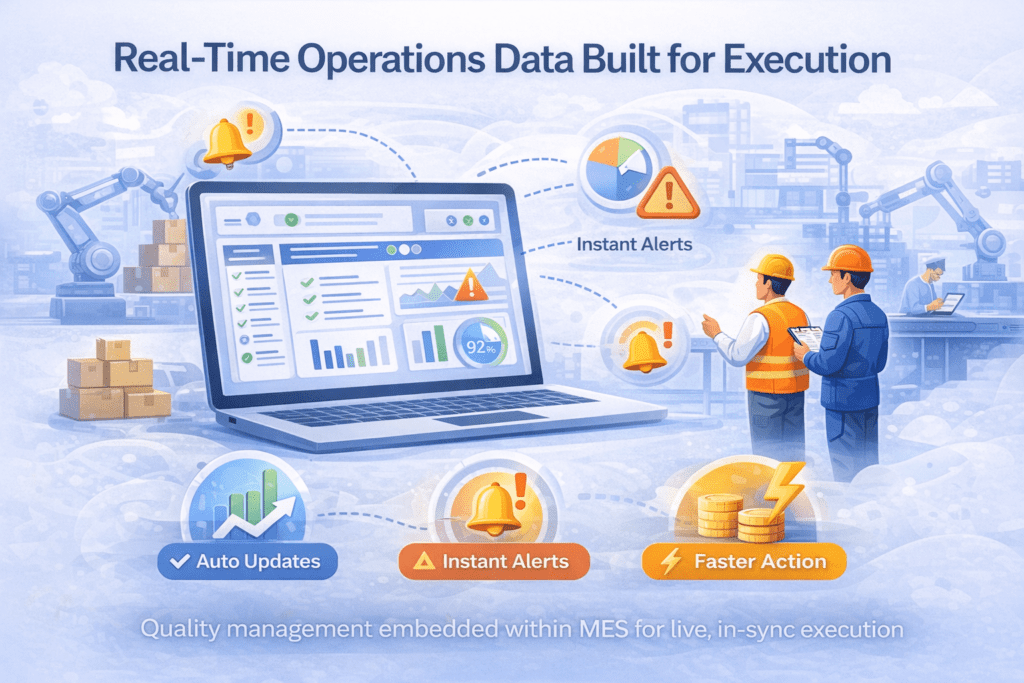
Real-Time Operations Data Built for Execution
A reliable real-time operations data platform supports decision-making while work is actively in progress.
This means:
- Operations data updates automatically as processes advance
- Real time data reflects current production conditions
- Exceptions and deviations surface immediately
- Teams act on live insights instead of historical reports
By embedding real-time operations data into execution, organizations reduce delays, minimize manual intervention, and improve operational stability.
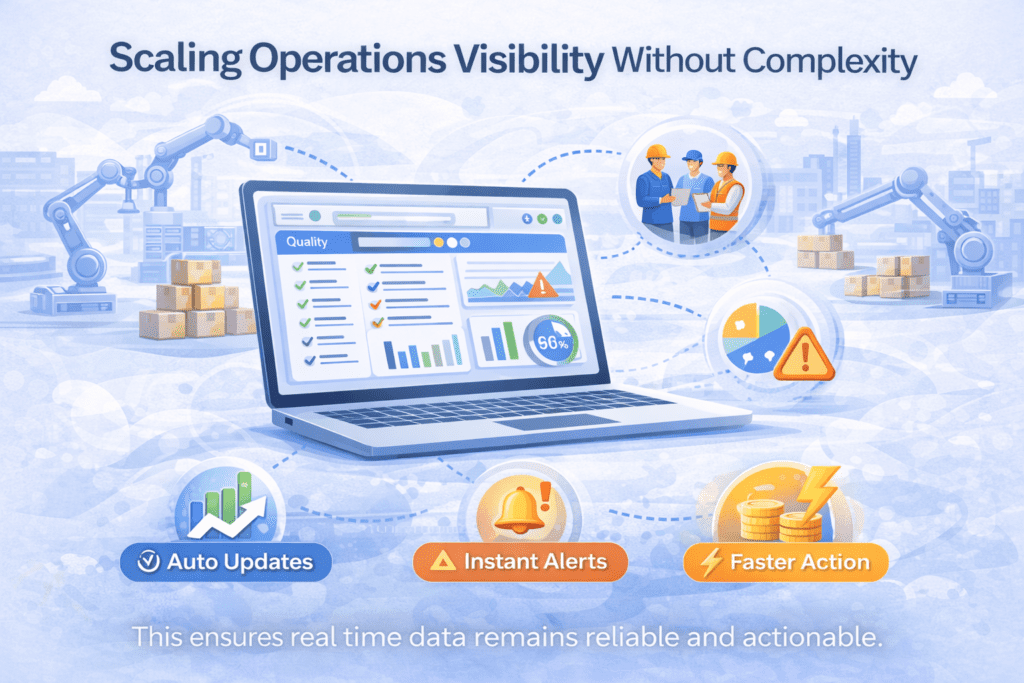
Scaling Operations Visibility Without Complexity
As manufacturing operations scale, the volume of operations data increases significantly. More machines, more product variants, and more shifts introduce complexity that traditional reporting systems cannot handle.
Modern platforms for real-time operations data are designed to scale without increasing overhead. They centralize operations data while maintaining clarity, ownership, and traceability across teams and locations.
This ensures real time data remains reliable and actionable, even as operations grow.
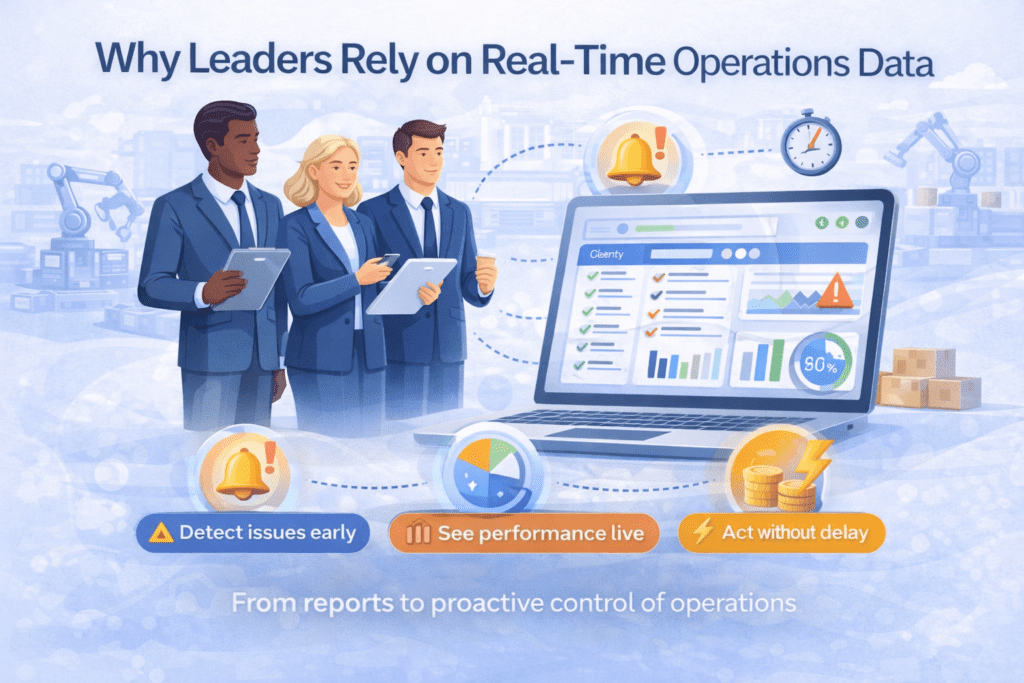
Why Leaders Rely on Real-Time Operations Data
For leadership teams, real-time operations data provides confidence in daily execution. Instead of waiting for end-of-day reports, leaders gain immediate insight into performance, risks, and bottlenecks.
With accurate real-time operations data, leaders can:
- Detect operational issues early
- Understand production performance as it happens
- Make informed decisions without disrupting throughput
This shifts operations conversations from retrospective analysis to proactive control.

Real-Time Operations Data Powered by Traveler MES
True real-time operations data depends on tight integration with manufacturing execution. Traveler MES plays a critical role by capturing operations data directly from live production workflows.
By embedding real-time operations data within Traveler MES, organizations gain continuous visibility into work orders, process steps, and execution status. Data updates as work progresses, ensuring decisions are based on real conditions rather than assumptions.
This integration improves traceability, reduces latency, and ensures real-time operations data remains accurate, contextual, and actionable throughout production.

When Real-Time Operations Data Starts Driving Results
When real-time operations data is integrated into execution, teams respond faster and operate with greater precision. Organizations begin to experience:
-
Reduced downtime and delays Minimize production interruptions and operational delays through faster visibility and response.
-
Faster Issue Resolution Identify and resolve problems quickly with real-time operational insights.
-
Greater alignment between planning and execution Ensure plans stay aligned with real-time operations for smoother execution.
Over time, real-time operations data evolves from a reporting function into a critical operational capability.
FAQs
Real-time operations data represents live information from production and execution processes, enabling teams to monitor performance and respond immediately as events occur.
Traditional reporting relies on historical data, while real-time operations data reflects current conditions and supports immediate decision-making.
Real-time operations data helps manufacturers identify issues early, reduce downtime, and improve coordination across teams and processes.
Traveler MES captures operations data directly from execution workflows, ensuring real-time operations data remains accurate, contextual, and continuously updated.
Yes. When embedded into execution platforms, real-time operations data scales across machines, locations, and shifts without increasing operational complexity.
Ready to Improve Real-Time Operations Data?
If operations data feels delayed, fragmented, or difficult to act on, the challenge is not effort. It is visibility. Modern platforms that combine real-time operations data with execution systems like Traveler MES allow organizations to respond faster, reduce risk, and maintain control across daily operations.
Contact